The move represents a decisive step in Europe’s long, halting journey toward strategic sovereignty in the face of growing geopolitical pressure.
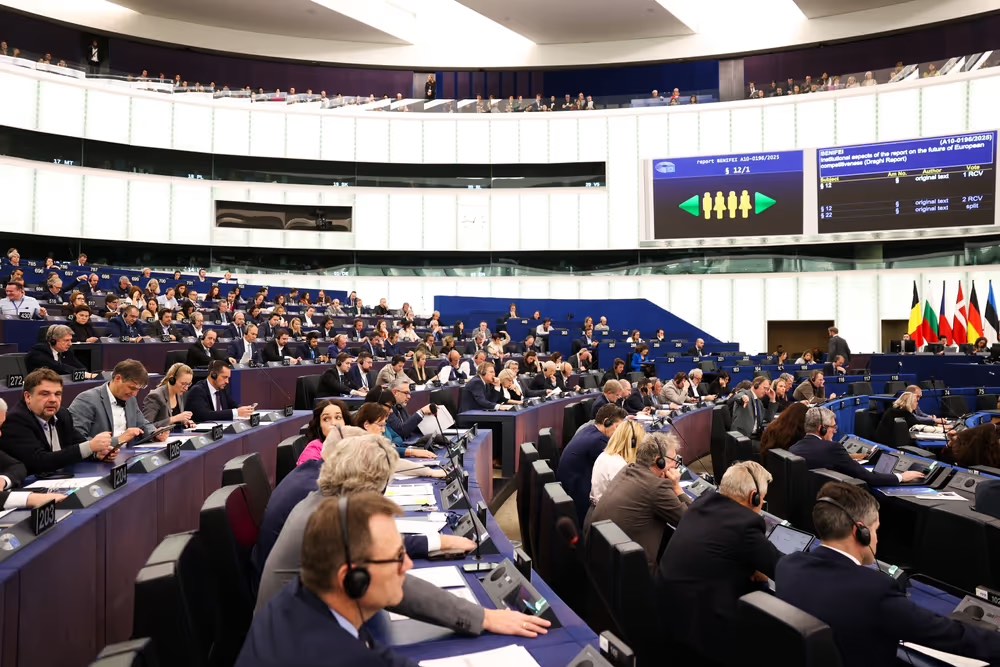
The legislation — backed by 457 MEPs, with 148 voting against and 33 abstaining — marks a turning point in how the EU intends to organise, finance, and sustain its defence industrial base. (turn0search0)
At its core, EDIP is designed to shore up the European Defence Technological and Industrial Base (EDTIB), making it more resilient, competitive, and capable of rapid production when needed. The programme will support joint procurement among EU nations, industrial ramp-up, and, crucially, cultivate a stronger defence manufacturing sector.
A third of EDIP’s €1.5bn — some €300 million — is earmarked for the Ukraine Support Instrument, allowing Ukrainian firms to cooperate on critical defence projects and deepen industrial integration. (turn0search0)
One of the more politically delicate provisions agreed by MEPs and the Council is what has become known as the “buy European” principle. Under the new rules, any defence product funded by EDIP may contain no more than 35 per centof its components from non-associated third countries.
This cap strikes a careful balance. On one hand, it protects Europe’s strategic interests by limiting dependence on foreign suppliers. On the other, it leaves room for cooperation with non-EU partners when necessary — acknowledging that defence ecosystems are globally interconnected.
To ensure that Europe can respond swiftly in a crisis, EDIP also introduces a dedicated “security of supply” mechanism—a first of its kind. This is not just about funding; it’s about building resilience into the European defence supply chain so that Europe is not caught unprepared.
Moreover, a new FAST instrument — the Fund to Accelerate Defence Supply Chain Transformation — will provide at least €150 million to help modernise supply lines, support small and medium-sized enterprises, and reduce production bottlenecks.
EDIP is not only about money; it fosters a legal framework for European Defence Projects of Common Interest (EDPCI). Such projects must involve at least four EU member states, ensuring broad cooperation rather than narrow national programmes. Perhaps most strikingly, Ukraine will be allowed to join these efforts — a bold gesture of industrial solidarity and geopolitical strategy.
Raphaël Glucksmann, co-rapporteur on the file, described EDIP as central to building “a more resilient and sovereign Europe … through joint investment, common procurement, and further integration of the Ukrainian and European defence industries.”
For Brussels, the approval of EDIP represents a long-overdue pivot. After decades of defence fragmentation, the EU is now making its industrial base a matter of urgency. With the war in Ukraine still raging and global tensions escalating, the EU clearly recognises that defence is no longer a peripheral matter — it is central to its very survival.
European Commission President Ursula von der Leyen has welcomed the vote, calling the new programme a historic milestone. According to the Commission, EDIP will fully align with the Defence Readiness Roadmap 2030, part of a broader “Preserving Peace” strategy to guarantee Europe’s autonomy and capacity to respond to future crises.
Critically, MEPs ensured that EDIP does not become a tool of narrow industrial nationalism. Rather, it is built on the principle of solidarity and shared interest across the EU. By requiring multi-state cooperation in its key projects, it aims to encourage both economies of scale and genuine strategic alignment.
The programme also leverages existing financial tools: co-legislators secured the right for member states to use unspent funds from the Recovery and Resilience Facility (RRF) to help back EDIP initiatives — a smart move that makes use of resources originally earmarked for post-pandemic recovery.
With Parliament having approved EDIP, the baton now passes to the member states to formally endorse the law. Once adopted, the regulation will be published in the Official Journal of the European Union, after which it will begin to take effect.
From there, the Commission will move into the programming phase. Brussels officials have indicated that priority will be given to projects aligned with the Defence Readiness Flagships, ensuring that critical capabilities are delivered rapidly.
But the programme is not risk-free. Balancing the “buy European” preference with real-world procurement needs, especially in crises, will require political will. Speeding up production is only one part: the real test lies in delivering interoperable systems and maintaining steady supply chains.
In the age of turbulence, the EU’s approval of the EDIP is a signal of ambition, not appeasement. It is an attempt to move defence from the margins of European policy to its core — to institutionalise cooperation in a sector long defined by national silos.
Whether EDIP becomes a defining legacy or a disappointing compromise will depend on Europe’s ability to transform this political commitment into industrial reality. But for now, Brussels’s message is clear: the era of fragmented defence industries is over. Europe is ready to act — together.
Main Image: Alexis HAULOT © European Union 2025 – Source : EP Usage terms: Identification of origin mandatory
MEPs Demand “Military Schengen” to Harden Europe’s Defences Against Rising Russian Threat