

Rome's rejection of Mark Rutte's claim about US aircraft using Italian bases for Iran operations exposes how allied basing can become politically explosive when operations move beyond Europe.

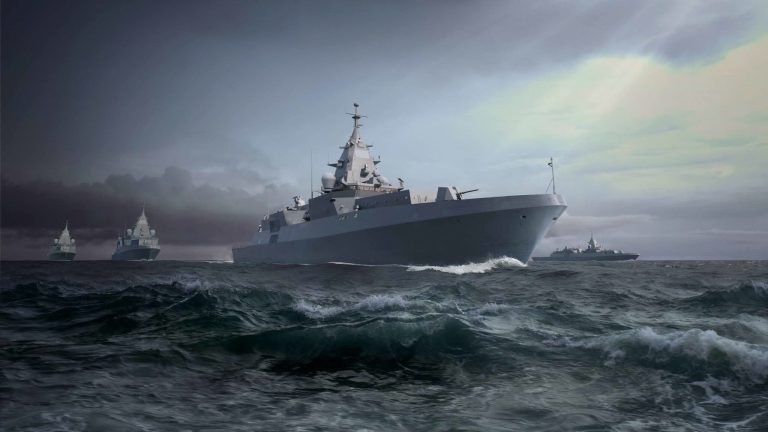
Germany’s decision to cancel its F126 frigate programme has turned one of Europe’s most ambitious naval projects into a warning about the limits of defence rearmament when money, industrial capacity and programme control do not move at the same pace.…

Italy's signal that Canada, Germany and Saudi Arabia could join GCAP shows that Europe's next-generation fighter politics are shifting after Franco-German cooperation faltered.

KNDS's planned Frankfurt-Paris listing would turn Europe's rearmament cycle into a capital-markets test, exposing how far governments are willing to mix private money with state control over strategic defence manufacturers.

A dispute over who should represent the Czech Republic at next month’s NATO summit has moved from domestic political argument to constitutional confrontation, after President Petr Pavel appealed to the Constitutional Court over his exclusion from the national delegation. The…

Germany’s planned move to take a 40 per cent stake in KNDS, the Franco-German manufacturer of the Leopard and Leclerc tanks, marks a shift in Europe’s rearmament debate from budgets to industrial control. The proposed acquisition, which is expected to…

Britain’s new long-range missile prototypes for Ukraine point to a wider defence-industrial problem: European weapons are increasingly being designed to avoid reliance on US export controls and political approval. The United Kingdom has unveiled three prototype long-range missiles for Ukraine…

Finland-based miniFactory’s technology enables production of complex ducting components for one of the United Kingdom’s most important defence modernisation programmes. Rheinmetall UK has confirmed that industrial 3D printing, also known as additive manufacturing, is now the baseline production method for…

France’s trial of the AI-powered Arcadia battlefield command system points to a wider European defence challenge: strategic autonomy will depend not only on higher military spending, but on control over the technologies, intellectual property and decision-making systems that underpin modern…

Washington’s call for a tougher “NATO 3.0” is not only a spending demand. It forces European allies to plan for crises in which US aircraft, carriers, tankers and command assets may no longer be available by default. The United States’…