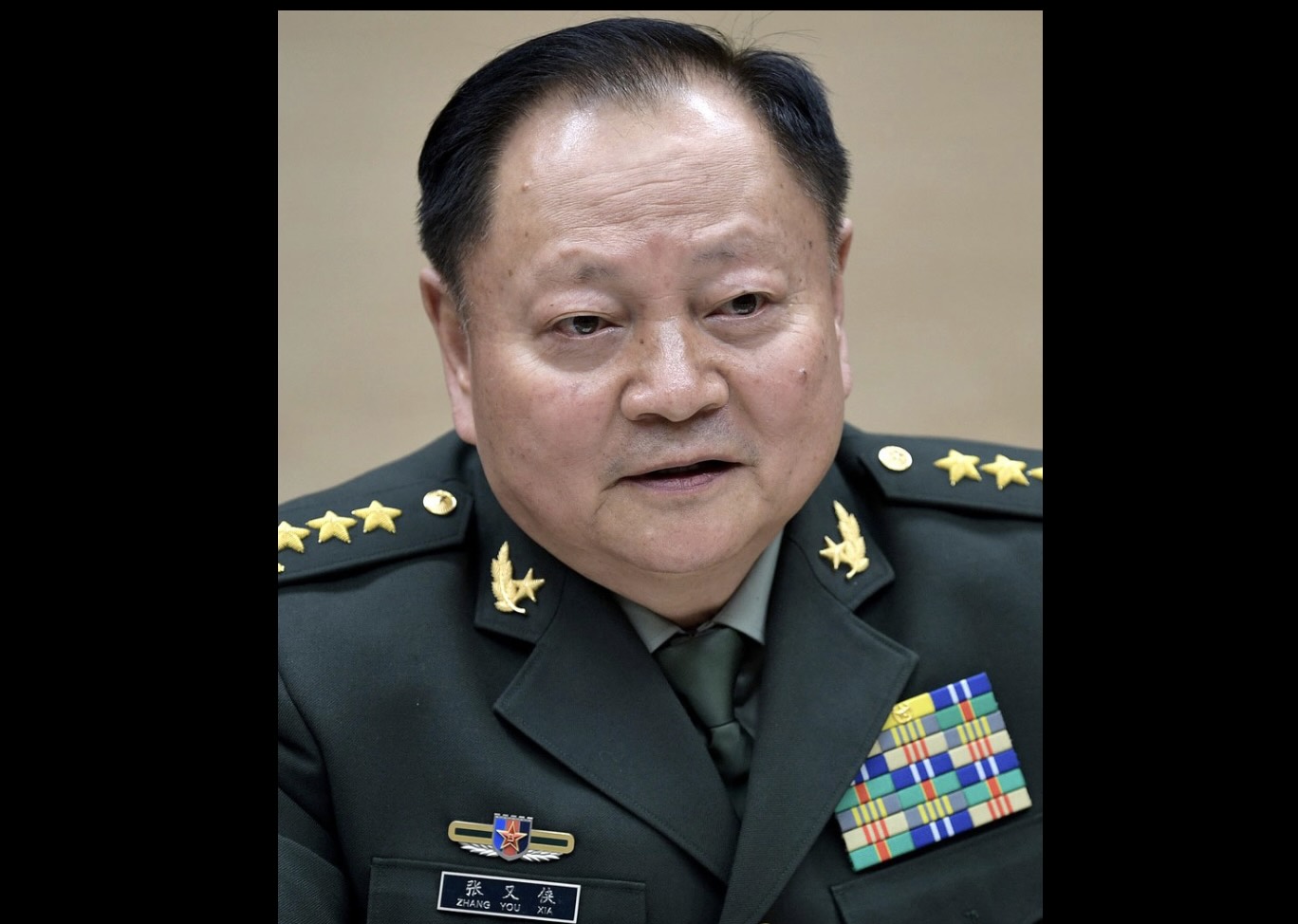
General Liu Zhenli, the chief of staff of the CMC’s Joint Staff Department, is also under investigation, according to the same announcement.
The move places scrutiny on an official widely regarded as central to President Xi Jinping’s grip on the armed forces and to the programme of military modernisation that Beijing has set out for the coming decades. Reuters described Zhang as a longtime ally of Xi who had been retained in a top post beyond the typical retirement age for senior officers.
The official statement did not set out specific allegations. However, reporting in several outlets has linked the inquiry to a mix of corruption and national security accusations. The Wall Street Journal reported that Zhang is accused, in an internal briefing, of leaking information related to China’s nuclear weapons programme to the United States, as well as accepting bribes and abusing authority over promotions and procurement.
According to the same report, the allegations were prompted in part by information provided by Gu Jun, described as a former head of a state-linked nuclear corporation who is himself under investigation. The Journal said Gu reported corruption and alleged that Zhang provided sensitive information on China’s nuclear capabilities to Washington. Chinese authorities have not publicly corroborated those details, and Beijing has not released evidence.
The investigation comes against the backdrop of a long-running anti-corruption campaign in the PLA that accelerated in 2023 with a wave of probes linked to the Rocket Force and defence procurement. The crackdown has disrupted procurement and affected defence firms, while leaving day-to-day operations broadly stable.
Zhang’s case is notable because of his status inside the CMC, the Communist Party body that commands the armed forces. A Reuters analysis published on 26 January said the investigation has fuelled speculation about the concentration of decision-making and the thinning of the military’s top leadership, while also reinforcing the signal that personal ties to Xi do not confer immunity.
Zhang, 75, is one of the few serving senior PLA figures associated with combat experience, and has been described in foreign reporting as a “princeling”, a term used for officials from revolutionary-era elite families. Zhang, like Xi, comes from such a background.
If the nuclear-leak allegation is substantiated, it would intersect with a strategic priority for Xi: the expansion and modernisation of China’s nuclear force. SIPRI’s 2025 assessment said the United States and Russia together possess almost 90 per cent of the world’s nuclear warheads, while China is continuing to strengthen and modernise its arsenal. The Pentagon’s 2025 report to Congress stated that China’s nuclear stockpile “remained in the low 600s through 2024” and reiterated an assessment that Beijing is on track to exceed 1,000 warheads by 2030.
Beijing has framed military reform around staged targets, including completing military modernisation by 2035 and achieving “world-class” status by 2049, formulations repeated across Chinese policy documents and analysed by research institutes. The current leadership shake-up, at least in the near term, risks slowing appointments and reinforcing cautionwithin the procurement system.
The timing is also politically sensitive. China faces ongoing friction with the United States over Taiwan, the South China Sea and technology restrictions, and Xi has repeatedly emphasised the Party’s “absolute leadership” over the military. Some analysts view the purge as a step towards centralising authority rather than evidence of an imminent external operation, including over Taiwan.
Any judicial outcome remains uncertain. China’s legal system allows severe penalties for both corruption and espionage-related offences, with courts in past cases imposing suspended death sentences for each category. For now, Beijing’s only confirmed position is that Zhang and Liu are being investigated for serious disciplinary and legal violations, without public detail on the charges or the evidence.
First published on euglobal.news.