The latest warning has come from Serhii Beskrestnov, a Ukrainian military radio-technology specialist known by the call sign “Flash”, who was appointed in late January as an adviser to Defence Minister Mykhailo Fedorov on technology-related defence issues. Ukrainian outlets reported Fedorov’s announcement and framed Beskrestnov’s role around strengthening electronic warfare and communications, as well as analysing Russian technical adaptations.
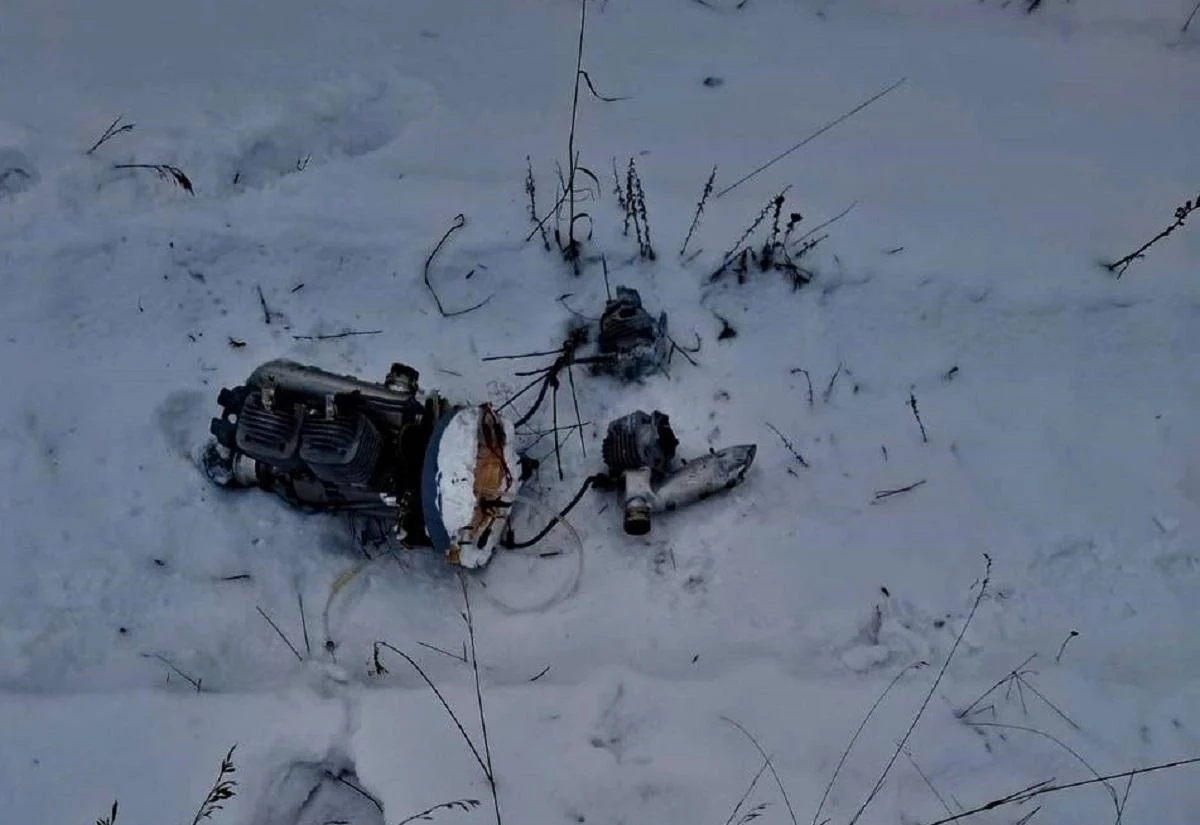
In a recent interview and related posts, Beskrestnov said Ukraine has recorded at least two cases suggesting satellite-linked control of Russian strike drones over the past several days. He stated that a BM-35—described as a smaller strike UAV with a fuel engine—reached the Dnipro area with a Starlink link, and that Russian forces had used Shahed-type drones with Starlink in an attack near Kropyvnytskyi in which Ukrainian helicopters were hit. Ukrainian media have reported these claims and circulated video said to have been posted by Russian sources.
Beskrestnov’s central argument is that Starlink connectivity changes what a long-range loitering munition can do. Instead of relying primarily on pre-programmed navigation, a drone that can transmit video and receive commands via satellite can, in principle, be flown like a “large FPV” system, with an operator adjusting course in real time. He linked that to the prospect of lower-altitude flight profiles designed to reduce radar detection and to enable last-minute manoeuvre towards targets of opportunity.
He said Ukraine had previously observed satellite-linked control primarily on “Molniya” drones used against infrastructure near the front, but that BM-35 expands the problem because it is fuel-powered and, in his estimate, capable of flights of up to about 500 kilometres. Reports citing his posts describe BM-35’s range in similar terms and present it as a mid-range strike platform rather than a one-way drone with the endurance of a Shahed-136.
The claims have landed amid heightened attention on drone activity far from the front. Western Ukrainian authorities reported strikes and prolonged drone presence over Lviv region in late January, including incidents around Brody, with local reporting focusing on infrastructure damage and subsequent air-quality monitoring.
Separately, international reporting has picked up the Starlink angle through a diplomatic dispute. Poland’s foreign minister, Radosław Sikorski, publicly urged Elon Musk to stop Starlink being used for strikes on Ukrainian cities, triggering a sharp exchange on social media that drew wider coverage.
Beskrestnov told interviewers that the most obvious countermeasure is administrative rather than purely technical: preventing “roaming” terminals—units bought and activated abroad—from functioning inside Ukraine. He argued for a national registry of terminals used by the security and defence sector and volunteer networks, with new activations channelled through an official dealer, so that unregistered devices operating inside Ukraine could be denied service. The same approach has been discussed in Ukrainian reporting as a way to narrow avenues for unauthorised terminals to be brought in and used.
Until such restrictions are possible, he said the practical requirement is earlier detection and faster engagement. He pointed to a countrywide network of acoustic sensors as one input for tracking drones flying at low altitude, and to citizen-reporting tools in which verified users submit sightings and sound detections through mobile applications to feed a central picture. The premise is to compensate for gaps in radar coverage and to cue interceptor assets sooner.
On interception, Beskrestnov described “zenit” (anti-air) drones—interceptor UAVs—as a scalable layer that Ukraine can produce domestically, with surface-to-air missile systems and other means acting as additional backstops. He cautioned, however, that Russian forces are likely to respond to successful interception tactics by introducing faster jet-powered drone variants designed to outrun current interceptor profiles, and by continuing to adapt routes after probing air-defence corridors.
The technical debate is being widened by Maria Berlinska, a Ukrainian drone advocate and head of the Centre for Support of Aerial Reconnaissance, who has argued that satellite links are only one part of the challenge and that autonomy—systems able to execute missions with limited operator input—will define the next phase. French and Ukrainian outlets summarising her position have described it as a shift from automated to autonomous strike and interception, with an emphasis on integrated sensor networks and layered responses.
For now, the public record rests largely on Ukrainian specialists’ assessments and scattered reporting around specific incidents. ISW, which tracks open-source indicators, has also stated that Russian forces are increasingly using Starlink to extend the range of BM-35 drones for mid-range strikes, reflecting the same direction of travel described by Ukrainian advisers.