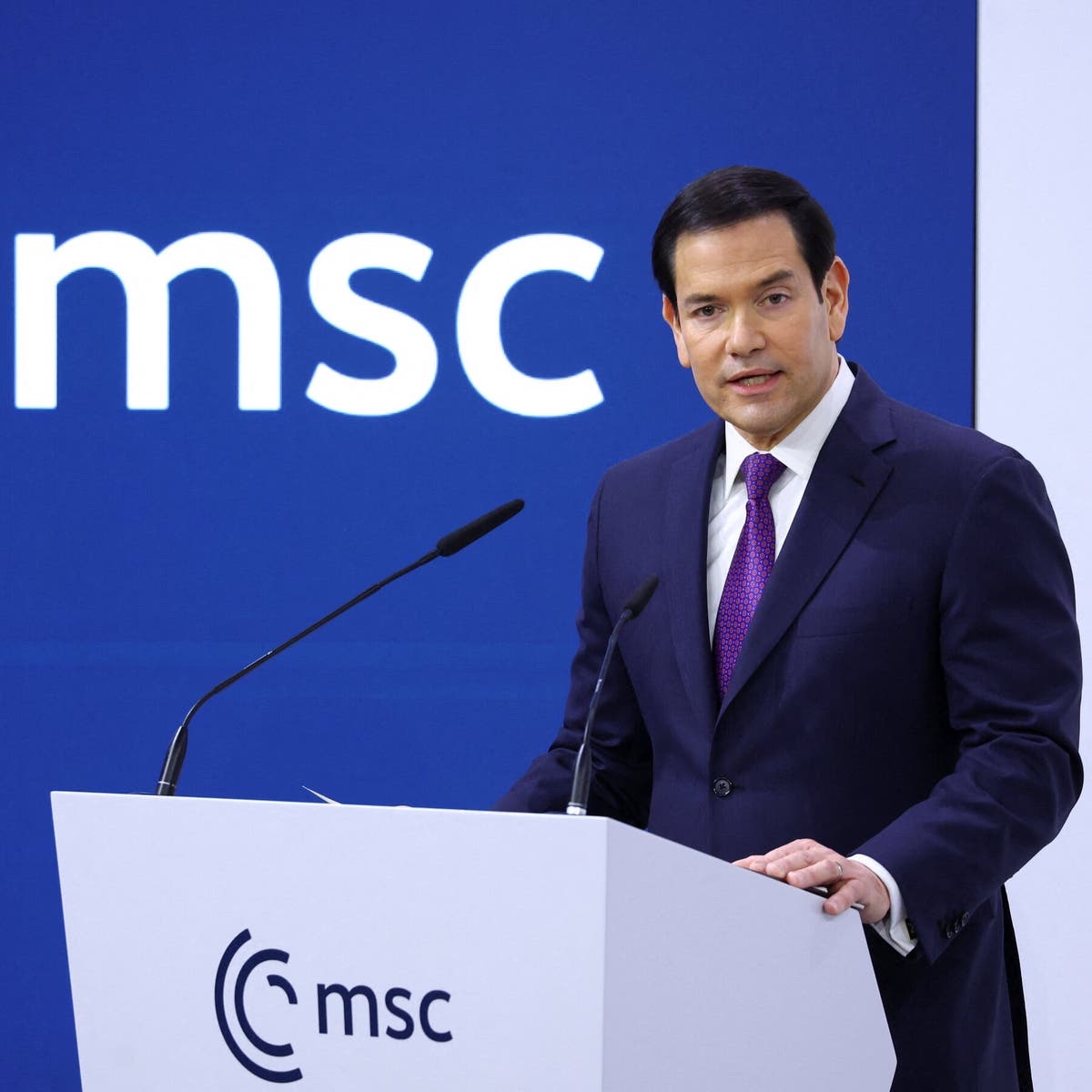
Marco Rubio did not come to Munich to be cautious.
His address on February 14th landed differently from the familiar conference oratory. It was neither an academic lecture nor a conventional diplomatic speech. It was closer to a strategic intervention — a reminder that alliances are not sustained by sentiment, nor security by declarations, but by confidence, strength and clarity about what is being defended.
Rubio’s underlying proposition was straightforward: the West has not become vulnerable because it lost its power. It has become vulnerable because it lost its certainty.
For three decades after the Cold War, Western governments acted on the assumption that history’s central arguments had been settled. Democracy would spread, markets would integrate rivals, and conflict would gradually give way to interdependence. The institutions built in 1945 and expanded in 1991 were believed sufficient to guarantee peace.
Events have disproved that assumption with unforgiving efficiency.
Russia’s war in Ukraine, China’s strategic assertiveness, instability across the Middle East and the weaponisation of economic dependency have exposed a truth the conference circuit has often hesitated to articulate: order is preserved not by aspiration but by deterrence. And deterrence rests, above all, on credibility.
This was the point at which Rubio departed from diplomatic routine. He argued that the transatlantic alliance remains indispensable — indeed, he was at pains to emphasise America’s deep civilisational and historical ties to Europe — but that alliances only function when their members are strong in their own right.
He did not present this as criticism of Europe, but as a principle of security itself. A partnership of capable states discourages aggression. A partnership of dependent ones invites testing.
Here his language became unusually direct. The United States, he said, does not wish for allies who cannot stand on their own feet. Weak allies, however sympathetic their circumstances, ultimately make the alliance weaker. Strength, shared across the Atlantic, is the surest way to ensure adversaries never calculate that the risks of confrontation might be acceptable.
In that respect, his argument echoed a lesson well understood during the Cold War but curiously neglected afterwards: peace is maintained when potential aggressors conclude that conflict would fail before it begins.
Rubio extended the argument beyond military spending. He spoke not only of defence capability but of morale — of whether Western societies believe sufficiently in themselves to sustain long-term competition. Nations uncertain of their legitimacy rarely project confidence abroad.
He warned against allowing Western societies to become constrained by perpetual historical self-reproach. A civilisation permanently apologising for its past struggles to defend its present. What he advocated instead was neither arrogance nor chauvinism, but self-respect: countries comfortable acknowledging their achievements alongside their mistakes, and prepared to preserve institutions that have delivered liberty and prosperity on a scale unprecedented in history.
His formulation was clear. The United States wants partners capable of self-defence so no adversary ever feels tempted to probe the alliance’s resolve. It wants partners unburdened by paralyzing guilt, confident in their culture and heritage, and conscious that they belong to a shared civilisational inheritance worth protecting. Only such nations, he suggested, can act together with conviction when confronted by threats.
To some European ears, talk of civilisation sounds unfashionable, even suspect. Yet alliances have always depended on more than treaties. NATO itself was not merely a defensive pact; it was a coalition of societies that believed political freedom, the rule of law and individual dignity were preferable to coercion. Military coordination followed cultural affinity, not the other way around.
Rubio’s intervention therefore touched a sensitive question: whether the West still recognises itself as a coherent community of values or merely a collection of administrative structures. Institutions alone do not inspire sacrifice. Shared identity does.
In practical terms, his speech amounted to a call for strategic adulthood. European rearmament, energy independence, resilient industrial capacity and technological competitiveness were not presented as concessions to American pressure but as necessary conditions for European security itself. An ally able to defend its territory strengthens collective deterrence. An ally dependent on others weakens it, however close the friendship.
This was not isolationism. It was the opposite. Rubio was arguing for a stronger alliance, one based on mutual capability rather than permanent asymmetry. The United States would remain committed, but commitment would be most effective when matched by comparable resolve.
Critics may regard such arguments as uncomfortable, particularly in a continent accustomed to viewing security as largely guaranteed. Yet the past decade has altered the strategic environment. War has returned to Europe. Economic coercion has become routine. Technology has become a battlefield. The comfortable assumptions of the 1990s no longer describe the world as it is.
In that context, Rubio’s message was less ideological than practical. Confidence deters. Weakness invites risk. Unity requires belief.
Munich has often been a forum for diagnosing problems while postponing conclusions. This year’s speech offered one. The West, Rubio suggested, does not need reinvention so much as rediscovery — a renewed willingness to defend its interests, its institutions and, ultimately, its civilisation.
It was a reminder that alliances endure not because they are necessary, but because their members believe they are worth preserving.
And history indicates that when the Atlantic democracies possess that confidence, adversaries rarely doubt the outcome.
Rubio tells Europe a new geopolitical era is under way ahead of Munich address