

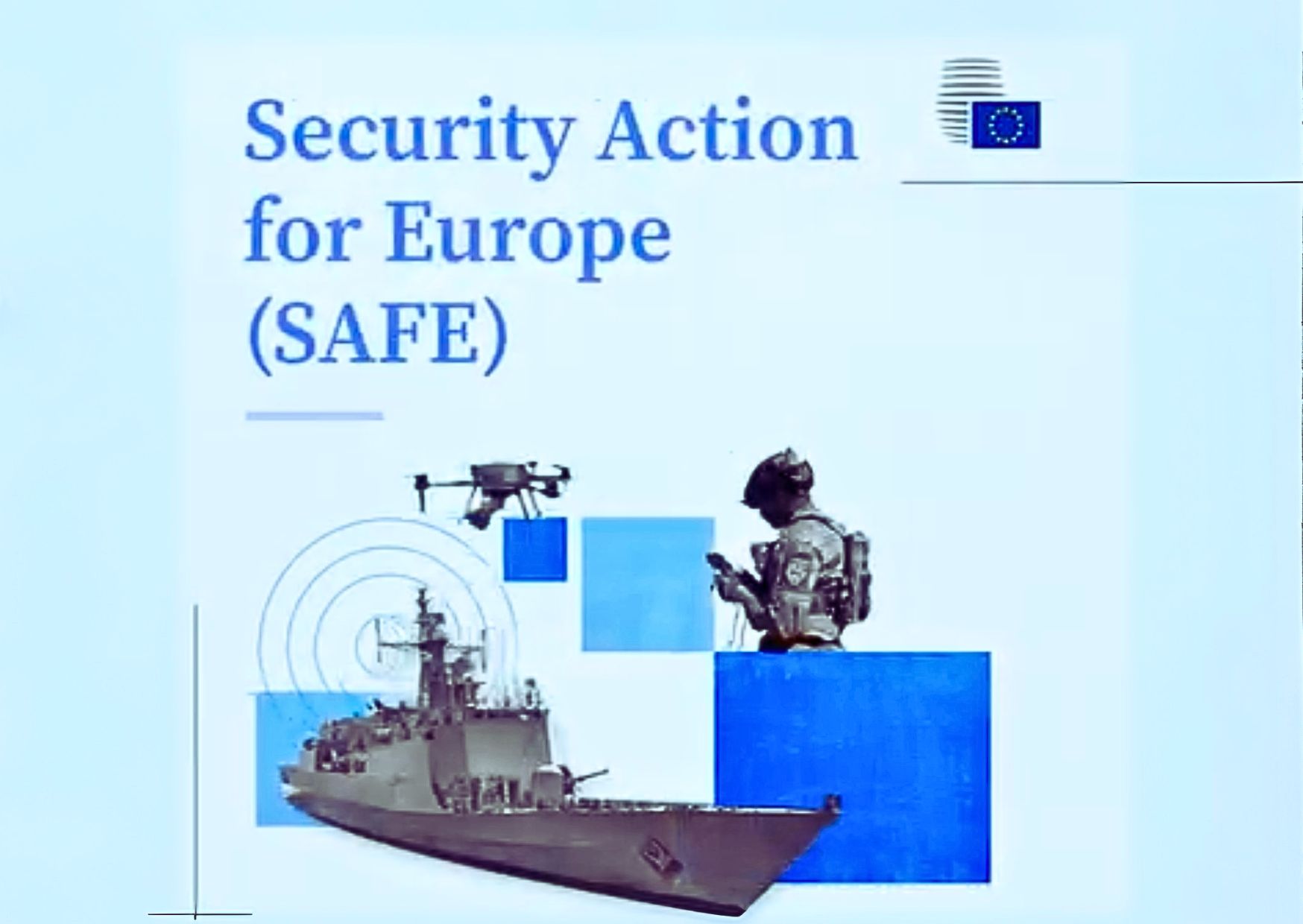
The move is as much a tactical retreat as it is a concession, exposing deep divisions inside the European Union over how — and with whom — to build a truly collective defence capacity.
The original €6.7 billion figure, mooted just weeks ago, provoked fierce objections in London. British officials bluntly rejected it. As one senior UK source put it, participation must be “good value for our taxpayers and for British industry,” not a blank cheque. The UK had, in fact, offered only €75 million — barely a rounding error compared to what Brussels initially demanded.
That gulf in expectations has fuelled a tense standoff. For Brussels, the demand was pitched not merely as a financial contribution, but as a measure of political commitment: a way to bind the UK into Europe’s rearmament drive. For the UK, still smarting from Brexit, it felt more like a protectionist toll booth — a price to cross back into influence.
Critically, the stakes are not just monetary. Under existing SAFE rules, non-EU firms (including British ones) can compete for up to 35% of procurement contracts. But if the UK formally joins the scheme, that cap could rise to 50%. That’s a significant lift — but Brussels has insisted that such privilege must come with a price that reflects the benefits to British industry.
Even after the reduction, the €2 billion price tag remains nearly 27 times higher than London’s bid. The question now turns to whether the UK is prepared to bridge that gap — or whether Brussels will have to come down even further. The looming deadline of 30th November, when EU member states must finalise their SAFE participation plans, adds urgency to what has become a high-stakes game of brinkmanship.
The scale and intensity of the row also underline profound divides within the EU. On one side are member states like Germany, Sweden, and the Netherlands, which see UK participation as a net positive — not just for defence industry synergies, but for broader NATO solidarity. On the other, hardline voices such as France are pushing for tougher conditions. Some in Paris argue that non-EU participation must be stringently priced or capped, lest European defence sovereignty be undermined.
These debates are more than industrial: they are ideological. Many in Brussels now argue that a hardline position could backfire. One diplomat told the Financial Times that refusing UK participation altogether would be “a serious embarrassment,” particularly given the urgency of bolstering Europe’s military resilience. By contrast, France, wary of ceding defence-industry advantage, has raised objections to what it sees as overly generous terms.
From London’s perspective, the UK is playing a careful balancing act. On the one hand, British defence firms have much to gain from SAFE: greater access to European contracts, faster demand, and potentially a more integrated procurement base. On the other, paying tens of billions without guaranteed returns or direct access to loans feels like an asymmetric deal.
There is, too, a principled objection: since the UK cannot draw loans from the fund, why would it pay into it? Some UK officials have argued that the contribution should be limited to administrative costs and guarantees — not a large capital outlay.
That Brussels has come down to €2 billion suggests a more pragmatic turn. The cut in demand can be read as a recognition that forcing the UK out now could be more damaging than any short-term financial compromise. It also underscores a broader anxiety among European capitals: as rearmament accelerates, the continent cannot afford to isolate the UK, a major defence exporter and natural security partner.
Yet Brussels has also made clear that its offer is not open-ended. The contribution “has to be proportionate to the benefits the UK gains from its participation,” according to a Commission spokesperson. In other words: sweetening the deal does not mean conceding sovereignty.
The stakes extend well beyond a balance sheet. Europe is racing to rearm in response to the ever-present threat posed by Russia, and to reduce dependency on transatlantic backing. SAFE is not only about buying weapons — it is about forging a genuine European industrial capacity, one that can sustain longer-term strategic autonomy.
By playing hardball but signalling willingness to compromise, Brussels is showing that the EU will tolerate non-EU participation — but only on its terms. For the UK, securing a seat at that table is about more than business: it is about influence.
Failure to strike a deal risks leaving Britain on the sidelines of a defining European project. Too much compromise, meanwhile, could limit the EU’s leverage or undermine its rules-based approach to third-country access. It is a diplomatic tightrope, and both sides are walking it.
Brussels’ reduction of the UK’s entry price to €2 billion is a clear sign of realist recalibration, not a capitulatory handover. The EU clearly wants Britain in — but only if London agrees to pay a premium. For its part, Britain is pushing back hard, insisting on value, not just access.
With the November 30th deadline looming, both sides must decide whether this fragile détente is to be cemented or collapsed. The outcome will not only determine the fate of UK defence firms, but potentially shape how Europe funds its future security architecture.


If Russia Wins: A Scenario and the Logic of the West’s Managed Defeat