

The two-week ceasefire announced on 7–8 April has reduced the immediate risk of a much wider US strike package against Iran, but it has not resolved the central military and political questions that drove the crisis. The truce, brokered by Pakistan, is tied to the reopening of the Strait of Hormuz and to talks expected in Islamabad. Yet the most important feature of the arrangement may be what has not changed: the United States is still reinforcing the theatre, not drawing down from it.
Iran has circulated a 10-point set of conditions which, taken together, amount less to a technical ceasefire framework than to a maximalist political settlement. According to current reporting, the list includes: a non-aggression commitment; continued Iranian control over Hormuz; recognition of Iran’s right to enrich uranium; removal of primary and secondary US sanctions; reversal of UN Security Council measures; an end to decisions by the relevant international governing bodies; compensation; withdrawal of US forces from the region; and an end to fighting across all fronts, including against Hezbollah in Lebanon. Washington has not accepted that package as stated. President Donald Trump has described the Iranian plan only as a possible basis for further talks, while Reuters reports that the United States publicly acknowledges only the immediate requirement that Hormuz be reopened safely.
Militarily, several of the 10 points are improbable because they would require Washington to surrender the leverage it has spent weeks assembling. Recognition of Iranian enrichment would cut directly against the declared purpose of the campaign against Iran’s nuclear and missile infrastructure. Lifting both primary and secondary sanctions at the start of talks would remove economic pressure before any verifiable concession. A US withdrawal from the Gulf would do the same in military terms. Even compensation, the least structurally important of Tehran’s demands, would still imply that Washington had accepted political liability for the conflict’s damage.
The maritime clauses are just as consequential. The ceasefire hinges on the Strait of Hormuz, through which about a fifth of global oil and gas trade normally passes. Markets reacted immediately to the truce, with Brent falling sharply as traders priced in the prospect of resumed traffic. But the strategic issue is not merely whether ships move; it is on whose terms they move. Iran has signalled that it wants military oversight of passage and, according to AP and other reporting, has floated the idea of charging transit fees in conjunction with Oman. That would not just reopen a chokepoint. It would turn a crisis into a revenue and leverage mechanism.
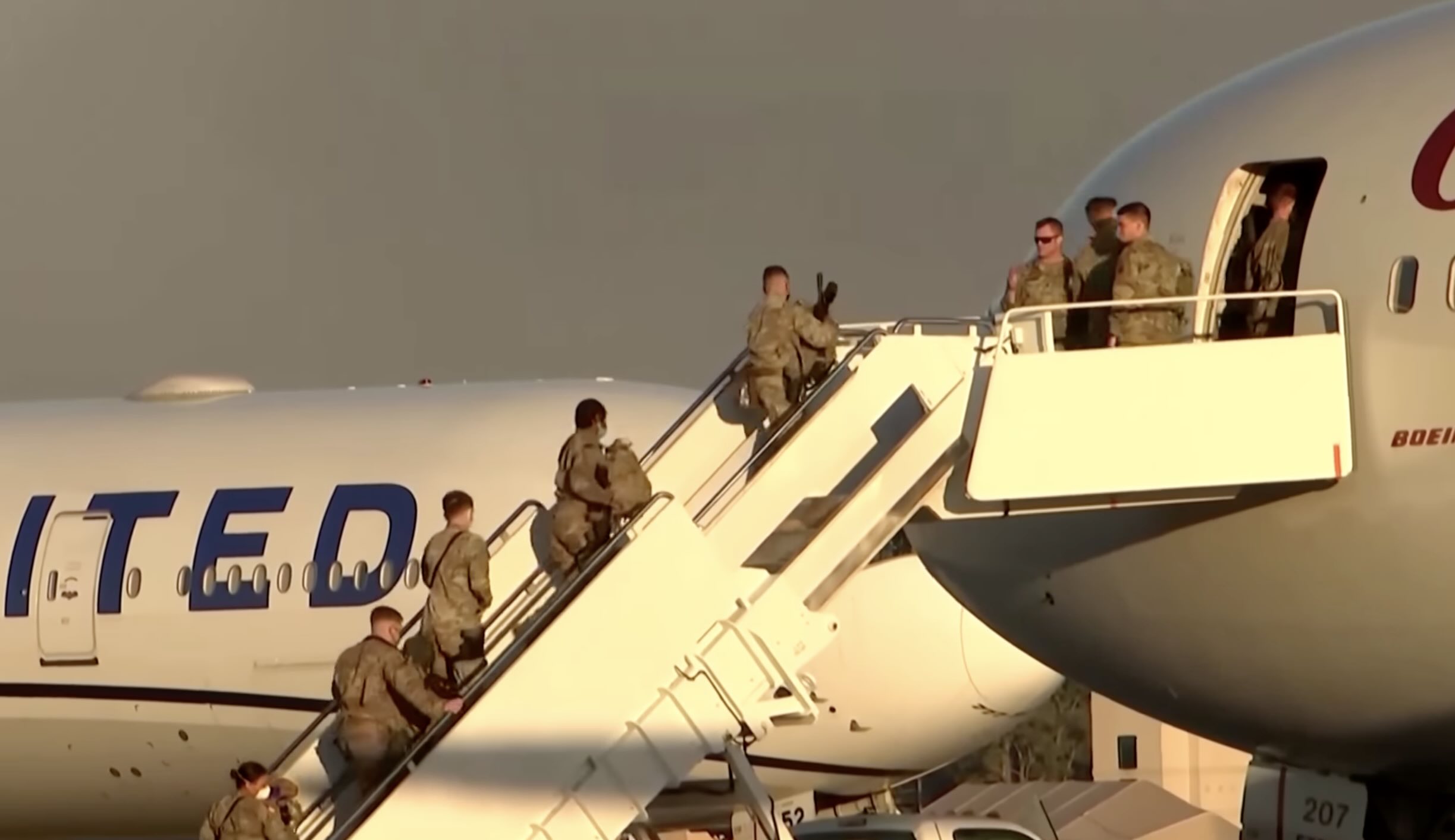
That is why the military build-up matters as much as the ceasefire text. Reuters has reported that the Pentagon was already moving an additional 3,000 to 4,000 soldiers into the Middle East in late March, explicitly to build capacity for possible future operations in the region. Thousands of US paratroopers had arrived, alongside additional Marines, sailors and special operations forces. At the naval level, the USS Abraham Lincoln carrier strike group entered the CENTCOM theatre in January, while the USS Gerald R. Ford had been operating in support of the campaign before pulling into port for repairs after a fire. The reported expectation that Ford will return, together with discussion of a third carrier presence, underlines that the operational direction remains one of reinforcement.
Air power tells the same story. Reuters imagery and CENTCOM material show B-52 bombers operating from RAF Fairford and in support of the campaign. This matters because bombers, carriers and additional ground-based air and missile defence assets are not the profile of a force preparing to leave the Gulf. They are the profile of a force preserving options: strike, maritime security, force protection, and potential escalation if the talks fail.
There is also a geographical limit to the ceasefire which weakens Iran’s presentation of the deal. Reporting indicates that Lebanon is not clearly covered, and that Israeli operations against Hezbollah have continued despite the pause with Iran. In practice, that means Tehran’s demand to end the war on all fronts has already run into operational reality. The so-called axis question has not been settled; it has merely been compartmentalised.
For defence planners, the conclusion is straightforward. The two-week pause is not yet a settlement. It is a temporary interruption in a campaign whose coercive instruments remain in place. Iran’s 10 conditions show the scale of what Tehran says it wants. The US and allied force posture in the Gulf shows what Washington is preparing to do if it does not get it. The significance of the ceasefire, therefore, lies not in any illusion of closure, but in the fact that diplomacy is now running inside an active military build-up. If the talks in Islamabad fail, the region will not be returning to a standing start. It will be resuming from an escalated baseline.



Rutte uses Washington speech to press allies on spending and defence production