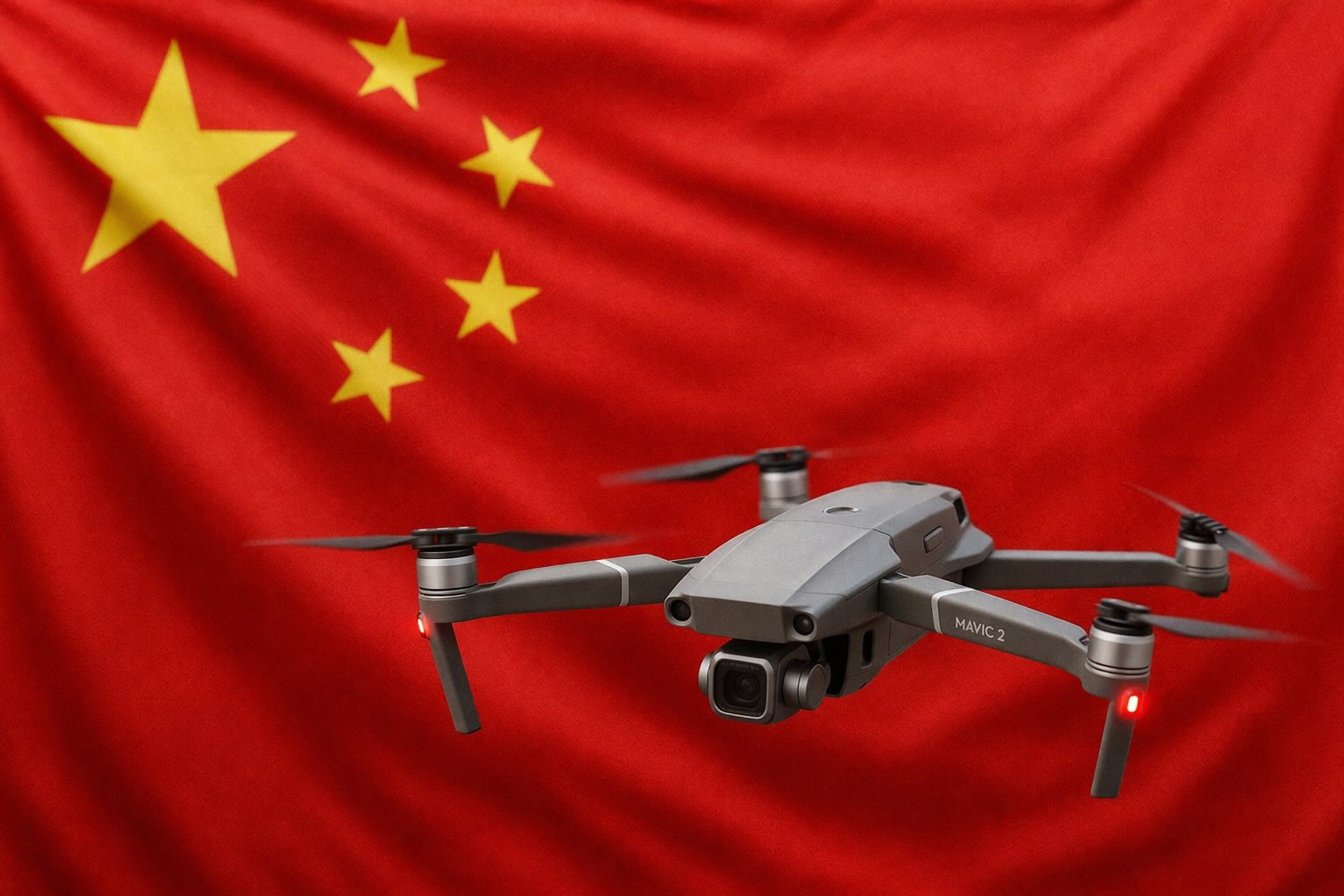
Yet from 1 May 2026, the same country will place far tighter controls on the use of drones at home, in a move that carries significance well beyond hobby flying or consumer electronics.
Under new mandatory national standards, civil drones in China will have to be registered using the real identity of their owners, and unmanned aircraft systems will be required to transmit identification and operational data continuously. Chinese state reporting says the data stream will include identification, location, speed and status information from power-on through the entire flight, giving authorities real-time visibility over operations. The standards were approved by the State Administration for Market Regulation and are due to take effect on 1 May 2026.
Officially, the policy is being framed as a response to rapid growth in the sector and the need for more orderly management of low-altitude airspace. The Civil Aviation Administration of China said the country had more than two million registered drones by the end of 2024, nearly 20,000 operators holding UAV operation certificates, and more than 26 million cumulative annual flight hours. In that context, Beijing argues that tighter registration, remote identification and activation rules are necessary if drones are to be integrated into what China calls the “low-altitude economy”, including logistics, agricultural work and infrastructure inspection.
But the strategic importance of the decision lies in the contradiction it exposes. China wants the economic benefits of mass drone adoption while also seeking near-complete state oversight of who flies what, where and when. That tension is especially visible in Beijing, where local authorities have adopted far stricter rules than the new national baseline. Municipal regulations approved in late March and also taking effect on 1 May require approval for all outdoor drone flights across the capital’s administrative area. Reporting from China Daily and the South China Morning Post says drones and designated core components may not be sold, leased or brought into Beijing without official approval, while storage is limited to no more than three drones or ten core components at one location within the area inside the sixth ring road.
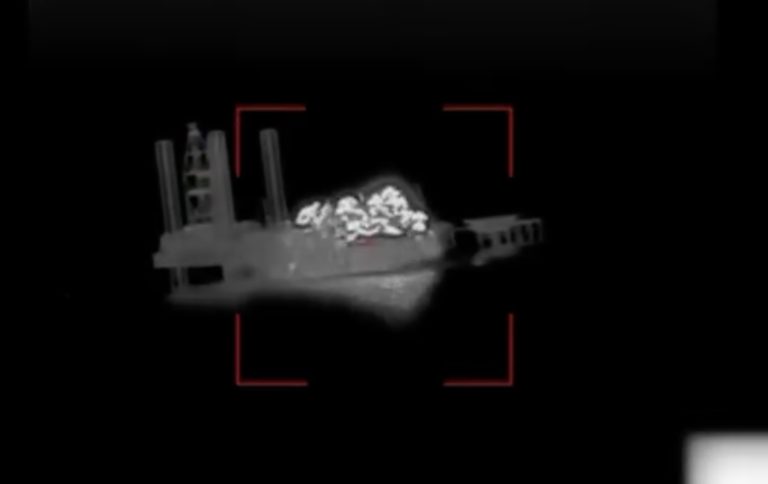
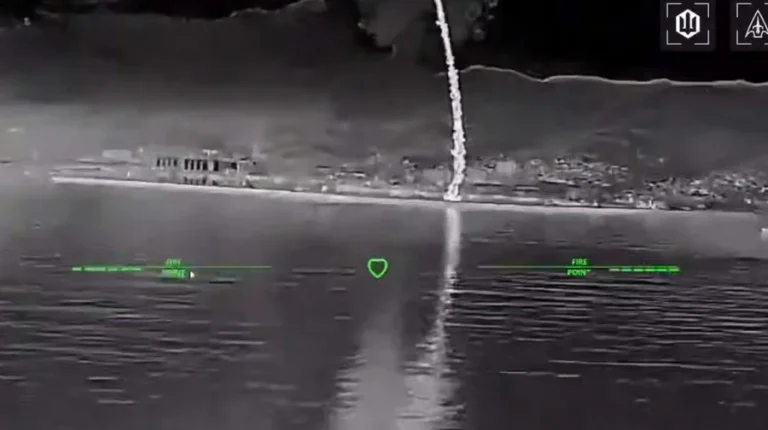
This is not simply a technical aviation matter. It reflects the growing strategic sensitivity of drones as dual-use systems. Civilian drones are now inseparable from questions of surveillance, critical infrastructure protection, internal security and wartime adaptation. In Ukraine, commercially available drones have been repurposed at scale for reconnaissance, targeting and attack. That experience has reinforced a lesson now visible across governments: systems sold for civilian use can become intelligence assets or battlefield tools with minimal modification. China’s tightening therefore appears to be part of a broader effort to ensure that private drone ownership does not create uncontrolled gaps in state security architecture. That is an inference from the scope of the rules and the security language used around them, rather than an explicit admission by Beijing.
The commercial consequences may be substantial. Reuters reported in December that China had already revised its aviation law to regulate drones more tightly, requiring broader certification and a more formal legal framework for design, production, import, maintenance and operation. The cumulative direction is unmistakable: what began as a booming consumer and commercial technology sector is being folded into a much denser regime of state supervision. For retailers and smaller operators, that means lower flexibility, higher compliance costs and a weaker recreational market. For consumers, it means that owning a drone in the world’s largest drone-producing country will increasingly resemble participation in a controlled aviation system rather than a straightforward retail purchase.
There is also a geopolitical dimension. Chinese manufacturers, above all DJI, have become central to global drone supply chains, even as Western governments have raised concerns about data security, procurement dependence and strategic vulnerability. China’s domestic crackdown does not directly alter its export role, but it sharpens international scrutiny of how Beijing treats the technology it sells abroad. A state that insists on real-time data transmission, identity-linked registration and severe urban restrictions at home is implicitly acknowledging that drones are not ordinary consumer devices. They are networked, surveillant and potentially militarised systems operating in contested regulatory space.
That is why China’s new policy matters internationally. It is not merely about hobbyists losing access to city skies. It is about a major power recalibrating its relationship with a technology that sits at the intersection of commerce, control and conflict. China remains committed to expanding its low-altitude economy. But before doing so, it is making clear that expansion will take place on terms defined by the state, not by the market.