

What is unfolding in 2026 is a structural shift—one driven by geopolitical fragmentation, technological acceleration, and a renewed emphasis on national security. For investors, this environment has created a rare combination of visibility, growth, and strategic relevance.
At the centre of this transformation sits a group of companies increasingly described by analysts as “must-own” defence stocks—the core tier of the market, defined by stability, scale, and deep integration into national defence architectures. These firms are not simply beneficiaries of rising budgets; they are the backbone of the modern military-industrial ecosystem.
Understanding their role—and how they interact with faster-growing and more specialised players—is key to navigating what is rapidly becoming one of the most consequential investment themes of the decade.
In previous cycles, defence stocks were often treated as defensive plays—reliable but lacking in dynamism. That perception has shifted. Today’s core contractors combine predictable revenues with exposure to some of the fastest-growing segments of military spending, particularly missile defence, advanced aircraft, and space systems.
Companies such as Lockheed Martin, RTX Corporation, Northrop Grumman, and General Dynamics dominate this tier. Their defining characteristic is not just size, but the nature of their contracts.
These firms operate within long-term programmes that often span decades. Whether it is next-generation fighter jets, nuclear deterrent systems, or integrated missile defence networks, the scale and complexity of these projects create exceptionally high barriers to entry. Once embedded, these contractors become indispensable.
For investors, this translates into unusual earnings visibility. Backlogs stretch years into the future, insulating revenues from short-term economic fluctuations. In a market environment defined by uncertainty, that predictability carries a premium.
Yet stability is only part of the story. These companies are also at the forefront of areas experiencing the fastest demand growth. The proliferation of drones and long-range missile threats has forced governments to prioritise air and missile defence systems, an area where core contractors have unmatched capabilities.
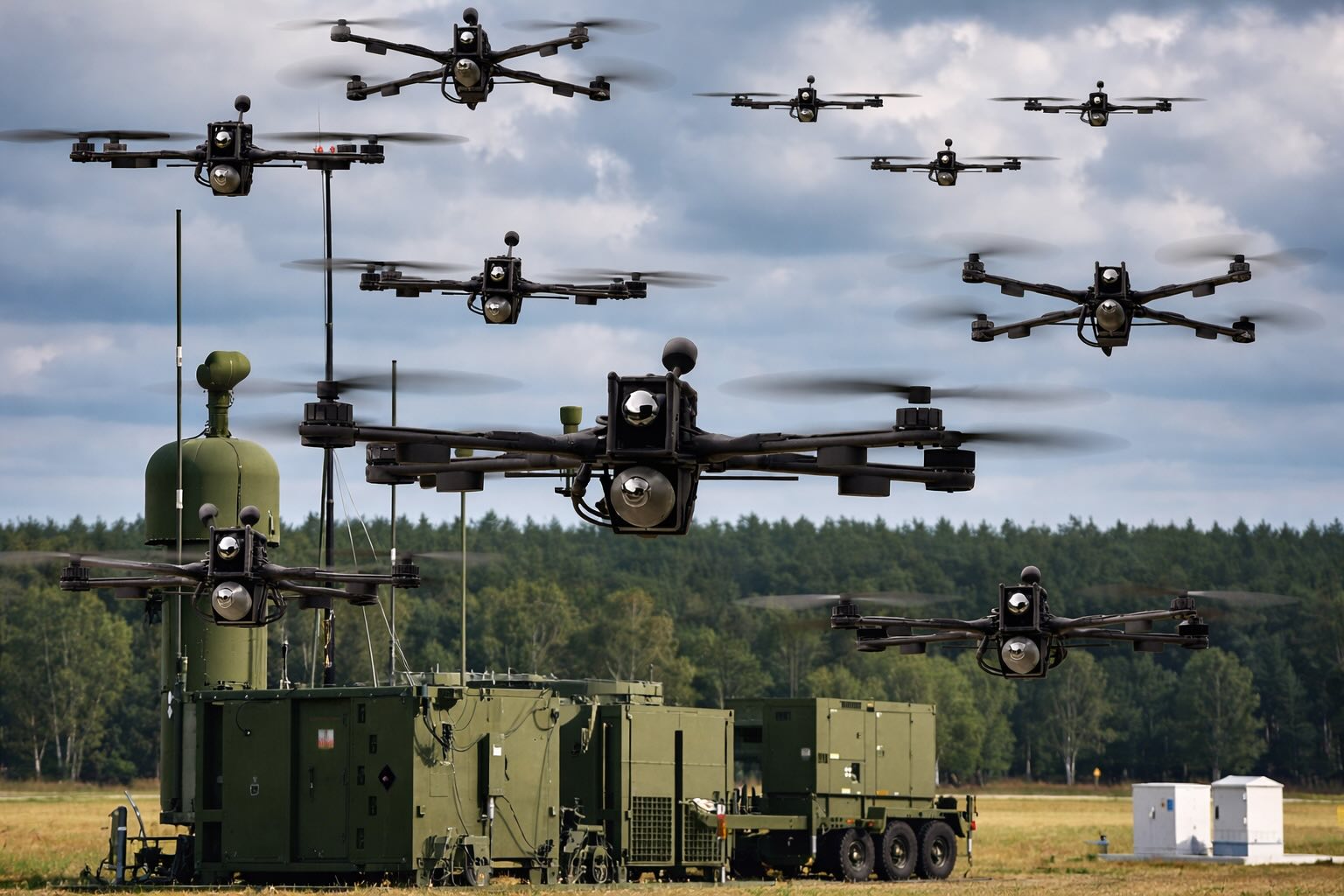
Recent conflicts have reshaped military thinking. Precision strikes, drone swarms, and hypersonic weapons have exposed vulnerabilities in traditional defence systems. As a result, governments are rapidly expanding investments in interception technologies, radar systems, and integrated defence networks.
This shift disproportionately benefits the core tier. Companies like RTX Corporation, with its deep involvement in missile defence systems, and Lockheed Martin, a leader in advanced interceptors and combat aircraft, are seeing sustained demand across multiple regions.
The implications are significant. Unlike conventional procurement cycles, which can be subject to delays and political negotiation, missile defence is increasingly viewed as an urgent necessity. This creates a pipeline of contracts that is both large and resilient.
In parallel, the expansion of space-based defence capabilities and the modernisation of nuclear arsenals reinforce long-term growth prospects. These are not discretionary investments; they are embedded in national security doctrines, ensuring continued funding regardless of economic conditions.
While the US-based core tier provides stability, the most dynamic growth is currently unfolding in Europe. Years of underinvestment have given way to a rapid rearmament effort, triggered by the war in Ukraine and broader concerns about regional security.
European defence firms are experiencing a surge in demand, particularly in areas such as artillery, ammunition, and land systems. Companies like BAE Systems, Rheinmetall, and Thales Group are at the forefront of this expansion.
The contrast with the core tier is instructive. Whereas US contractors offer scale and predictability, European firms provide growth and momentum. Their order books are expanding rapidly, driven by both domestic spending and exports.
However, this growth comes with increased volatility. Production bottlenecks, regulatory complexity, and political decision-making can all influence performance. For investors, the opportunity lies in balancing this higher-risk, higher-reward segment with the stability of core holdings.
Beyond the established giants and European champions lies a third layer of the defence market—smaller, specialised companies focused on emerging technologies. These firms are reshaping the battlefield through innovation, particularly in areas such as drones, electronic warfare, and advanced communications.
Companies like L3Harris Technologies and AeroVironment exemplify this trend. Their products are often deployed in rapidly evolving operational environments, allowing them to adapt and scale more quickly than traditional contractors.
This segment represents the highest upside potential, but also the greatest uncertainty. Technological advantages can be fleeting, and competition is intense. As a result, these stocks are best viewed as complementary to a broader portfolio anchored by core holdings.
In this evolving landscape, the importance of the “must-own” core tier becomes increasingly clear. These companies provide a foundation upon which more speculative investments can be built.
Their advantages extend beyond financial metrics. Core contractors benefit from:
Perhaps most importantly, they serve as gatekeepers of large-scale defence programmes. Smaller firms may innovate, but it is often the core contractors that integrate these innovations into operational systems.
For investors, this creates a hierarchy of opportunity. While growth and innovation attract attention, it is the core tier that underpins the entire ecosystem.
Several forces are converging to sustain the current defence investment cycle.
First, global military spending is rising at an unprecedented pace. Governments are committing to long-term increases, driven by a reassessment of strategic risks. This is not a temporary surge, but a structural shift.
Second, the nature of warfare is changing. The emphasis on resilience, redundancy, and technological superiority is driving demand across multiple segments. From missile defence to cyber capabilities, the scope of defence spending is expanding.
Third, industrial policy is playing a more active role. Governments are increasingly focused on securing domestic supply chains and reducing dependence on external suppliers. This benefits both core contractors and regional players.
Finally, geopolitical tensions show little sign of easing. As long as uncertainty persists, defence spending is likely to remain elevated.
Despite the strong outlook, investors must remain aware of potential risks.
Valuations have risen significantly, reflecting high expectations for future growth. Any disruption—whether due to political changes, budget constraints, or execution challenges—could trigger corrections.
Supply chain constraints also pose a challenge. Scaling production to meet demand is complex, particularly in industries that rely on specialised components and skilled labour.
Political risk remains ever-present. Defence spending is ultimately determined by governments, and shifts in policy can have far-reaching implications.
Given these dynamics, a balanced approach is essential. The most effective strategies typically combine exposure across all three tiers:
This structure reflects the realities of the current market: a blend of predictability, expansion, and disruption.
The defence sector in 2026 is defined by contrasts. Stability coexists with rapid change; long-term contracts underpin short-term volatility; established giants operate alongside agile innovators.
At the heart of this landscape lies the core tier of “must-own” defence stocks. These companies provide the stability and scale that anchor the sector, even as new technologies and geopolitical realities reshape its trajectory.
For investors, the message is clear. The defence boom is not a fleeting phenomenon—it is a structural shift with years, perhaps decades, to run. Navigating it successfully requires more than identifying growth opportunities; it demands an understanding of how the entire ecosystem fits together.
In that ecosystem, the core tier remains indispensable—not just as a foundation for portfolios, but as the engine driving the modern defence industry.



Rutte uses Washington speech to press allies on spending and defence production