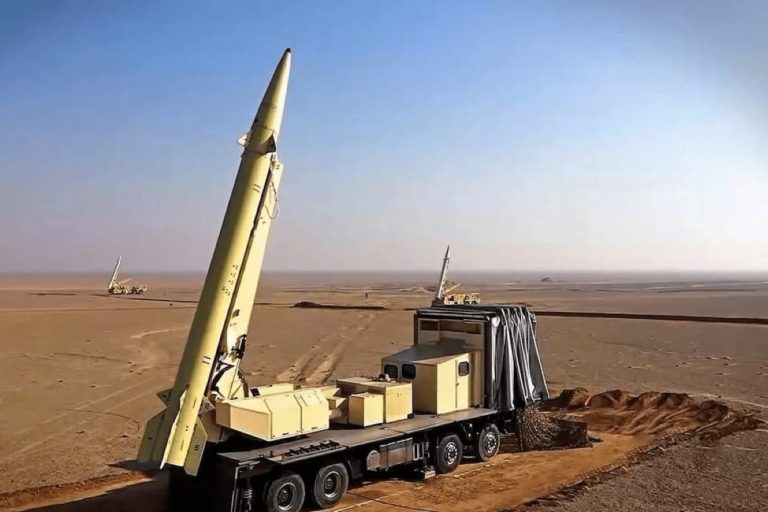
New START, signed in 2010 and extended once in 2021, set limits on deployed strategic warheads and launchers, including a ceiling of 1,550 deployed warheads and 700 deployed launchers for each side. With the treaty now expired, both states are legally free to increase the number of warheads carried on existing missiles and to adjust deployment patterns, even if industrial and operational constraints mean rapid expansion is not automatic.
In Washington, President Donald Trump has argued that any successor arrangement should be “better” than New START and should involve China, reflecting a long-standing US concern that Beijing’s growing nuclear forces are not covered by existing US–Russia frameworks. Reporting this week indicated that the administration is considering a new pact rather than a straight continuation of the old treaty’s terms, because the formal one-time extension provision was already used in 2021.
In Moscow, Yuri Ushakov, President Vladimir Putin’s foreign policy aide, said Russia had previously proposed that both sides voluntarily continue to observe New START’s central numerical limits for an additional year, but that the United States had not provided an official response.
The distinction matters. Under the original treaty, the parties could extend it once by mutual agreement. That mechanism has now been exhausted, so any continued observance would require either a new agreement or a political commitment to behave as if the caps still applied.
Arms-control specialists argue that the treaty’s value lay not only in the numerical ceilings but also in the predictability it created. Without a binding framework, the two nuclear superpowers lose the last established set of rules governing deployed strategic forces, and, with it, an element of transparency. Analysts at the Bulletin of the Atomic Scientists said New START’s lapse leaves no legally binding restraints on US and Russian nuclear arsenals for the first time in decades.
A central issue, raised repeatedly in expert debate, is the uneven visibility of each side’s broader warhead holdings and readiness. The United States publishes substantial information on force structure and has long participated in data exchanges and inspections under arms-control regimes. Russia’s wider stockpile, by contrast, is harder to assess from open sources, particularly after Moscow suspended participation in elements of New START implementation in 2023, even while the treaty remained formally in force until its expiry.
Beyond accounting, there is the question of the condition of nuclear warheads and the cost of keeping them safe. Warheads and their components age; maintaining them requires periodic refurbishment, and retiring them requires specialised dismantlement and secure handling of fissile material. This is one reason limits have historically been accompanied by verification, inspections and agreed procedures. In the 1990s and 2000s, cooperative threat-reduction initiatives provided a channel for funding and technical support for dismantlement and storage, creating a precedent for external assistance in managing nuclear risk—though that era of cooperation has long since receded.
From this perspective, a simple political pledge to “continue observing the limits” would not resolve the underlying pressures. If Russia faces fiscal constraints on large-scale modernisation and dismantlement, a temporary continuation of limits could buy time while avoiding the immediate political costs of a visible build-up. For the United States, continued restraint could be presented as risk management while Washington seeks a broader framework that also addresses China, and possibly the nuclear forces of other states that Moscow increasingly cites in its public arguments.
Whether such issues can be handled alongside the Ukraine-related diplomacy under way in the Gulf is less clear. Negotiations in Abu Dhabi this week were primarily framed as peace talks involving Ukraine and Russia, with the United States mediating, and they produced agreement on a prisoner exchange and plans for further engagement.
However, the timing has encouraged overlap. Reuters reported that US and Russian officials were close to a deal to continue observing New START limits beyond the expiry date, with negotiations taking place in Abu Dhabi, even if a final decision had not been confirmed. Separately, the United States said it had agreed with Russia to re-establish high-level military-to-military dialogue following the Abu Dhabi discussions, a step presented as reducing the risk of miscalculation.
The immediate question is whether Washington and Moscow can produce a credible, durable substitute for New START—either through a new executive arrangement, a broader treaty process, or a time-limited political commitment backed by practical confidence-building measures. If they cannot, the post–New START environment is likely to be characterised by looser constraints, fewer routine channels for verification, and a greater premium on crisis communications to prevent escalation.