

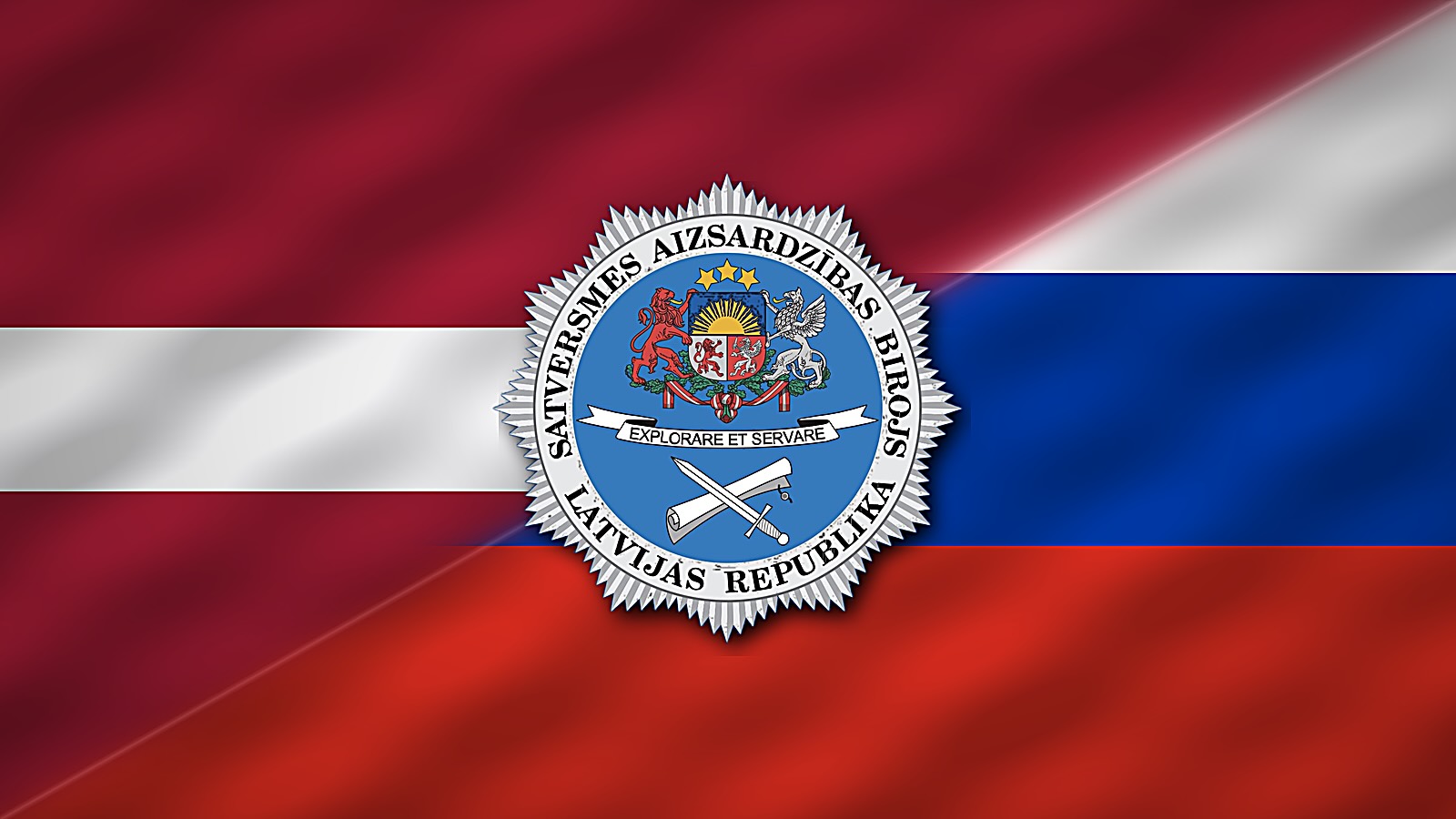
The warning is contained in the unclassified part of SAB’s annual report for 2025, issued on 26 January 2026. SAB says the Kremlin’s view of the West has hardened since 2022 and is shaped by assumptions “detached from reality”, a distorted threat picture and the growing isolation of Russia’s ruling elite.
SAB states that “Russia’s perception of Latvia is becoming increasingly similar to the one Russia had of Ukraine before the war”. It adds that, while there is “no direct military threat … at the moment”, “a number of signs indicate potential long-term plans”. According to the service, Russian officials are increasingly influenced by the regime’s own narratives about Latvia.
Those narratives, SAB says, present Latvia as “russophobic”, accuse it of oppressing Russian speakers, and depict the country as a “Nazi state”, a “puppet” of Britain and the United States, and a “failed state”. Before 2022, the report notes, Moscow promoted similar themes about Ukraine; it now portrays all three Baltic states in a comparable way.
SAB argues that Russia’s main strategic effort remains focused on the war against Ukraine and on weakening Western cohesion, but that Moscow sees the confrontation as global and ideological. SAB says Russia continues to use and adapt existing influence tools, while developing new hybrid instruments, including information operations supported by artificial intelligence to tailor content to specific audiences.
Latvian Public Media reported that SAB expects legal pressure to feature alongside propaganda, including the use of international legal mechanisms to discredit Latvia and to pursue claims linked to alleged discrimination against Russian speakers. The same report quoted SAB’s director, Egils Zviedris, saying the threat from Russia would remain high and warning that Russia would try to influence Latvia’s parliamentary elections this year.
Latvia’s security calculation is defined by the distinction between a direct military attack and activity below that threshold. As a NATO member, Latvia is covered by the Alliance’s collective-defence commitment. NATO and Canada say the Canada-led multinational presence in Latvia is being developed into a brigade, with Canada aiming to complete the full implementation of persistently deployed brigade capabilities by 2026, with up to around 2,200 Canadian troops based at Camp Ādaži.
Riga has increased defence spending alongside these posture changes. Latvia’s Ministry of Defence says the 2025 defence budget amounts to 3.8 per cent of GDP, while the Ministry of Finance has said defence spending under NATO’s definition is expected to reach 4.9 per cent of GDP in 2026.
SAB’s focus on Russian intent is linked to earlier efforts by Moscow to reshape Europe’s security framework. In December 2021 Russia published draft agreements calling for NATO to halt enlargement, including to Ukraine, and to refrain from deploying forces and weapons in states that joined after 1997, a list that included Latvia, Lithuania and Estonia. NATO and the United States rejected those demands in January 2022.
The report’s emphasis on hybrid instruments aligns with wider European assessments. Europol’s 2025 EU Serious and Organised Crime Threat Assessment notes that hostile actors can exploit criminal networks and proxies to retain deniability, including for state-linked hostile activity. For Baltic states, the operational concern is that influence activity, sabotage and legal pressure can be used to test cohesion without a conventional cross-border assault.
Reuters reported on 27 January that Denmark and Greenland’s leaders were seeking European backing after President Donald Trump said the United States would assume control over Greenland, a move Denmark and Greenland reject, adding to debate about US priorities within NATO.
SAB does not offer a timetable for any future escalation and says Latvia is not Russia’s priority theatre. Its central argument is that Russia is hardening its political framing of Latvia, and that this increases the importance of deterrence and resilience, particularly during an election year, if Moscow seeks to apply pressure through provocation, subversion or actions designed to probe NATO’s cohesion.



If Russia Wins: A Scenario and the Logic of the West’s Managed Defeat