

In reality, it looks far more like a familiar European reflex: moral posturing at minimal cost, underwritten—yet again—by the hard power of the United States.
According to Reuters, Madrid has not only denied U.S. forces access to jointly operated bases, but has now barred overflights entirely for aircraft linked to the Iran campaign. The practical consequence is simple: American planes must take longer, more complex routes to reach the Middle East. The political message, however, is louder—Spain wants distance from Washington’s war.
But distance is a luxury afforded by geography—and by history. Since 1945, the United States has shouldered the overwhelming burden of Europe’s defence. From the ashes of World War II through the Cold War and into the present day, it has been American money, American matériel, and American lives that have anchored NATO’s deterrent. European nations, Spain included, have enjoyed the dividends: security without sacrifice, influence without responsibility.
Spain’s posture today is particularly rich in irony. A NATO member that has benefited for decades from the alliance’s security umbrella—an umbrella overwhelmingly financed by U.S. taxpayers—it now chooses to obstruct the very power that makes that umbrella possible.
Let’s be clear: Spain is not Switzerland. It is not a neutral state perched outside the Western security architecture. It is embedded within it. Spanish bases such as Rota and Morón have long served as critical logistical hubs for American operations, not as acts of charity but as part of a shared defence system. Yet when that system is tested, Madrid retreats into legalism and sanctimony.
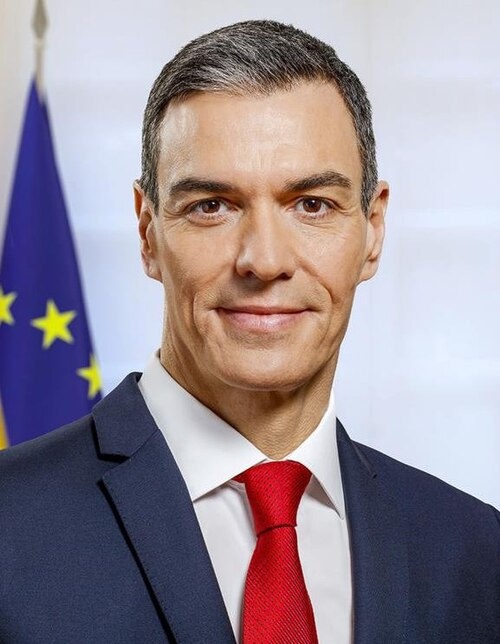
Prime Minister Pedro Sánchez has been among the most vocal critics of U.S. and Israeli actions, branding them “reckless” and “illegal.” This rhetorical flourish may play well domestically, but it sits uneasily with Spain’s strategic reality. One cannot simultaneously rely on American power for national security while denouncing its use abroad as illegitimate.
Indeed, Spain’s stance has gone beyond rhetoric. It previously forced U.S. aircraft to leave Spanish bases and has now extended its opposition to airspace denial, further complicating NATO logistics. This is not merely symbolic dissent; it is operational obstruction.
Yet the costs of this obstruction will not fall evenly. The United States will adapt—as it always does—rerouting aircraft, repositioning assets, and recalibrating alliances. The burden, once again, will be absorbed by Washington. Europe, meanwhile, continues to benefit from the strategic stability that American power provides, even as some of its leaders publicly disavow it.
This asymmetry has long been the dirty secret of NATO. For decades, successive U.S. administrations have complained—often politely, sometimes bluntly—that European allies underinvest in defence while overindulging in criticism. The numbers tell the story: the United States consistently spends far more on defence than its European counterparts, both in absolute terms and as a share of GDP. Spain, notably, has lagged well behind NATO’s 2% spending benchmark for years.
And yet, when a crisis erupts, it is Washington that is expected to act—and, increasingly, to absorb the political fallout as well.
Spain’s current position is being framed as a defence of international law. But international law, like international order, ultimately depends on power for its enforcement. It is easy to invoke legal principles when others bear the cost of upholding them. It is rather harder to do so when one must commit resources, accept risk, and face consequences.
There is also a deeper question of credibility. NATO is, at its core, a collective defence pact. Its strength lies not merely in its military capabilities but in the understanding that its members will stand together in times of crisis. When a member state actively impedes the operations of the alliance’s principal military power, that principle is inevitably strained.
To be fair, Spain is not alone in its ambivalence. Across Europe, there is a persistent tendency to view American power as both indispensable and distasteful: something to be relied upon in extremis but criticised in principle. This duality has been sustainable only because the United States has been willing—grudgingly, at times—to continue bearing the burden.
But that patience is not infinite.
Already, the response from Washington has included threats of trade retaliation, a reminder that alliances are not cost-free. If Europe wishes to assert strategic autonomy, it must be prepared to pay for it—not merely in words, but in capabilities and commitments.
Spain’s decision, then, is more than a diplomatic spat. It is a microcosm of a larger transatlantic imbalance: a Europe that enjoys the protection of American power while increasingly distancing itself from its application.
As for Sánchez, his government’s stance risks reducing Spain to what might politely be called a spectator on the world stage—loud in commentary, limited in consequence. It is one thing to oppose a war; it is another to do so from the comfortable shelter of an security architecture one neither leads nor adequately funds.
In the end, the uncomfortable truth is this: Europe’s security still rests, to a remarkable degree, on American shoulders. Until that changes, gestures like Spain’s airspace closure will carry a faint but unmistakable note of hypocrisy.
‘This Is No Time for Complacency’: Mark Rutte’s Stark NATO Message to Europe


Kellogg questions NATO and floats new alliance including Ukraine