The United Kingdom and the European Union appear to be moving back towards an agreement on British participation in the EU’s SAFE defence fund, reopening a politically sensitive file that goes to the heart of the wider effort to rebuild practical cooperation in security and defence. European Council President António Costa said on Tuesday that he was confident a deal would be reached, even if it might take time.
SAFE: Europe’s €150bn defence loan fund is a desperate bid to paper over years of military neglect
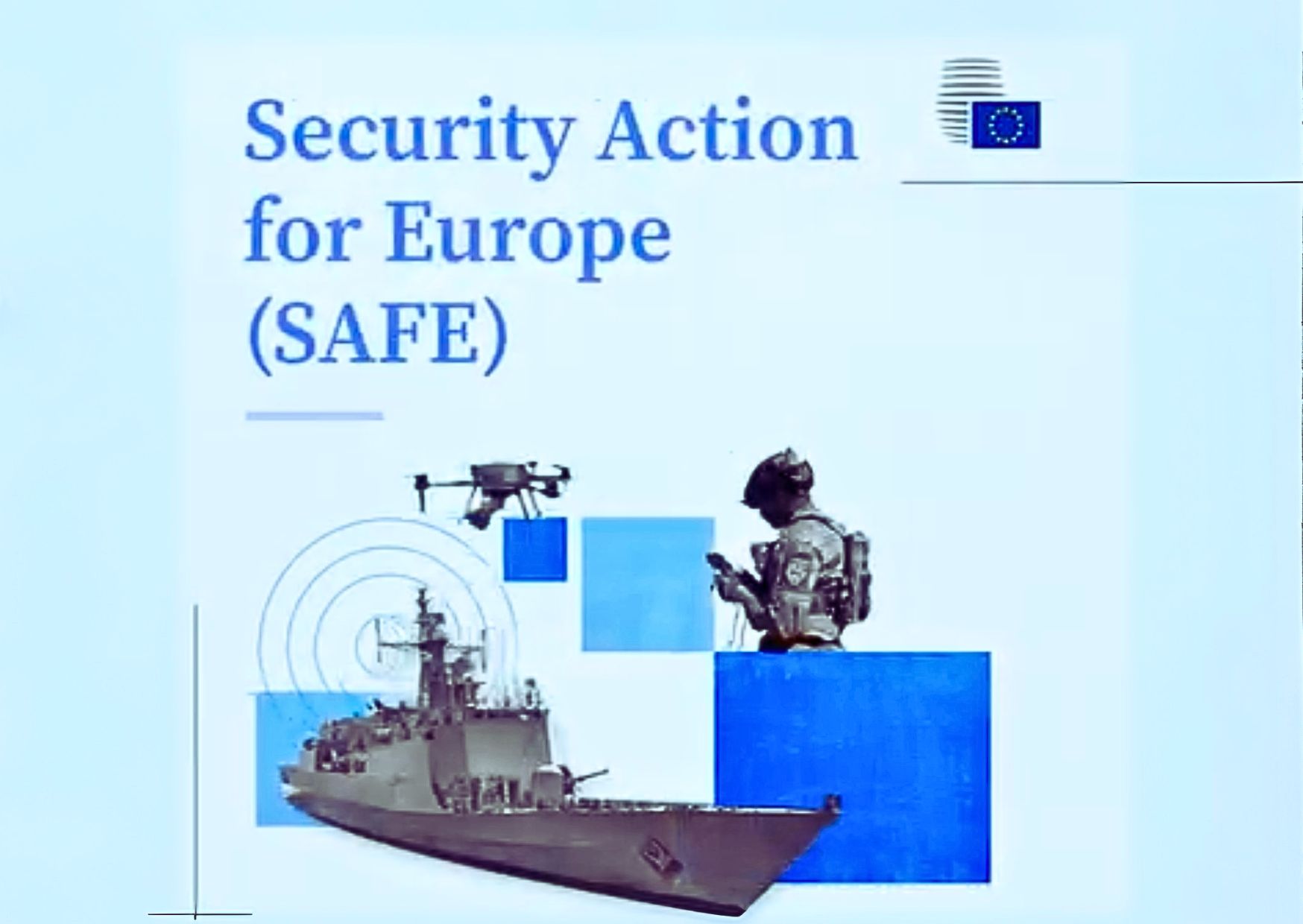
SAFE, or Security Action for Europe, is the EU’s €150 billion defence-financing instrument. It provides competitively priced, long-maturity loans to member states for urgent defence investment, with the aim of scaling up procurement and strengthening the European defence industrial base. Commission and Council material present SAFE as one of the central financial pillars of Europe’s current defence build-up.
Costa’s comments matter because the British track had previously faltered. Negotiations collapsed in November after London declined to contribute financially. The question has remained politically significant ever since, because participation would affect not only intergovernmental cooperation but also the access conditions under which British industry could take part in projects financed under the EU framework.
At present, British defence firms can still participate under third-country rules, but only within limits. British companies are currently able to engage under those terms, with up to 35% of each project’s value. That leaves a clear difference between limited access and a fuller political agreement that would bring the UK closer to the core of the scheme.
The wider context has changed since the earlier breakdown. Costa linked the improving atmosphere to the broader improvement in UK-EU relations and to Britain’s role in joint defence initiatives, including the Franco-British-led “Coalition of the Willing” in support of Ukraine. That reflects a wider pattern in which practical security cooperation has moved faster than some other parts of the post-Brexit relationship.
For Brussels, the issue is not simply whether the UK joins one funding mechanism. SAFE was designed to encourage common procurement, reduce fragmentation and help direct higher European defence spending towards coordinated industrial output. The Commission says the instrument is meant to support urgent and large-scale procurement efforts while improving predictability and interoperability. In that sense, British participation would be important not only politically but also industrially, particularly in areas where UK companies remain significant players in the European supply chain.
The Council’s defence-readiness timeline also shows that the EU has already authorised negotiations with the UK and Canada on their participation in SAFE, indicating that the legal and political groundwork for such arrangements is already part of the bloc’s planning. That does not guarantee a deal, but it does show that the UK question is being treated as a live policy track rather than a speculative discussion.
The timing is also notable because member states are increasingly treating SAFE as the main available EU-level vehicle for near-term defence financing. Reuters reported separately that Poland is prioritising SAFE as it works through its defence-investment plans, even while taking part in discussions on other financing models. That underlines the extent to which SAFE has moved from concept to operational instrument in the European debate.
For the UK, the calculation is likely to remain pragmatic. London has been cautious about any arrangement that could imply a financial obligation or a political concession beyond what it considers consistent with national interest. Yet the economic and industrial case for closer participation is difficult to ignore. A more structured role in SAFE would give Britain a clearer route into collaborative procurement at a time when both sides are under pressure to raise output, accelerate delivery and avoid duplication.
For the EU, the case is similarly practical. Europe is trying to spend more on defence, but it is also trying to spend more effectively. That requires not only more money, but more coordination across production, procurement and standards. Bringing the UK closer to the SAFE framework would not resolve all of those questions, but it would reduce one obvious source of industrial and political fragmentation at a moment when both are increasingly costly.
SAFE is no longer an abstract concept. It is part of the EU’s functioning defence architecture, and the question of whether the UK can find its way into that system has become a practical test of how far the post-Brexit reset can reach when hard security interests are involved.
First published on eutoday.net.