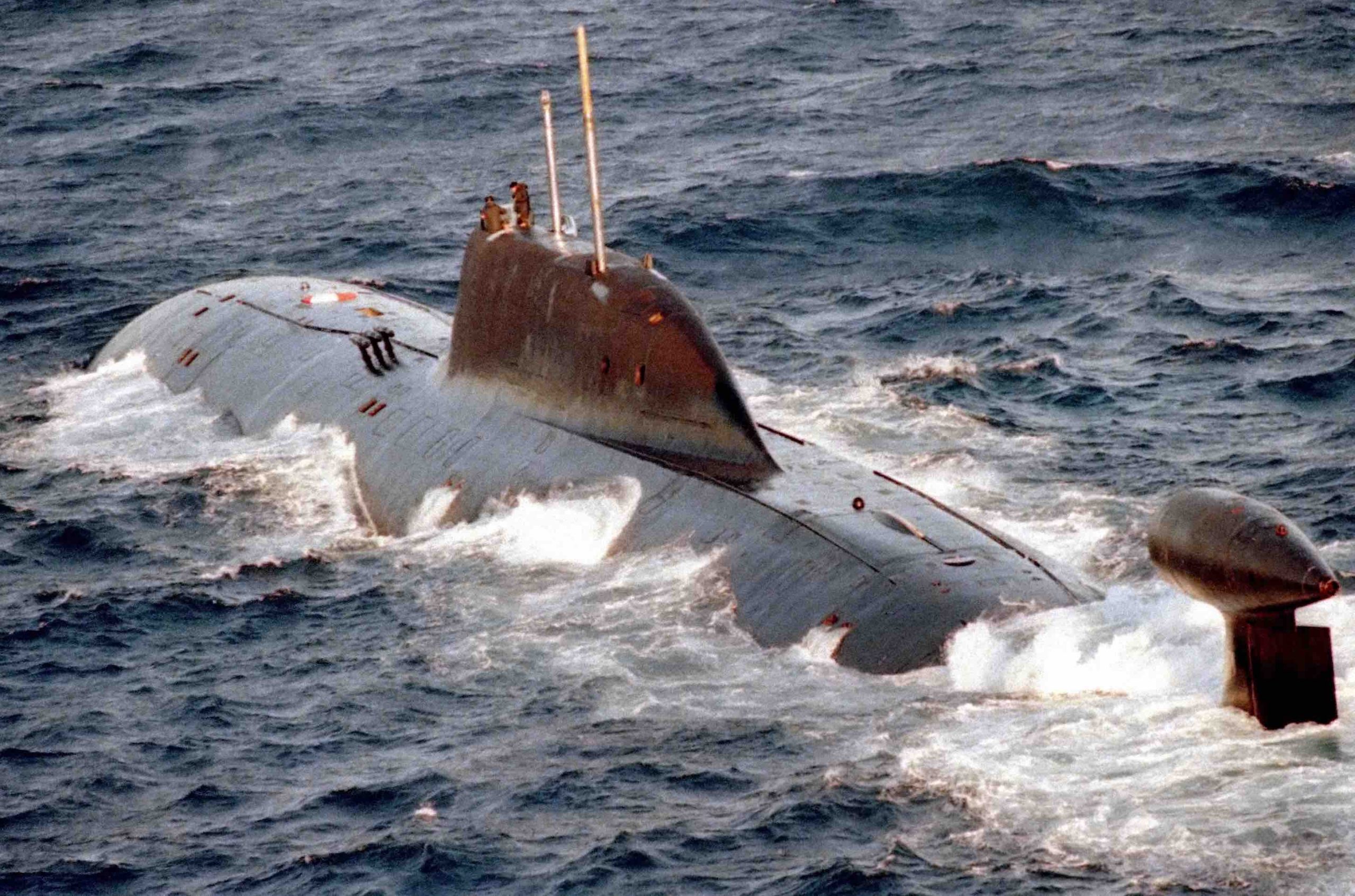
Britain has publicly disclosed details of what it says was a recent covert Russian submarine operation in and around UK waters, using the announcement to underline the growing importance of seabed security and the vulnerability of the undersea infrastructure on which modern economies depend. In a Ministry of Defence statement published on 9 April, the government said British forces, working with allies including Norway, tracked a Russian Akula-class submarine and two specialist units linked to Russia’s Main Directorate of Deep-Sea Research, known as GUGI, before the vessels eventually returned north.
According to the government account, the operation began several weeks ago when British aircraft and warships identified a Russian attack submarine entering international waters in the High North. British personnel then concluded that the submarine was acting as a distraction while other Russian undersea units conducted activity near critical underwater infrastructure elsewhere. The UK said it responded with what it described as a campaign of overt action, designed to make clear that the Russian vessels had been identified and were no longer operating covertly.
The Defence Secretary’s 9 April speech added more operational detail. John Healey said the operation lasted more than a month, involved around 500 British personnel, and included more than 450 flying hours by RAF aircraft. He said a Royal Navy warship and RAF P8 maritime patrol aircraft, operating alongside allied assets, monitored the Russian submarines around the clock. He also said the frigate involved covered several thousand nautical miles during the response.
The official version presented by London is that the Russian mission failed. The government said both the GUGI-linked units and the Akula-class submarine retreated home without completing their operation in secrecy. That language is politically significant. It suggests that the public disclosure itself is part of the response, not merely a retrospective account. By releasing declassified imagery and setting out some of the operational outline, London appears to be signalling both awareness and readiness, while seeking to deter any further activity directed at undersea cables and pipelines.
The focus on GUGI is also notable. In both the government release and Healey’s speech, GUGI is described as a specialist Russian military capability intended to survey underwater infrastructure in peacetime and, in conflict, to damage or destroy it. The government drew a direct line between this operation and earlier concern over the Russian vessel Yantar, which it says tested British defences near UK waters last year. London further stated that it has seen a 30 per cent increase over the past two years in Russian vessels threatening UK waters.
That matters because the infrastructure in question is not peripheral. The Ministry of Defence said more than 99 per cent of international data traffic travels through subsea fibre-optic cables. Healey added that the seabed network is central to Britain’s economy and security, referring not only to telecoms and data traffic but also to pipelines and energy supply. The government’s position is that these systems are resilient, but increasingly exposed to hostile probing and hybrid pressure in the North Atlantic and High North.
The disclosure also sits within a wider defence policy frame. The government used the announcement to highlight an extra £100 million for the UK’s P8 submarine-hunting aircraft and to point to the Atlantic Bastion programme, which is intended to combine warships, aircraft, autonomous systems and advanced sensors in a strengthened anti-submarine and seabed-protection posture. Healey also linked the episode to a broader rise in Russian activity and to the conclusions of the Strategic Defence Review, which he said identifies growing Russian aggression across multiple domains.
Operationally, the case illustrates a point that has become more central to European defence planning: some of the most serious threats to national security are difficult to see, often deniable, and directed at enabling systems rather than obvious targets. A submarine or specialist deep-sea vessel does not need to fire a shot to create strategic pressure. The existence of cables, pipelines and offshore networks means maritime surveillance and anti-submarine warfare now overlap more directly with energy security, communications resilience and economic continuity.
For Britain, the timing of the disclosure is deliberate. Healey said the Russian submarine’s activity took place while international attention was focused on the Middle East. The message from London is that the pressure on NATO’s northern flank and in the Atlantic has not eased, even when headlines have shifted elsewhere. By making the operation public, the UK is not only exposing one episode of Russian naval activity. It is also setting out a warning that activity around critical underwater infrastructure is being watched more closely, and that future incidents may be met with a more visible political and military response.
Main Image: US Navy – https://commons.wikimedia.org/w/index.php?curid=284178