It is an act of voluntary strategic disarmament, dressed up as moral rectitude, and accompanied by a bill so eye-watering that even Whitehall’s most seasoned accountants must have blinked in disbelief.
At Westminster on Wednesday 28th January, former Home Secretary Priti Patel laid out the case against Labour’s plan with devastating clarity. She pointed out that the United Kingdom should not be handing £34.7 billion to Mauritius when that money could – and should – be spent strengthening Britain’s armed forces. At a moment when defence budgets are already under strain and threats are multiplying across the globe, the idea that Britain would willingly divert tens of billions of pounds to give away sovereign territory is not merely perverse; it is indefensible.
More serious still is Patel’s warning that the proposed Diego Garcia British Military Base and Indian Ocean Territory Bill breaches the 1966 Exchange of Notes with the United States, which governs the availability of the British Indian Ocean Territory for defence purposes. That agreement is not some dusty relic to be casually overridden; it underpins one of the most important military partnerships on earth. Diego Garcia is a cornerstone of Western power projection in the Indo-Pacific, a region where strategic competition is intensifying by the month. To jeopardise that arrangement for the sake of a hasty political gesture is the height of irresponsibility.
The plan is bad enough in principle. In execution, it borders on farce. Britain would give away a vital defence asset for nothing, only to lease it back at vast ongoing cost. This is not diplomacy; it is masochism. It is the geopolitical equivalent of selling your house, paying the buyer to take it off your hands, and then asking politely if you might rent the spare room for the foreseeable future. One struggles to think of a more spectacular example of negotiating against oneself.
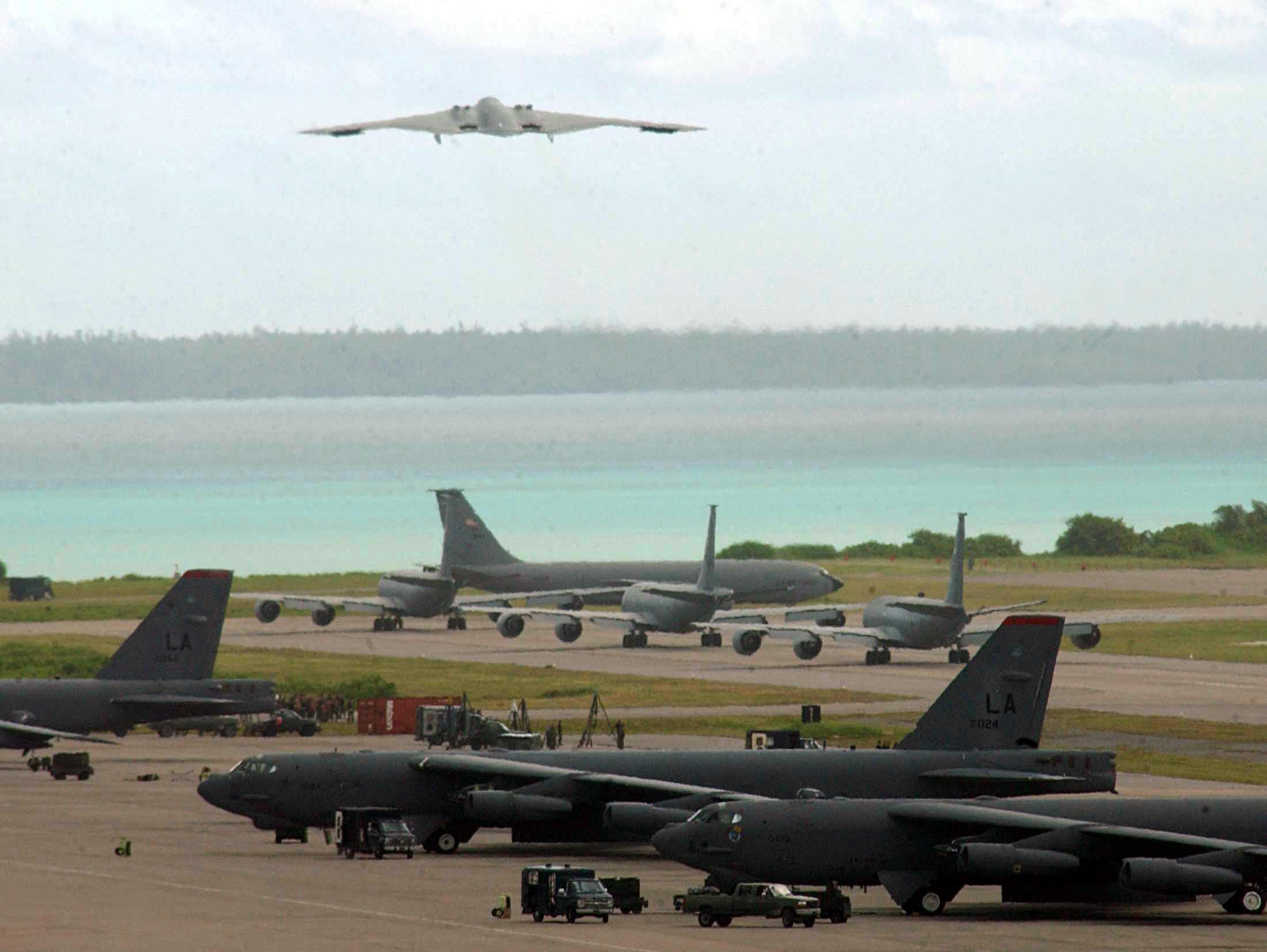
Diego Garcia is not an abstract symbol of colonial legacy. It is an operational military base of immense strategic value, supporting UK and US forces across the Middle East, Africa, and the Indo-Pacific. It has played a central role in deterring hostile states, combating terrorism, and maintaining freedom of navigation. To treat it as a bargaining chip in a moral performance aimed at international applause is to misunderstand the nature of power – and the obligations of government.
Labour’s defenders mutter darkly about international law and historical injustice, but this argument collapses under scrutiny. Even if one accepts the need for dialogue over sovereignty, there is no requirement – legal or moral – to surrender control in a manner that actively undermines Britain’s security. Nor is there any justification for excluding Parliament from the process. As Patel rightly observed, any changes to the 1966 Exchange of Notes must be approved through the Constitutional Reform and Governance Act 2010. The attempt to rush through such a momentous decision without full parliamentary scrutiny speaks volumes.
Then there is the question of the Chagossian people, cynically invoked by Labour whenever criticism grows too loud. Their rights matter. Their voices matter. But it is far from clear that handing the territory to Mauritius best serves their interests. Many Chagossians have long expressed scepticism about Mauritian claims to represent them, and the notion that sovereignty transfer automatically equates to justice is a convenient fiction. It allows ministers to posture morally while avoiding the hard work of genuine, lasting solutions.
Patel was unsparing in her assessment, describing Labour’s £35 billion “Chagos surrender deal” as one that is “falling apart every single day”. She is right. The more the details emerge, the more extraordinary the proposal appears. On international law, defence and security, self-determination, environmental stewardship and basic fiscal responsibility, the government’s case unravels. What remains is an ideological fixation with shedding responsibility, regardless of cost or consequence.
At a time when Britain should be reinforcing alliances and strengthening its military posture, Starmer’s government appears determined to do the opposite. The Indo-Pacific is not a quiet backwater; it is rapidly becoming the central theatre of global competition. Giving away a critical asset in that region sends precisely the wrong signal – not just to allies, but to adversaries watching closely for signs of Western weakness.
Above all, this is a betrayal of the British taxpayer. Tens of billions of pounds will be spent not on ships, aircraft or troops, but on a transfer that leaves Britain poorer, weaker and dependent on the goodwill of others for access to its own former territory. In an era of tight budgets and rising threats, such extravagance is an insult.
There is still time to stop this folly. The Prime Minister could tear up this atrocious surrender treaty, respect Parliament, honour Britain’s defence commitments and put national interest first. However, that would require political courage – and a willingness to admit error. Sadly, neither quality has yet been on display.
If this plan proceeds, it will stand as a monument to a uniquely modern form of failure: the belief that virtue signalling can substitute for strategy, and that giving things away somehow makes a nation stronger. History will be far less forgiving.
Main Image: U.S. Air Force photo by Senior Airman Nathan G. Bevier B-2 bomber takeoff, B-52 bombers on tarmac on Diego Garcia in 2003