

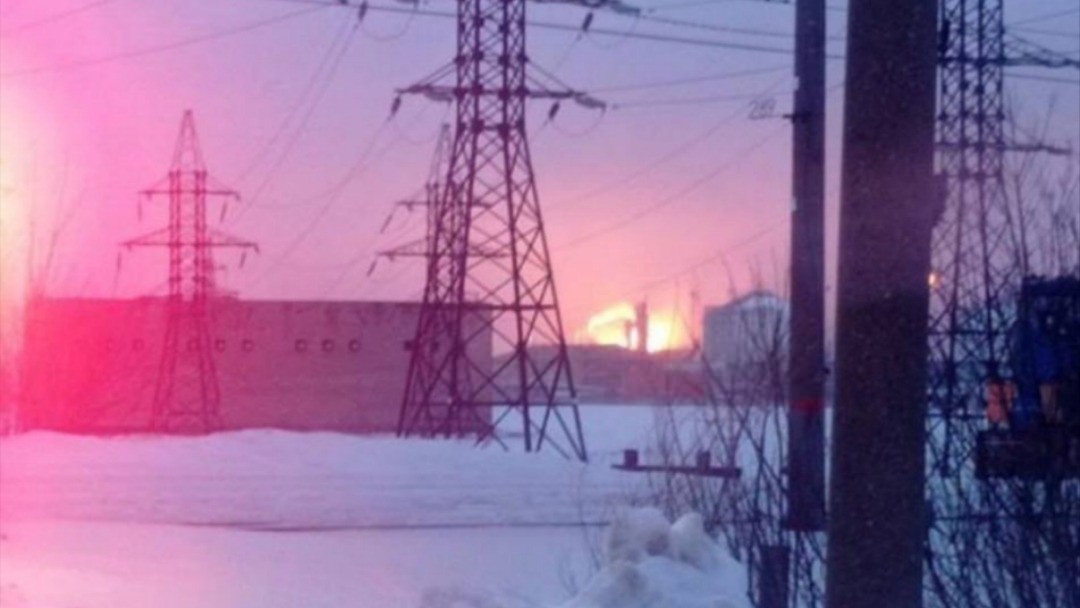
Same-day reports from Ukrainian and independent regional media said the plant caught fire after a UAV attack during a broader strike on Samara region. Samara governor Vyacheslav Fedorishchev confirmed a large-scale drone attack on the region, though early official statements gave limited detail on the specific damage at the site.
KuibyshevAzot is not a weapons factory in the narrow sense. It is, however, a major producer of industrial chemistry with clear dual-use relevance. The company and other public corporate profiles describe it as a leading Russian producer of caprolactam, polyamide-6, ammonia and nitrogen-based chemical products. Those are civilian industrial products, but they also sit within supply chains that matter to military manufacturing, explosives precursors, synthetic materials and other defence-related production processes.
That is what makes the strike strategically notable. The war has moved far beyond attacks on troop concentrations, depots and oil refineries alone. Ukraine’s long-range strike campaign has increasingly sought to erode the infrastructure that sustains Russia’s war machine: refining capacity, logistics nodes, air bases, ammunition storage, radar systems and industrial plants that contribute directly or indirectly to defence output. A chemical complex such as KuibyshevAzot belongs in that category because it forms part of the industrial base from which a state at war draws materials, processing capacity and resilience.
Open reporting on the Tolyatti incident remains incomplete. It is still not publicly established what type of drone or strike package was used, how many impacts occurred, or whether the damage was confined to one production unit or extended more widely across the site. That uncertainty matters. A fire at a major chemical plant may produce dramatic images, but visible flame does not necessarily indicate decisive operational damage. Russia has often restored limited output at affected industrial sites more quickly than early reporting suggested. At the same time, repeated strikes force dispersal, protective investment, temporary shutdowns, repair cycles and growing pressure on air defence coverage in regions previously regarded as relatively secure.
In military terms, the deeper significance lies in geography. Tolyatti is not a frontline city. A successful strike there demonstrates continued reach into the Russian rear and reinforces a wider trend: Moscow must now defend an expanding map of industrial targets far from the combat zone. Every additional plant that requires protection competes for finite air-defence resources, electronic warfare assets and surveillance coverage. Even when physical destruction is limited, such attacks can impose cumulative costs by stretching Russian defensive systems across a larger national industrial footprint.
KuibyshevAzot’s product portfolio also explains why the incident attracted immediate attention in Ukrainian defence reporting. Caprolactam is a core feedstock for polyamide production, while the company’s broader output includes nitrogen chemistry and related industrial materials. These products are embedded in civilian sectors, but in wartime there is no clean line between purely civilian industry and the industrial ecosystem that supports state military production. Russia’s ability to sustain a prolonged war depends not only on tank factories and missile assembly plants, but also on the uninterrupted operation of upstream chemical, metallurgical and energy facilities.
The strike on KuibyshevAzot should therefore be read less as an isolated fire and more as part of a systematic contest over industrial endurance. Ukraine appears increasingly focused on degrading the supporting architecture of Russian war production, not merely its visible weapons platforms. For Russia, that means the rear is becoming less secure, and its industrial depth less insulated than in the earlier phases of the war. Whether the Tolyatti attack results in serious production losses will depend on the damage assessment that follows. But as a signal, it is already clear enough: large chemical enterprises inside Russia are now firmly within the logic of modern long-range warfare.


Britain’s Consistent Message on Ukraine Carries Growing Weight at the OSCE