Large-scale power outages were reported across Russian-occupied Crimea, parts of Kherson region and Donetsk overnight on June 28–29, following a series of drone attacks and explosions in several rear-area locations.
The disruption affected territories that Russia uses as military, logistics and administrative hubs for its war against Ukraine. Reports from the occupied peninsula referred to explosions in Sevastopol and Kerch, while local accounts suggested that a power substation near the village of Nekrasivka, in the Bakhchysarai district of Crimea, may have been damaged. Electricity was reportedly cut off in the area after the explosion.
There were also reports of a fire in occupied Melitopol after the night-time attack. Around midnight, electricity was reported to have gone out in occupied Donetsk. By morning, the Russian-installed head of the occupied part of Kherson region, Vladimir Saldo, acknowledged that all districts of the region had been left fully or partly without electricity.
The scale and geography of the disruption are notable. Crimea, Melitopol, occupied Kherson and Donetsk are not isolated points on a map. They form part of a wider network of command posts, road and rail routes, military depots, air-defence positions, communications nodes and occupation administrations. Even where a strike is aimed at an energy facility rather than a military base, the operational effect can extend into the functioning of Russian forces in the rear.
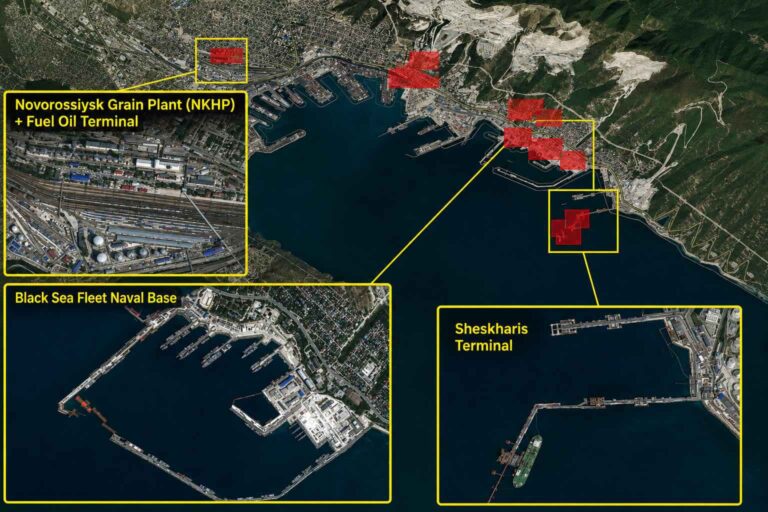
Ukraine has not publicly claimed every individual incident reported overnight. However, the pattern fits a broader campaign in which Kyiv has increasingly used drones to impose costs on Russian logistics, fuel supplies, electricity networks and transport infrastructure in occupied territory and inside Russia itself. Recent Ukrainian strikes have also targeted Russian refinery capacity, underlining Kyiv’s effort to weaken the systems that support Moscow’s military operations.
For Russia, electricity disruption in occupied southern Ukraine creates several military problems. Power is required for communications equipment, railway signalling, repair facilities, fuel pumping, administrative control, surveillance systems and air-defence support infrastructure. Backup generators can reduce the immediate effect, but they increase dependence on fuel deliveries and maintenance. In a theatre where fuel infrastructure and supply routes are also being hit, that dependency becomes a vulnerability.
Crimea is particularly exposed. Since its seizure by Russia in 2014, the peninsula has been turned into a major military platform, supporting air, naval, missile and logistics operations against Ukraine. The Kerch area remains important because of its connection to Russia through the Kerch Bridge and its role in sustaining Russian control over the peninsula. Sevastopol, meanwhile, remains central to Russia’s Black Sea Fleet infrastructure, even after repeated Ukrainian strikes forced Moscow to disperse assets and reduce the fleet’s freedom of action.
The latest outages also follow earlier electricity restrictions in Crimea, where Russian-controlled authorities had already introduced power curbs after previous disruption to energy infrastructure. Reports of mounting pressure on the peninsula’s infrastructure, including power and fuel disruption, suggest that the grid and associated supply systems are operating under strain. A single damaged substation can be repaired; repeated strikes against energy and logistics nodes can create cumulative pressure.
The military significance lies in that accumulation. Ukraine’s drone campaign does not need to produce one large, visible event to have operational value. Repeated disruption forces Russia to move air defences, divert engineering teams, allocate security units, restore damaged infrastructure and reassure occupation administrations. Each repair cycle consumes resources. Each blackout exposes the fragility of rear areas that Moscow has tried to present as securely integrated into Russia’s war economy.
Occupied Kherson region is also important because of its position between Crimea, southern Ukraine and the lower Dnipro front. Power cuts there may affect occupation governance and military support functions, but they also carry a psychological effect. Russian-installed authorities rely on the appearance of control. Repeated outages undermine that image, particularly when they occur across several occupied territories during the same night.
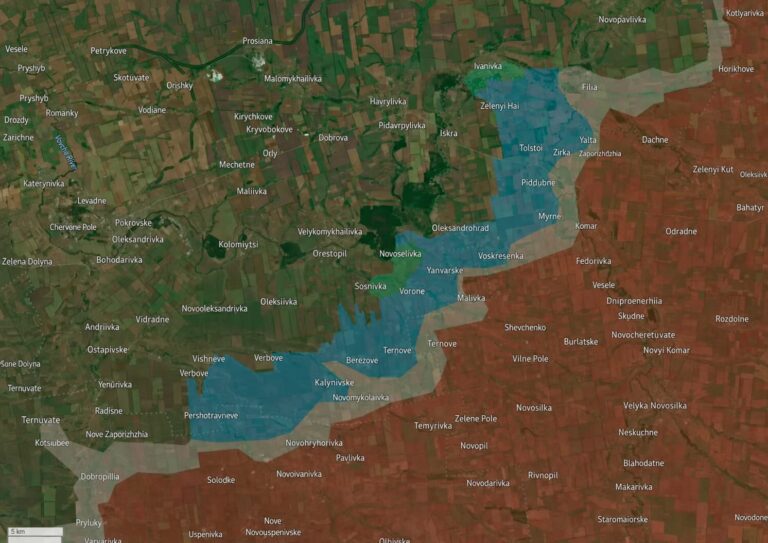
For Ukraine, the use of long-range and medium-range drones has become one of the central instruments for offsetting Russia’s advantage in manpower and artillery mass. By striking behind the front line, Ukraine can force Russia to defend a much larger battlespace. Energy infrastructure, fuel systems, rail links and air-defence sites are all part of that battlespace. Ukrainian commanders and analysts have repeatedly pointed to attacks on supply lines and rear-area infrastructure as a way of reducing the pressure on front-line positions, particularly in the east, where Russia continues to press against Ukraine’s Donetsk defensive belt.
The overnight events should therefore be viewed less as a local blackout and more as part of the continuing contest over Russia’s rear-area depth. Ukraine is seeking to make occupied territory harder to administer, harder to supply and harder to use as a platform for further attacks. Russia, in turn, must decide how much of its air-defence and repair capacity to dedicate to defending power grids, refineries, depots and bridges far from the immediate line of contact.
The June 29 outages show that the rear of Russia’s occupation zone remains vulnerable. They also underline a wider shift in the war: infrastructure once treated as safely behind the front is now part of the active battlefield.