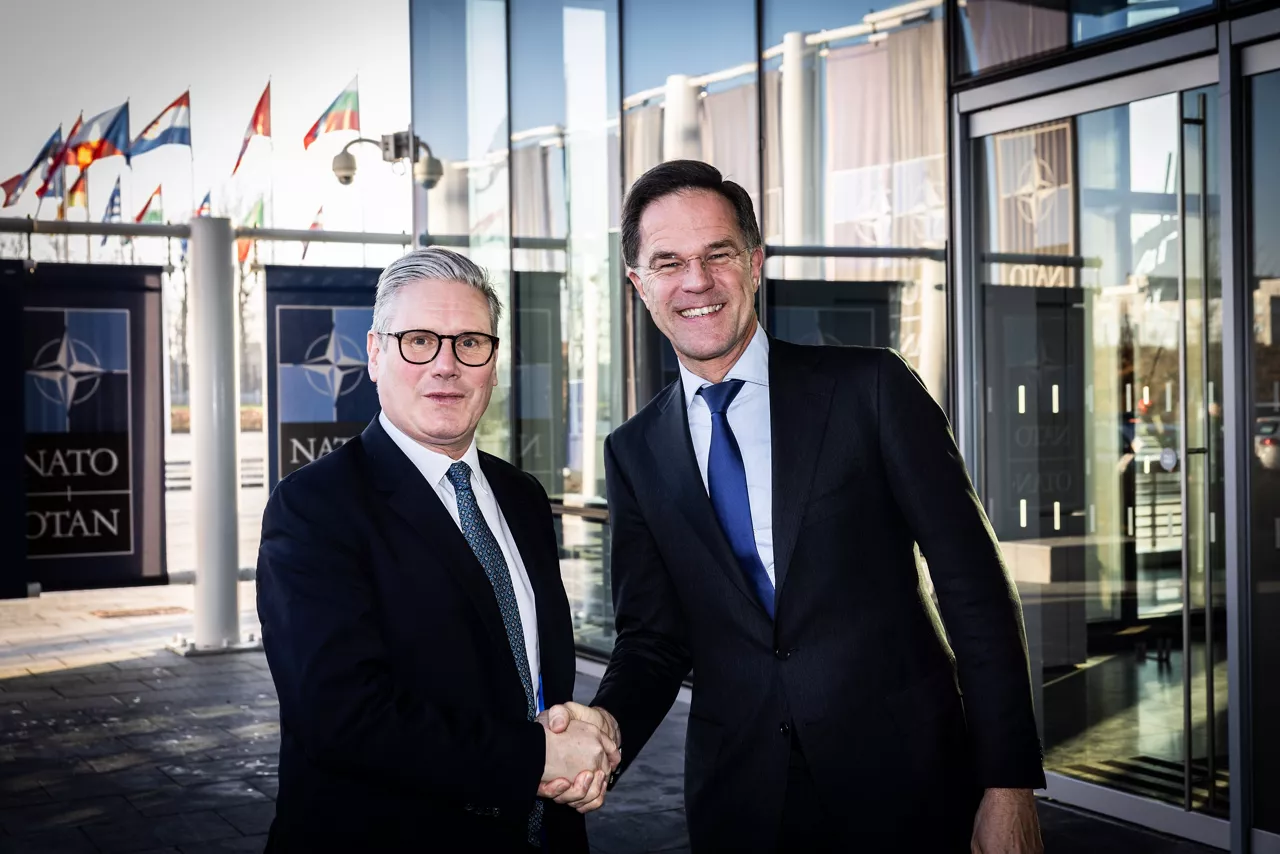
According to the Alliance’s advisory, Rutte is due to meet Prime Minister Sir Keir Starmer at 10 Downing Street, with separate bilateral meetings scheduled with Foreign Secretary Yvette Cooper and Defence Secretary Dan Jarvis. The talks come ahead of the NATO summit in Ankara, to be held on 7 and 8 July.
The visit is not simply a diplomatic call. It comes as NATO tries to turn higher defence-spending promises into visible procurement, production and military readiness. Rutte has said allies are expected to announce tens of billions of dollars in new defence-related contracts at the summit, reflecting a wider attempt to move the alliance beyond annual spending targets and towards industrial delivery.
For Britain, that creates a direct test. The UK remains one of NATO’s main European military powers, with nuclear capability, expeditionary forces, intelligence reach and a central role in military support for Ukraine. But those assets also increase pressure on London to show that its future defence plans are funded, coherent and capable of producing equipment at the speed now demanded by the security environment.
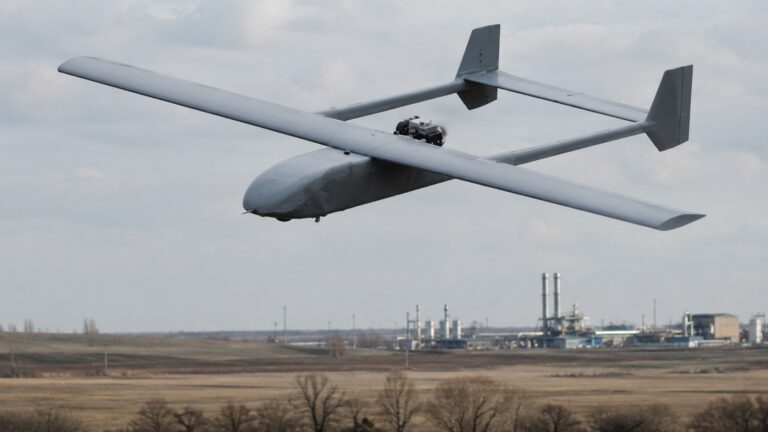
The issue is no longer limited to percentage targets. NATO’s current debate is about what extra spending actually buys: air defence, drones, interceptors, long-range fires, electronic warfare, munitions, maritime protection and the industrial capacity needed to replace stocks. The war in Ukraine has shown that expensive platforms alone are not sufficient if armies lack mass, resilience and rapid replacement capacity. European commanders have warned that allies need to rethink how they fight, with more emphasis on mass-produced drones, cheaper interceptors and electronic warfare.
That argument is particularly relevant for Britain. London has been among Ukraine’s strongest European supporters, but continued support for Kyiv increasingly depends on the depth of national and allied production lines. Ukraine needs predictable deliveries, while NATO countries also need to rebuild their own inventories. This creates an uncomfortable balance between immediate assistance to Ukraine and longer-term force regeneration at home.
Rutte’s meetings with Cooper and Jarvis therefore matter beyond protocol. The Foreign Office must manage Britain’s position on Ukraine, Russia, the Middle East and wider alliance diplomacy. The Ministry of Defence must turn those objectives into force structure and procurement. The central question is whether Britain can close the gap between strategic ambition and available capability.
The timing also reflects wider uncertainty over the United States’ role in European security. Rutte met President Donald Trump in Washington last week, where he said Europe and Canada were increasing their share of defence spending. The message was aimed at preserving transatlantic cohesion before Ankara, but it also underlined the pressure on European allies to demonstrate that they can carry more of NATO’s conventional burden.
Recent tensions in the Middle East add to that pressure. Any escalation involving Iran affects American military attention, energy markets, maritime security and allied political cohesion. For NATO, this is not separate from European defence. If Washington is drawn into another major crisis, European allies face a sharper requirement to sustain deterrence on the continent with less assumption of unlimited US bandwidth.
Britain sits at the centre of that dilemma. It has global security interests, a major role in NATO’s European posture and long-standing commitments in the Middle East. But it also faces the same industrial and budgetary limits as other European allies. The practical question before Ankara is whether the UK can present a credible investment path that supports both alliance deterrence and continued assistance to Ukraine.
Rutte’s London visit is unlikely to produce a dramatic announcement by itself. Its significance lies in what it signals before the summit. NATO wants Ankara to be judged by delivery, not language. Britain will want to present itself as a leading European ally. To do so, it will need to show that its defence planning is not only politically firm, but operationally credible.