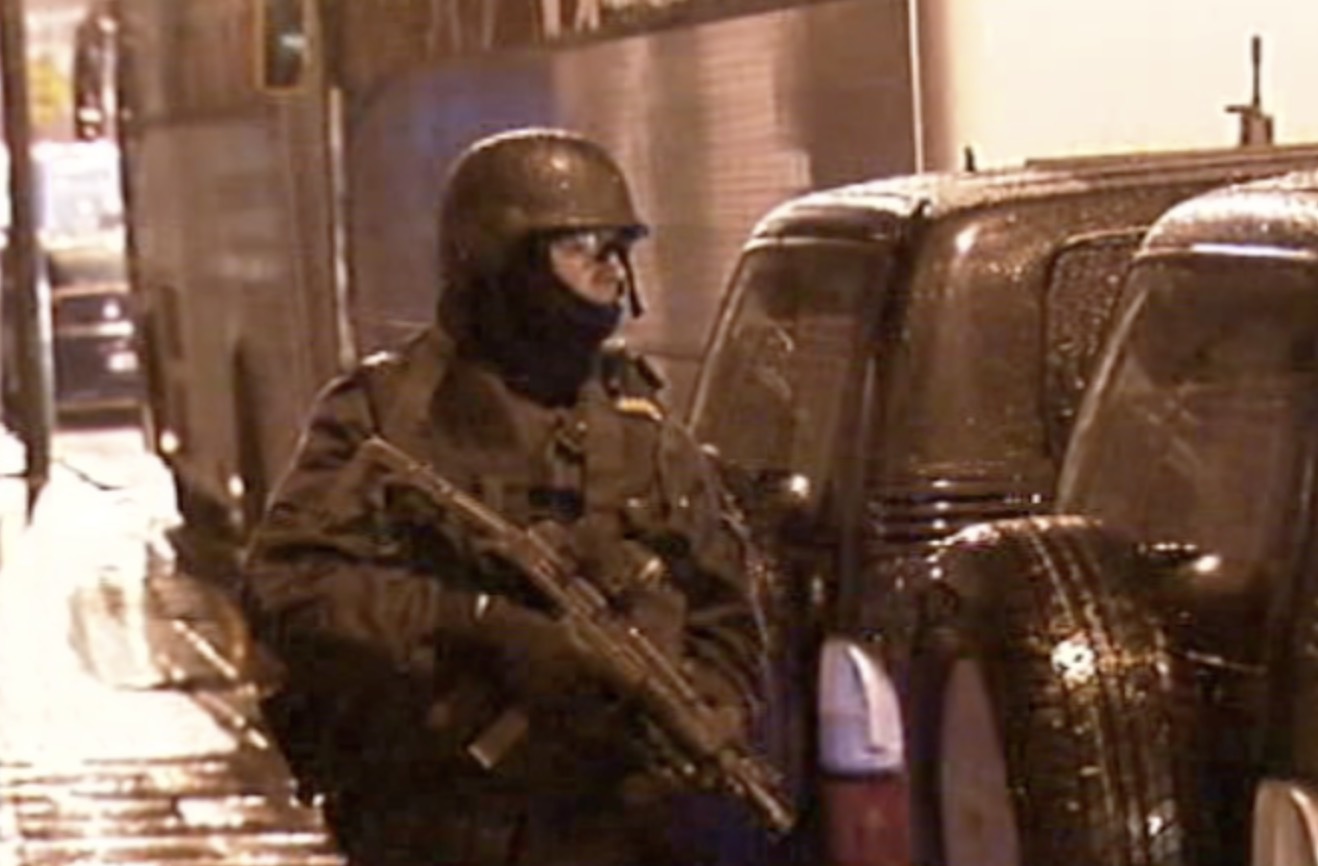
Irish police have stopped a vehicle near Carrickmacross, County Monaghan, during an operation targeting dissident republican activity and called in an Irish Defence Forces explosive-ordnance-disposal team.
In its official statement, An Garda Síochána said members of the Special Detective Unit stopped the vehicle on the N2 south of Carrickmacross at approximately 3pm on 22 July.
The Defence Forces EOD team examined the vehicle. Gardaí said the outcome was not being released for operational reasons. A woman in her twenties, identified as the driver, remained detained under section 30 of the Offences Against the State Act. A man in his forties was subsequently arrested and detained at a Garda station in the Dublin region.
Those are the confirmed facts. Reports describing the load as a large bomb may prove accurate, but the Garda statement deliberately withholds the technical result. It would be premature to publish details of size, construction, target or group attribution that investigators have not confirmed.
That restraint is especially important in a terrorism investigation. Public speculation can prejudice proceedings, disclose police knowledge or provide propaganda to organisations seeking attention.
Carrickmacross lies close to the border with Northern Ireland and on a road network connecting Dublin with border counties. The area’s geography creates legitimate daily traffic while offering multiple routes that can complicate surveillance.
The 1998 Belfast/Good Friday Agreement transformed security conditions and enabled the removal of much border infrastructure. Preserving an open border is politically and economically vital. It also means counter-terrorism cannot depend on permanent checkpoints.
Instead, security relies on intelligence-led operations, cooperation between An Garda Síochána and the Police Service of Northern Ireland, targeted vehicle stops and specialist support. The Carrickmacross interception, as described by Gardaí, fits that model.
Dissident republican organisations reject the peace settlement and retain an intent to attack police, prison officers and other targets. Their membership and operational capability are far below those of the Provisional IRA during the Troubles, but small cells can still construct explosive devices and exploit local knowledge.
Capability should not be inferred from intent alone. Investigators will need to establish whether a viable device was present, its components, who assembled it, where it was going and whether it was connected to a planned attack.
Calling an EOD team does not itself prove that a viable bomb was found. It is the correct precaution whenever a vehicle or object may contain explosives.
Specialists make the scene safe, identify components, preserve forensic evidence and advise investigators about construction. Their work may reveal links to previous devices through wiring methods, power sources, explosives or triggering systems.
Forensic intelligence can connect an apparently isolated seizure to a broader network. Fingerprints, DNA, tool marks, communications data and vehicle movements may all be relevant, subject to legal safeguards.
The use of section 30 detention powers reflects the seriousness of the investigation. It does not establish guilt. Both detainees are entitled to due process, legal representation and the presumption of innocence.
If investigators suspect an intended target in Northern Ireland, rapid information exchange with the PSNI will be essential. Officers may need to identify reconnaissance activity, associated vehicles, safe houses or movements across the border.
Coordination also protects against displacement. Pressure in one jurisdiction can cause a cell to store material or recruit in the other. Joint threat assessments should cover logistics as well as known members.
Operational cooperation must remain compatible with the different legal systems. Evidence collected in the Republic of Ireland may be used in proceedings elsewhere only when chain-of-custody and admissibility requirements are satisfied.
The case also underlines the importance of community reporting. Unusual storage, suspicious purchases or abandoned vehicles may appear innocuous in isolation. Trusted channels allow information to be assessed without encouraging vigilantism or suspicion based on political identity.
The incident should not be used to exaggerate the overall threat or suggest a return to conflict. Alarmism can damage border communities and reward violent organisations with publicity disproportionate to their capacity.
Nor should the apparent success of an interception produce complacency. Counter-terrorism is often visible only when an arrest is made; the intelligence collection and surveillance preceding it remain hidden.
Governments in Dublin and London should ensure that specialist policing, EOD availability and cross-border liaison remain properly resourced. Political disagreements over other issues must not interrupt operational cooperation.
Public agencies should release further information when doing so no longer risks the investigation. Confirmation of whether the device was viable, without unnecessary technical detail, would allow the public to understand the seriousness of the event and reduce space for misinformation.
For now, the official account supports a limited but important conclusion. An intelligence-led Garda operation stopped a vehicle near the border, specialist bomb technicians were deployed and two people were detained in an investigation explicitly directed at dissident republican activity.
That combination warrants attention as a security matter. It also warrants discipline: accuracy, due process and effective cooperation are more useful than dramatic claims while the evidence is still being examined.
Main Image: