

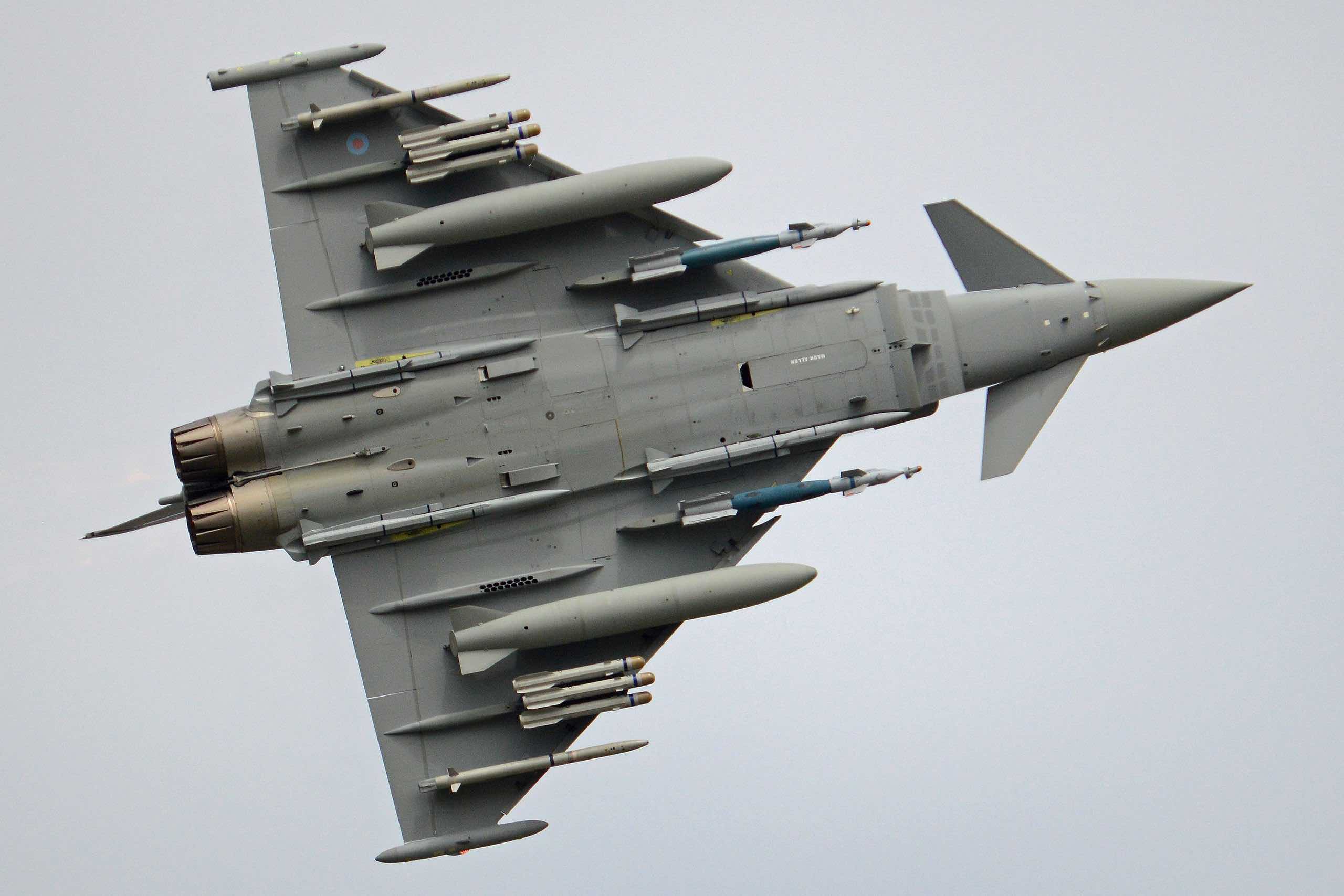
For decades Western Europe comforted itself with the idea that war on the continent belonged to history. Defence firms were often treated as slightly embarrassing relics — necessary perhaps, but faintly awkward to celebrate in polite political company. That era is over. BAE’s results are not merely strong; they are symptomatic of a structural shift in how governments now think about security.
Chief executive Charles Woodburn described a “new era” of defence spending driven by escalating threats, and the markets appear to agree. Shares rose sharply on the announcement and have more than trebled since Russia’s invasion of Ukraine in 2022. Investors, unlike politicians, tend to confront reality early. They have concluded that rearmament is no passing phase.
The explanation is straightforward. The post-Cold War dividend — the belief that peace would be permanent and military budgets could shrink indefinitely — has expired. Russia’s war in Ukraine shattered the illusion that conventional state conflict was obsolete. In doing so it forced NATO countries to rediscover something they had spent thirty years avoiding: preparedness.
Britain has pledged its largest increase in defence spending since the Second World War and is even considering accelerating a target of 3 per cent of GDP. Across Europe, similar debates are taking place. Germany has embarked on its Zeitenwende rearmament, Poland is building the continent’s largest land army, and even traditionally cautious governments are quietly rediscovering stockpiles, logistics and ammunition production.
BAE stands directly at the centre of this strategic awakening. The company builds the Typhoon fighter jet, the Astute-class nuclear submarine and the CV90 combat vehicle, as well as advanced drone and counter-drone systems — precisely the technologies modern warfare has demonstrated to be indispensable.
Ukraine has provided a grim but clarifying laboratory. The conflict has not resembled the tidy, short wars imagined by defence planners of the 1990s. Instead it has been an industrial war of attrition: artillery shells, armoured vehicles, electronic warfare, drones in vast numbers. Woodburn observed that the war accelerated “more than a decade’s worth of defence tech evolution into just a few years.”
The consequences reach far beyond Ukraine. NATO members have realised that deterrence depends not on declarations but on inventories. A nation can proclaim its values, but if its ammunition runs out after three weeks of combat, those values are strategically irrelevant.
Hence the astonishing backlog now sitting on BAE’s books. Orders for Typhoon jets, frigates and armoured vehicles are not luxuries — they are insurance policies. Defence companies prosper because governments, belatedly, have accepted that security cannot be improvised once a crisis begins.
There is, of course, an unease about celebrating military industry success. Europeans in particular prefer the language of diplomacy to that of deterrence. Yet history rarely grants such preferences. Peace is preserved not only by negotiation but by credibility, and credibility requires capability.
Critics often speak as though defence spending is inherently bellicose. The opposite is frequently true. The paradox of military power is that it prevents wars more often than it causes them. Weakness, by contrast, invites calculation. Russia’s invasion of Ukraine was shaped in part by a perception that Western nations lacked the will — and perhaps the means — to respond decisively.
The markets have grasped this before politics has fully caught up. European defence stocks surged last year, buoyed by expectations of higher NATO spending. Investors are betting not on conflict itself but on sustained caution — a prolonged recognition that the international environment has become harsher.
Yet the BAE story carries a second implication: defence is becoming technological again. The company is investing heavily in advanced systems, particularly unmanned and counter-unmanned capabilities. The drone, once a specialist tool, is now central to warfare. The battlefield increasingly resembles a network rather than a frontline — sensors, software and electronic warfare as important as armour plate.
This technological shift may ultimately matter more than the spending totals. The Cold War was defined by nuclear deterrence and massed armies. The emerging era will be defined by autonomy, artificial intelligence and electronic dominance. In that sense, BAE is not merely selling weapons but participating in a redefinition of military power.
There is an irony here. Europe spent decades attempting to escape geopolitics through economic integration and trade. Yet geopolitics has returned regardless. The result is that defence contractors — once marginal to the continent’s political imagination — have become central to its strategic future.
BAE’s profits therefore say less about corporate brilliance than about political necessity. The company is prospering because governments now fear the alternative. A peaceful continent is no longer assumed; it must be maintained.
And maintenance, history reminds us, is rarely cheap.
From BAE to Rheinmetall: The Industrial Surge Behind Europe’s “Buy European” Push



Kellogg questions NATO and floats new alliance including Ukraine