The 45-minute session on Wednesday 21 January brought together NATO Secretary-General Mark Rutte, Polish President Karol Nawrocki, Finnish President Alexander Stubb, European Investment Bank president Nadia Calviño and Sanofi chief executive Paul Hudson, moderated by Sarah Kelly.
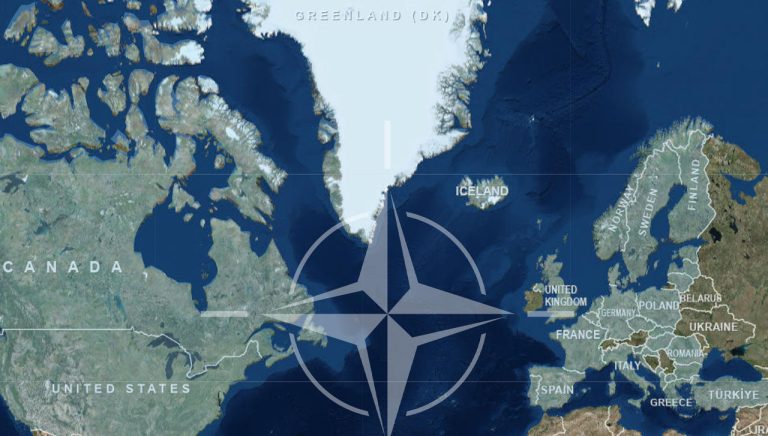
The discussion came against a backdrop of Trump’s remarks a day earlier that Washington and NATO would “work out something” on Greenland, while declining to rule out using force and tying the island to Arctic security. European officials have also been weighing the risk of an escalating trade confrontation following Trump’s tariff threats.
Kelly opened by telling the panel that the question of Europe’s ability to defend itself had “really been thrust into the forefront” as Trump threatened allies over Greenland, with speculation extending to “even the collapse of the NATO alliance itself”.
Rutte responded by reasserting NATO’s founding logic and rejecting the idea that the US was merely underwriting Europe. “NATO since 1949 is the transatlantic alliance,” he said, arguing that Washington remained in NATO because it was “crucial not only for the defence of Europe but only also for the defence of the United States”. He framed the Greenland argument through the wider geography of deterrence:
“For the United States to stay safe, you need a safe Arctic, a safe Atlantic and a safe Europe.”
Pressed on whether it was unprecedented for a NATO member to threaten another’s territorial integrity, Rutte declined to comment publicly, saying the Secretary-General’s role was to help “diffuse the tension” rather than inflame it. “As soon as I do [comment], I cannot any longer help… to deescalate,” he said, adding: “You can be assured that I’m working on this issue behind the scenes.”
Rutte did, however, endorse Trump’s emphasis on the Arctic as a strategic theatre, pointing to the opening of sea lanes and increased activity by Moscow and Beijing. “We need to defend the Arctic,” he said. “China and Russia are increasingly active in the Arctic.” He listed the seven NATO countries with Arctic coastlines and described Russia as the sole non-NATO Arctic state, arguing that China was effectively a “ninth country” through its growing presence.
Nawrocki, whose country hosts significant US forces and has expanded defence spending since Russia’s full-scale invasion of Ukraine, sought to balance solidarity with caution. “United States of America are the most important Polish bilateral ally,” he said, while describing NATO as “stable” and “solid”. On Greenland, he said Poland recognised “some problems”, but added: “I’m looking at the Greenland from the strategic side,” citing the challenge of Russian and Chinese influence and the sense of threat on NATO’s eastern flank.
When Kelly asked whether Europe needed a united response, he replied: “There is necessity of solidarity in Europe, but there is also the necessity of building the good transatlantic relations.” He pointed to Poland’s force posture and procurement choices: “We have 10,000 American soldiers in Poland… we buy American military equipment… [and] we have the biggest army in east central Europe.” He said Poland had pushed military spending “almost to five percent” of GDP. Any Greenland dispute, he argued, should be handled “on diplomatic way”.
Stubb, whose country joined NATO recently and shares a long border with Russia, described what he called “NATO 3.0”, arguing that the alliance was strengthening after decades of under-investment. “We’re in the process of creating a stronger NATO than we have seen since the end of the Cold War,” he said. Finland, he added, had not dropped its guard: “We still have conscription… [and] the biggest military force of Arctic capabilities in the alliance.” He cited a trained reserve of “1 million” and said Finland could mobilise “280,000 soldiers within weeks”.
Stubb insisted that capability mattered more than budget ratios. “You don’t fight wars with percentages,” he said. “You fight wars with capabilities.” He also argued that wartime endurance depended on society at home, pointing to civil defence and supply security: shelters for “4.4 million” Finns, and systems designed to avoid shortages of food, energy and electricity.
Rutte later drove the discussion towards the US-Europe gap in core enablers, such as strategic lift, command-and-control and intelligence, and argued that Trump’s pressure had accelerated European spending. He told the audience that the US still spent more on core defence than Europe on average and claimed that several allies reached 2 per cent only after Trump’s demands. The challenge, he said, was production as much as money: “It is not only money, it’s also the defence industrial base,” noting that European and American industry were not producing enough at scale.
Calviño described defence finance as a “sea change”, saying the EIB had widened the scope of what it could fund and that defence-linked activity had reached “5% of our financing inside the union” in 2025. In closing, she argued for confidence in Europe’s technological base: “The European Union is a superpower” in research and key technologies, while adding that the EU was “not a defence superpower” and needed time to ramp up.
Hudson broadened “collective defence” beyond weapons, linking it to health resilience and supply chains. “NATO have made that point about making sure that people can get medicines they need in difficult times,” he said, recounting pandemic-era calls from governments seeking priority access. He argued that Europe risked losing ground in life sciences: “For the first time, China and the US publish more clinical papers… discover more medicines than Europe.” He also claimed: “54% of medicines approved by the European Medicines Agency aren’t available to patients in Europe.”
Ukraine, though initially sidelined by Greenland, returned as the panel’s central strategic concern. Nawrocki said the war remained “the most important” security issue for “all free world” and described Europe as living through “hybrid war”. Rutte warned that attention on Greenland must not weaken immediate support for Ukraine’s air defence and energy infrastructure, stressing that Europe needed to keep focus on interceptors and supplies while diplomacy continued.