Yet behind this seemingly “clean” form of warfare lies a deeply complex history rooted in nuclear experimentation, Cold War rivalry, and rapid technological innovation.
The origins of EMP technology are inseparable from the dawn of the nuclear age. Scientists first observed the phenomenon during early nuclear tests in the mid-20th century, when electronic equipment unexpectedly failed in the vicinity of detonations. By the late 1950s and early 1960s, these effects were better understood, particularly following high-altitude nuclear tests.
One of the most significant milestones came in 1962 with the United States’ “Starfish Prime” test. A nuclear device detonated hundreds of kilometres above the Pacific generated an electromagnetic pulse that disrupted electrical systems in Hawaii, over 1,000 kilometres away. This single event demonstrated that a nuclear explosion could produce continent-scale electronic disruption without direct blast damage.
At the heart of this phenomenon lies a physical process involving gamma radiation and the so-called Compton effect. High-energy electrons released by the explosion interact with Earth’s magnetic field, generating intense electromagnetic fields capable of inducing damaging currents in electrical systems.
By the 1960s, both the United States and the Soviet Union had begun to explore EMP not merely as a by-product of nuclear weapons, but as a strategic capability in its own right.
During the Cold War, EMP research accelerated rapidly. Initially, the focus was on understanding vulnerability: military systems, communications networks, and early computer technologies were all found to be susceptible to electromagnetic disruption.
Soon, attention shifted to weaponisation. Nuclear warheads were redesigned and, in some cases, optimised to maximise EMP output. High-altitude detonation strategies—known as High-Altitude Electromagnetic Pulse (HEMP)—were seen as a way to cripple an enemy’s infrastructure on a massive scale without necessarily targeting population centres directly.
The strategic logic was clear. In a conflict between technologically advanced powers, disabling command-and-control systems, radar networks, and communications could provide a decisive advantage. In effect, EMP offered a pathway to paralyse an opponent before traditional combat even began.
At the same time, defensive measures—collectively known as “hardening”—became a priority. Military systems were shielded, redundant networks were developed, and research into resilient electronics intensified.
While nuclear-generated EMP remains the most powerful form, the late 20th and early 21st centuries saw the emergence of non-nuclear EMP technologies. These developments significantly broadened the potential use of electromagnetic weapons.
Today, EMP systems are generally categorised into three types:
Non-nuclear EMP weapons, in particular, have attracted growing interest. These systems use directed energy—often in the form of high-power microwaves—to disrupt or destroy electronics within a targeted area. Unlike nuclear EMP, they can be deployed tactically, potentially even on the battlefield or via airborne platforms.
This shift marks a crucial transition: EMP is no longer solely a strategic, nuclear-level phenomenon, but also a practical tool of modern warfare.
In the 21st century, EMP technology has moved from theoretical capability to operational consideration. Several nations are believed to possess or be actively developing EMP weapons, though details are often classified.
The United States remains at the forefront of EMP research and development. Agencies such as the Air Force Research Laboratory and DARPA have explored high-power electromagnetic weapons designed for integration into aircraft and missile systems.
One notable area of development is the concept of “e-bombs”—non-nuclear devices capable of disabling electronics in a confined area. These could be used to neutralise enemy air defences, communications hubs, or even urban infrastructure without widespread physical destruction.
Russia has also invested heavily in EMP capabilities, particularly in non-nuclear systems. Reports indicate the testing of EMP “cannons” with ranges extending several kilometres, reflecting a focus on tactical battlefield applications.
Russian military doctrine has long emphasised electronic warfare, and EMP fits naturally within this framework. The ability to disrupt NATO’s technologically dependent forces is seen as a key strategic advantage.
China’s rapid military modernisation has included significant investment in electromagnetic and directed-energy weapons. While specific EMP systems remain opaque, Chinese research institutions have published extensively on high-power microwave technologies and their military applications.
Given China’s emphasis on “informatized warfare”—where information systems are central to combat effectiveness—EMP capabilities are likely viewed as a means of both offence and countermeasure.
Israel is widely regarded as a leader in defensive EMP technologies, particularly in hardening critical infrastructure. However, it is also believed to possess offensive capabilities, reflecting its broader expertise in electronic warfare.
Other technologically advanced states, including the United Kingdom, France, and India, are also engaged in EMP-related research. In many cases, the focus is dual-use: both protecting national infrastructure and developing limited offensive capabilities.
The primary appeal of EMP weapons lies in their ability to disable rather than destroy. In modern societies, where everything from power grids to transportation systems depends on electronics, this capability is profoundly disruptive.
EMP can target:
In a military context, an EMP strike could precede conventional operations, effectively blinding and isolating an opponent. In theory, it could even achieve strategic objectives without large-scale casualties—though the secondary effects, such as societal collapse due to infrastructure failure, could be severe.
The growing interest in EMP technology raises complex ethical and strategic questions. While often described as a “non-lethal” weapon, its effects on civilian infrastructure can be catastrophic. Hospitals, water systems, and food supply chains all rely on electricity and electronics.
Moreover, the line between nuclear and non-nuclear EMP is blurred in strategic terms. A high-altitude nuclear detonation designed primarily for EMP effect would still be considered a nuclear attack, with all the escalation risks that entails.
There is also the issue of attribution. Non-nuclear EMP weapons can be difficult to trace, raising the possibility of covert attacks or use by non-state actors.
Looking ahead, the trajectory of EMP technology points toward increased precision, portability, and integration with other systems. Advances in high-power microwave sources, energy storage, and antenna design are making EMP weapons smaller and more versatile.
Future systems may be deployed via drones, missiles, or even satellite platforms. At the same time, efforts to protect infrastructure—through shielding, redundancy, and rapid recovery systems—are likely to intensify.
What remains constant is the underlying logic: in an age defined by digital dependence, the ability to disrupt electronics is tantamount to the ability to disrupt society itself.
From its accidental discovery during nuclear testing to its current role as a sophisticated tool of electronic warfare, EMP technology has undergone a remarkable evolution. Once a by-product of atomic explosions, it is now a focal point of strategic planning among major powers.
The nations leading this development—the United States, Russia, China, and others—are not merely building weapons; they are reshaping the nature of conflict. In a world increasingly reliant on interconnected systems, the silent, instantaneous impact of an electromagnetic pulse may prove as decisive as any conventional weapon.
The ultimate question is not whether EMP will be used, but how—and what kind of world will remain when the lights go out.
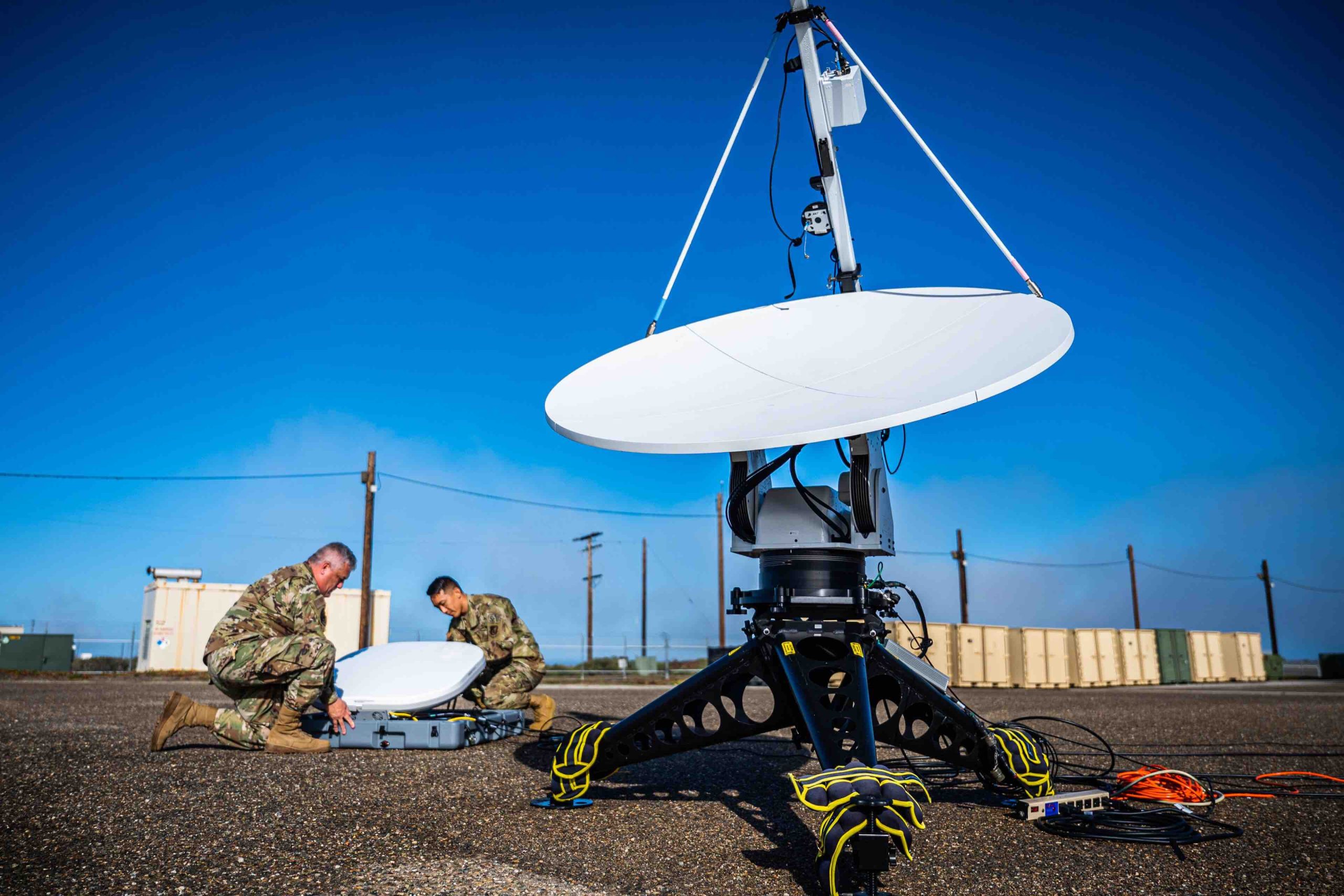
Main Image: By U.S. Space Force photo by Tech. Sgt. Luke Kitterman https://commons.wikimedia.org/w/index.php?curid=123371105