The European Union is once again confronting the gap between strategic ambition and available force. As the closure of the Strait of Hormuz disrupts global energy and shipping flows, EU foreign ministers are discussing whether the bloc’s Aspides naval mission should be strengthened to respond to the deteriorating security environment in the wider Middle East. The issue is on the agenda of Monday’s Foreign Affairs Council, although no immediate expansion of the mission’s mandate is expected.
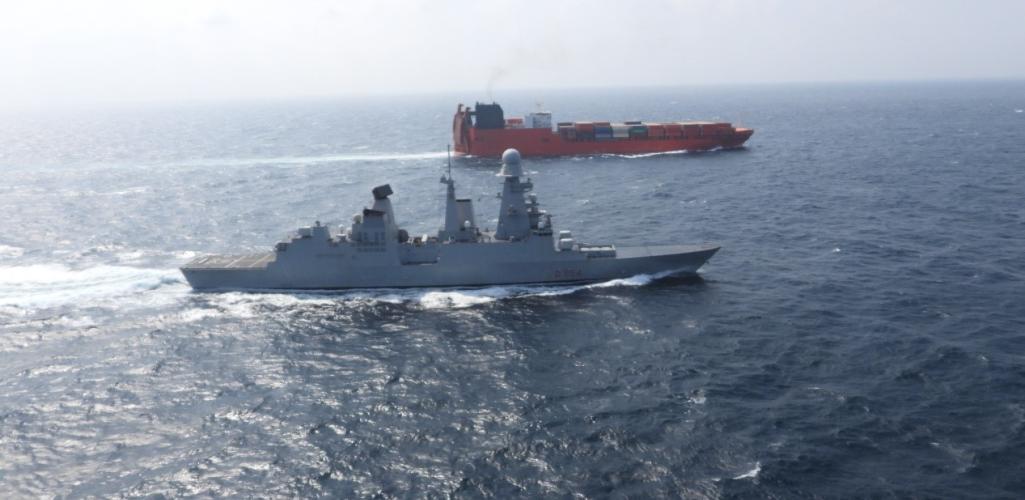
Aspides was launched in 2024 to protect commercial shipping in the Red Sea from attacks linked to Yemen’s Houthi movement. It was not designed for a crisis of this scale in the Gulf itself. Kaja Kallas is urging member states to contribute more naval assets under the mission’s current mandate, while stopping short, for now, of proposing a formal move into the Strait of Hormuz.
That caution reflects both operational and political constraints. Any change in mandate would require the agreement of all 27 member states, and support for a more assertive EU role is uneven. German Foreign Minister Johann Wadephul has questioned whether Aspides has been sufficiently effective in its existing theatre to justify widening its scope. His comments point to a familiar problem in European defence policy: before states agree to do more, they want proof that the current instrument is working.
Yet the pressure to act is real. The Strait of Hormuz carries roughly one fifth of the world’s oil and LNG shipments, and its closure has immediate consequences for European energy prices, supply security and wider economic stability. The wider conflict has already driven the EU back into emergency discussions over energy-market intervention. For defence planners, that is a reminder that maritime security in distant waters is not a peripheral issue. It can rapidly become a domestic political and economic problem inside Europe.
The military question is therefore not simply whether the EU wants a larger naval role, but whether it has the assets, political will and command flexibility to sustain one. The current discussions are focused on bolstering the mission rather than transforming it, suggesting that ministers understand the risks of over-promising in a theatre where the United States remains the dominant military actor and where regional escalation could expose European ships to far greater danger than in the Red Sea.
There is also the matter of alliance politics. Separately President Donald Trump has been pressing allies and partners to contribute more directly to efforts to secure Hormuz, while countries such as Japan and Australia have so far resisted sending ships. That wider international hesitation helps explain Europe’s uncertainty. The strategic need is clear, but the burden-sharing framework remains unsettled.
From a defence perspective, Aspides matters because it is one of the few visible examples of an EU maritime operation tied directly to live commercial-security requirements. If the bloc cannot adapt even a limited mission under conditions of severe economic exposure, questions will inevitably be asked about its credibility as a security actor. On the other hand, an overly rapid expansion into a much more dangerous operating environment could expose the limits of European readiness just as clearly. France and Britain are discussing wider coalition action, implying that, if movement comes, it may do so first through flexible coalitions rather than through a fully reworked EU framework.
That leaves ministers with a narrow path. They can ask for more ships and more robust burden-sharing under the current mission, while postponing the harder political decision about mandate expansion. Such an approach would be modest, but not meaningless. It would show that the EU can at least thicken its maritime presence in response to a genuine crisis without forcing an immediate all-or-nothing debate about entering the Gulf.
The deeper issue, however, is one that goes beyond Aspides itself. Europe has long argued that economic security, supply-chain resilience and freedom of navigation are strategic interests. The Hormuz crisis is testing whether that language can be matched by deployable capability and political agreement. Monday’s discussion is unlikely to deliver a dramatic operational shift. But it does expose a harder reality: Europe wants the benefits of maritime security in the Gulf, yet remains unsure how much risk it is prepared to assume to help provide it.