

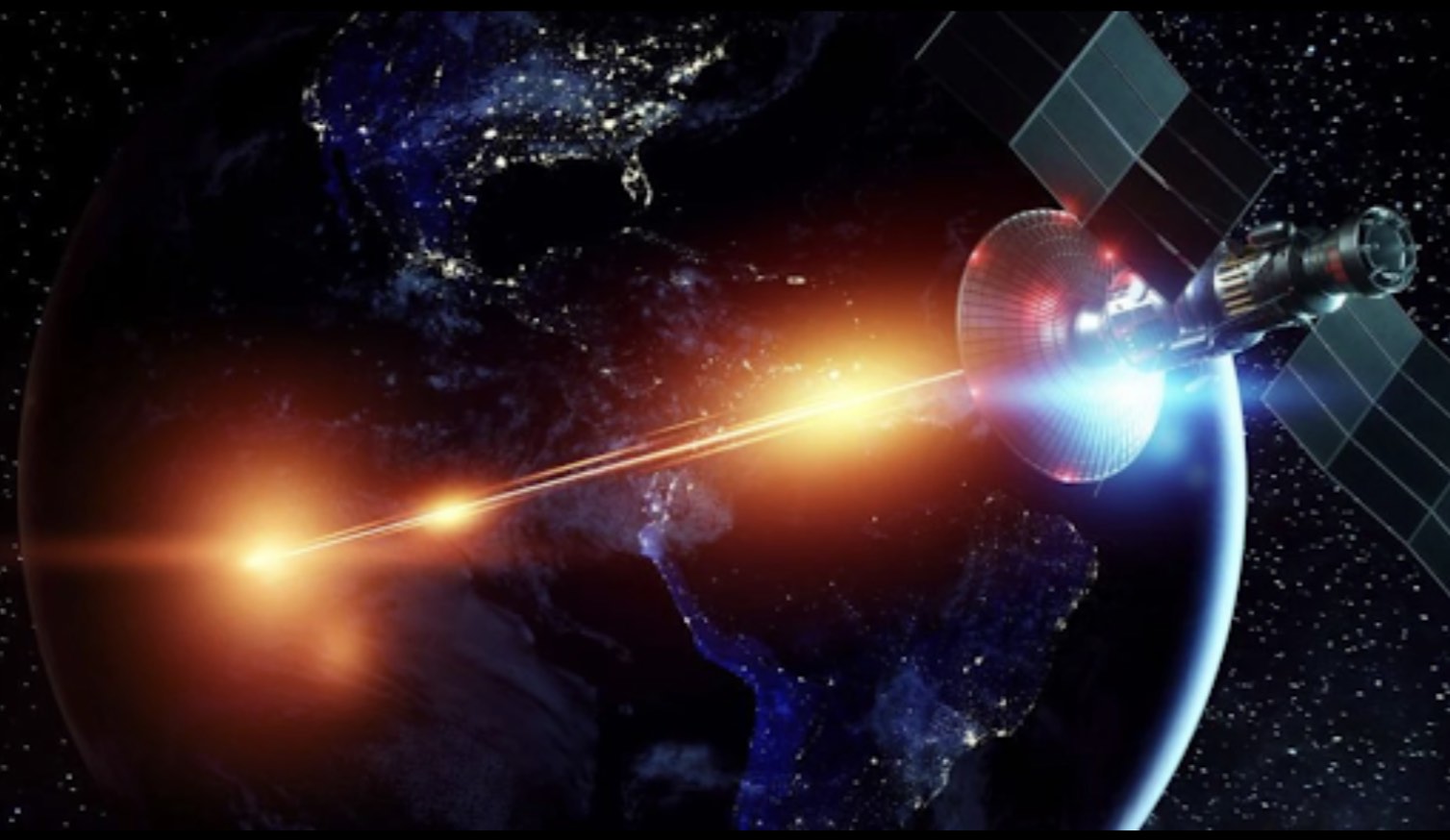
Berlin’s plan to develop a €10 billion military satellite network—independent of an existing EU programme—has sparked unease in Brussels and beyond, Reuters reports, reviving concerns about duplication, inefficiency and the enduring tension between national sovereignty and collective ambition.
The proposal, which involves major German industrial players including Rheinmetall, OHB and Airbus, would see the deployment of around 100 low-Earth orbit satellites dedicated exclusively to military communications. It is an ambitious effort, shaped in part by lessons from Ukraine, where satellite connectivity has proved decisive on the battlefield.
Yet the controversy lies not in the technology, but in the timing and the context. The EU is already investing heavily in its own satellite constellation, known as IRIS², a €10.6 billion project intended to deliver a shared, secure communications system across the bloc. That network, expected to consist of roughly 290 satellites, is a cornerstone of Europe’s broader push for strategic autonomy in defence and technology.
For critics, Germany’s decision to proceed with a parallel system risks undermining that collective effort. European lawmakers have warned that running two large-scale projects side by side could lead to fragmented standards, duplicated costs and, ultimately, reduced strategic coherence.
Marie-Agnes Strack-Zimmermann, who chairs the European Parliament’s security and defence committee, voiced a concern widely shared in Brussels: that national initiatives pursued in isolation could weaken the very structures Europe is trying to strengthen. The central issue, she suggested, is not whether countries should invest in defence, but whether those investments are aligned with a broader European framework.
The debate reflects a deeper, long-standing dilemma. Defence remains one of the most jealously guarded areas of national sovereignty within the EU. While member states have repeatedly endorsed the idea of closer cooperation, practical integration has often lagged behind political rhetoric.
Germany’s position is that its proposed system addresses specific military requirements that differ from those of IRIS². Officials in Berlin argue that national capabilities are essential for meeting sovereign needs, particularly in an era of heightened geopolitical uncertainty.
There is also a strategic logic underpinning this approach. Europe’s reliance on the United States for key defence capabilities—especially in space-based communications and missile warning systems—has come under increasing scrutiny. With Washington’s long-term commitments perceived as less predictable, European governments are seeking greater autonomy.
In that sense, Germany’s satellite plan is part of a broader shift. Across the continent, governments are investing more heavily in defence and exploring ways to reduce dependence on external partners. Space, once a largely civilian domain, is now central to that effort, offering critical infrastructure for intelligence, surveillance and secure communications.
However, autonomy can come at a cost. Analysts warn that if each member state pursues its own path, Europe risks ending up with a patchwork of systems that are neither fully interoperable nor cost-effective. The result could be precisely the opposite of what policymakers intend: weaker collective capability despite higher overall spending.
This concern is not purely theoretical. Italy is reportedly considering its own satellite network, though the project remains at an early stage. If more countries follow suit, the risk of fragmentation will only grow.
At the same time, delays in the EU’s IRIS² programme complicate the picture. With full deployment not expected until well into the next decade, governments face a difficult choice between waiting for a shared solution or pressing ahead with national alternatives. For some, the urgency of current security challenges makes delay an unacceptable option.
The European Commission has sought to strike a careful balance, emphasising the benefits of shared investment while acknowledging that defence remains a national competence. Participation in IRIS², officials argue, offers economies of scale and access to a common pool of expertise that individual countries would struggle to match on their own.
Yet the underlying tension remains unresolved. Europe’s defence landscape is increasingly shaped by a dual dynamic: the push for integration on one hand, and the pull of national priorities on the other.
Public reaction reflects this divide. Some observers argue that additional systems provide valuable redundancy, enhancing resilience in the face of potential threats. Others counter that without coordination, such redundancy risks becoming wasteful duplication.
“A unified European network vs a fragmented national patchwork,” one commenter noted in an online discussion, capturing the essence of the debate.
Ultimately, the question is not whether Europe needs more capability in space—it clearly does—but how that capability should be organised. The answer will shape not only the efficiency of defence spending, but also the political cohesion of the Union itself.
Germany’s satellite plan may yet prove to be a catalyst for deeper cooperation, forcing a more honest conversation about the balance between sovereignty and integration. Or it could become another example of Europe’s difficulty in acting as a single strategic actor.
For now, it stands as a reminder that even in the face of shared challenges, Europe’s instinct to go it alone remains as strong as ever.
Russia accused of intercepting European satellite communications in orbit



