


US Defence Secretary Pete Hegseth declined on Tuesday to reaffirm Washington’s commitment to NATO’s collective-defence obligation, saying the matter would be for President Donald Trump to decide. The remarks came as divisions widened between the United States and several European allies over support linked to the war with Iran.
Hegseth made the comments at a Pentagon briefing after being asked directly whether the United States remained committed to NATO’s collective defence. He said that, “as far as NATO is concerned”, the decision would be left to the president. The statement is extraordinary given that collective defence lies at the core of the alliance established in 1949.
The immediate backdrop is a dispute over European support for US military activity connected to the Iran war. France, Italy and Spain pushed back against some US requests, including access, basing or overflight arrangements, as Washington pressed allies for operational support. France and Italy have resisted some US-linked military activity, while Spain publicly defended its position as consistent with international law.
The operational details are not uniform across all accounts. Reuters reported that French, Italian and Spanish restrictions affected US military movements linked to the conflict, while Le Monde said France had not imposed a blanket ban on military overflights and continued to handle requests on a case-by-case basis. What is clear is that the dispute has become public and politically damaging.
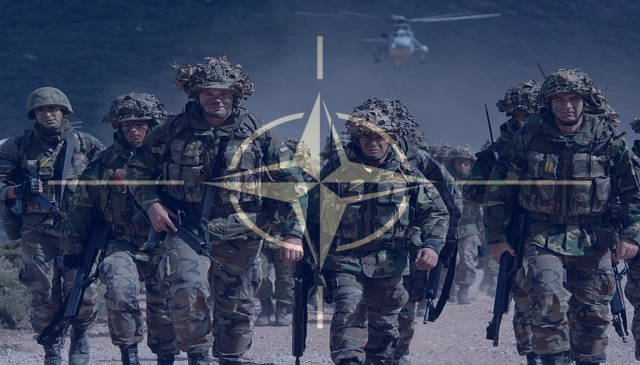
For NATO, the significance goes beyond the Middle East. Article 5 of the North Atlantic Treaty states that an armed attack against one ally shall be considered an attack against them all. NATO’s own official guidance describes collective defence as the alliance’s “most fundamental principle”, and the 2025 Hague Summit Declaration reaffirmed an “ironclad commitment” to Article 5.
That is why even rhetorical ambiguity matters. Analysts and officials have long warned that signals suggesting the United States might not honour its commitments could weaken deterrence and encourage adversaries to test the alliance. In practical terms, NATO’s credibility rests not only on force posture and readiness, but also on political certainty that the alliance’s leading military power would act in a crisis.
The timing is especially sensitive for Europe. The continent is already dealing with the military and economic consequences of the Iran war, including energy-market disruption and a renewed debate over strategic dependence on the United States. At the same time, European governments are watching the Trump administration’s wider posture on Russia, Ukraine, trade and Greenland, all of which have added strain to transatlantic relations. Iran conflict has intensified tensions that had already been building since Trump’s return to office.
This does not amount to a formal US withdrawal from NATO, nor to any announced change in treaty obligations. A full withdrawal could require congressional consent. But defence planning does not wait for formal legal rupture. Signals from senior officials affect risk assessments immediately, especially in frontline allied capitals and within ministries responsible for force posture, procurement and reinforcement planning.
For European defence policymakers, the story is therefore not simply whether Article 5 still exists on paper. It is whether the political assumptions that have underpinned European security for decades are becoming less reliable in practice. NATO’s official texts remain unchanged. The uncertainty lies in Washington’s current willingness to state, without qualification, that the commitment is intact.
That gap between treaty language and political messaging is now itself a strategic fact.



Paris Bomb Plot Foiled as Banks Shift to Remote Work Amid Security Fears