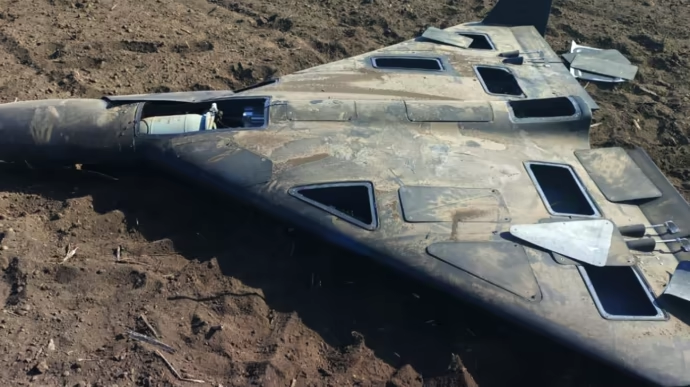
According to the report, senior figures in Moscow and Tehran began secret discussions on drone supplies within days of US and Israeli strikes on Iran. Western officials quoted by the FT said the process is expected to be completed by the end of March. The precise model of drone has not been publicly confirmed, but officials believe Russia may be supplying Geran-2 systems, the Russian-produced version derived from the Iranian Shahed-136 loitering munition.
That detail carries a strong element of symbolism as well as military significance. Iran previously supplied Russia with Shahed-family drones that were then used extensively against Ukraine. If Moscow is now returning adapted versions of the same platform to Tehran, it would underline how the military relationship between the two countries has developed into a two-way exchange rather than a one-sided procurement arrangement. It would also demonstrate that Russia’s wartime industrial base is now capable not only of absorbing Iranian drone designs, but of reproducing them for export back to its original partner. This is an inference from the reporting rather than a formally stated position by either government.
One western official quoted by the FT said Moscow’s objective goes beyond the immediate battlefield. In that assessment, the Kremlin is seeking to strengthen not only Iran’s combat capability but also the broader political stability of the regime in Tehran. That interpretation is consistent with the wider pattern of Russian-Iranian co-operation seen over the past two years, in which military, economic and diplomatic ties have deepened as both states confront western pressure and sanctions.
The reported drone deliveries are not the only sign of Russian military support. Earlier reporting by the FT said Iran had signed a secret agreement with Russia in December 2025 for the purchase of 500 Verba portable air-defence launchers and 2,500 associated missiles. Several outlets later echoed those details, describing the deal as part of Tehran’s effort to rebuild lower-layer air defences after earlier strikes had exposed serious vulnerabilities.
At the same time, Moscow appears to be drawing a line over more advanced systems. The FT report says Iran also asked Russia for more sophisticated air-defence assets, but that the Kremlin rejected a request for S-400 systems, one of the most advanced elements in Russia’s inventory. The refusal is understood to reflect concern in Moscow about the risk of a sharper confrontation with Washington. In effect, Russia appears willing to reinforce Iran, but not at a level that would amount to an unambiguous strategic escalation.
Moscow and Tehran: Alleged Verba Missile Agreement Adds New Pressure on Washington
That distinction matters. Portable systems such as Verba can improve point defence against low-flying aircraft, cruise missiles and drones, while strike drones such as the Geran-2 can be deployed rapidly and in significant numbers. The S-400, by contrast, would represent a much more visible upgrade to Iran’s strategic air-defence architecture and could be interpreted as a direct challenge to US and Israeli freedom of action. The reported Russian calculus therefore suggests calibrated support: enough to help Tehran withstand pressure, but not enough to remove all restraint from the regional balance. The description of Verba’s role is supported by reporting on the February agreement; the broader interpretation is analytical.
For Europe and Ukraine, the report has a wider significance. Kyiv has long argued that Russia’s partnership with Iran is not a regional matter but part of a larger anti-western axis linking conflicts in Europe and the Middle East. The reported transfer of Russian-made attack drones to Iran would reinforce that argument. It suggests that technologies, production lines and combat experience developed in one war theatre are now being redirected into another.
Whether the deliveries alter the immediate course of the conflict remains unclear. Much depends on the numbers involved, the operational condition of Iran’s launch infrastructure, and the degree to which US and Israeli forces adapt to the threat. But politically, the message is already clear. Russia is signalling that it will not remain a passive observer while one of its most important regional partners comes under sustained military pressure. Even without S-400 systems, the supply of drones and other support indicates a deeper level of Russian commitment to Tehran than before.