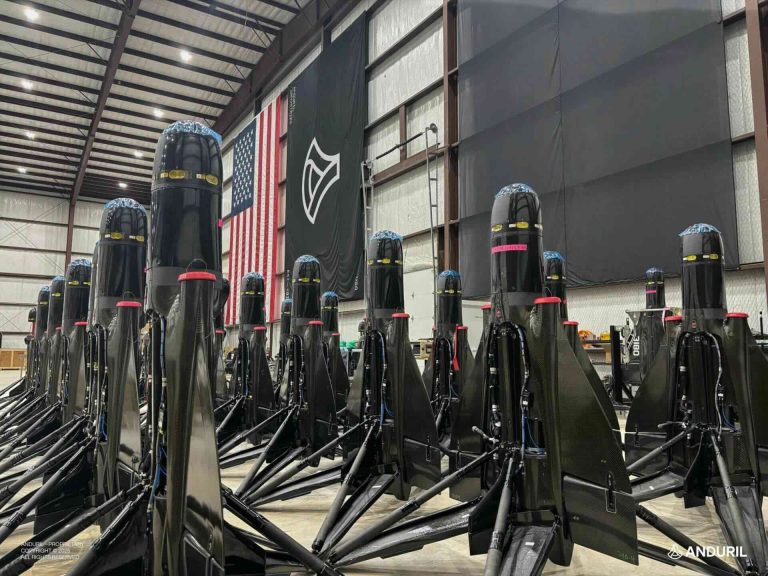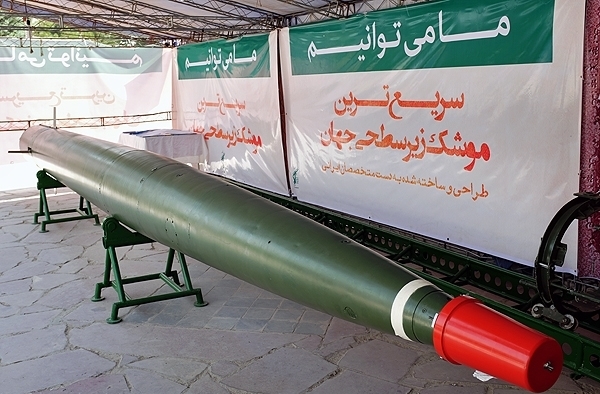
Its Iranian counterpart, widely identified as the Hoot, has been publicly known for two decades. Iran announced tests of the weapon in 2006, describing it as a high-speed underwater system capable of striking large surface targets and submarines. The Federation of American Scientists later noted further Iranian claims and linked the Hoot to the Russian Shkval family.
The technology behind the weapon is straightforward in concept and difficult in execution. A supercavitating torpedo travels inside a gas bubble created around its body, sharply reducing drag from the surrounding water. That is what allows such systems to reach speeds far beyond those of conventional torpedoes. Scientific American described the Russian design as travelling at around 230 miles per hour, or roughly 370 km/h, making it one of the fastest underwater weapons ever fielded.
Speed, however, comes with trade-offs. The Shkval has long been associated with relatively short range and limited manoeuvrability compared with slower conventional torpedoes. Publicly available assessments differ on exact figures, but most place its speed at over 200 knots and its range in the single-digit to low double-digit kilometre bracket. That combination means it is not a universal naval weapon. It is, however, potentially relevant in narrow and crowded waters such as the Strait of Hormuz.
That geography matters. The Strait of Hormuz remains the world’s most important oil chokepoint. According to the U.S. Energy Information Administration, oil flows through the strait averaged about 20 million barrels per day in 2024, equivalent to around one fifth of global petroleum liquids consumption. Britannica notes that the wider strait is far broader than the narrow image often invoked in political rhetoric, but the practical shipping lanes are constrained by navigational rules and coastal geography. In military terms, that makes the passage far more vulnerable than a simple map might suggest.
This is why the Hoot attracts attention. A short-range, very high-speed underwater weapon is of limited value in open ocean operations, but in confined waters its warning time can be measured in minutes. That does not by itself make it a decisive “carrier killer”, a phrase often used loosely in commentary, but it does reinforce a broader Iranian anti-access strategy built around geography, drones, anti-ship missiles, mines and fast-attack craft. A CSIS assessment of Iranian maritime threats argued that Tehran’s power in the Gulf rests not on symmetric naval strength but on layered, asymmetric pressure against shipping and warships operating near the Iranian coast.
The present crisis has pushed that logic back into view. Reuters reported this week that several merchant vessels have been struck in Gulf waters and that Washington is considering naval escorts for shipping in the Strait of Hormuz when militarily feasible. At the same time, U.S. officials have also cautioned against overstatement: Defence Secretary Pete Hegseth said on 13 March that there was no clear evidence Iran had mined the strait, despite earlier reports and heavy speculation. In other words, the maritime threat is real, but the exact weapons used in recent incidents remain uncertain.
That distinction is important because some of the strongest claims attached to the Shkval story are difficult to verify. It is true that the torpedo became entangled in a well-known espionage case after the Soviet collapse. The American businessman Edmond Pope was convicted in Russia in 2000 in a case centred on alleged attempts to acquire information relating to the Shkval; he was later pardoned. Contemporary reporting treated the case as evidence of continued Western interest in the weapon, though it did not prove the wider stories that have since grown up around its transfer and proliferation.
What can be said with confidence is narrower, but still significant. Iran has publicly displayed and discussed a supercavitating torpedo known as the Hoot. The original Soviet Shkval demonstrated that such weapons were technically feasible and strategically unsettling. And in a conflict centred on one of the world’s most sensitive maritime chokepoints, even the possibility that Iran can threaten shipping with a mix of underwater and surface systems is enough to complicate U.S. and allied planning. The central intrigue, then, is not whether one torpedo has already changed the war, but whether the mere prospect of such a weapon has altered the naval calculus in the Gulf.