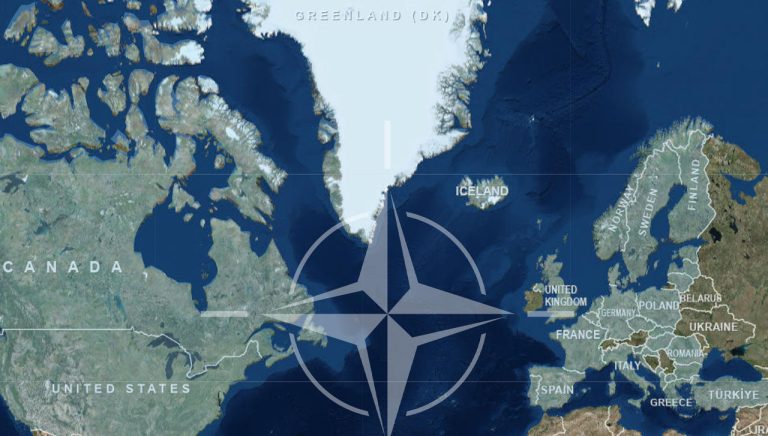
NATO allies are confronting an unusual mix of external coercion and internal strain after President Donald Trump renewed his push to bring Greenland under United States control, while the Pentagon placed a sizeable Alaska-based force on standby for possible domestic deployment.
In Brussels on Monday, Denmark and Greenland floated the idea of a NATO mission focused on Greenland and the wider Arctic. Danish defence minister Troels Lund Poulsen said the proposal had been discussed with the Greenlandic government and presented to NATO Secretary General Mark Rutte.
The talks come amid a steady escalation from Washington. Earlier this month, the White House said Trump and his advisers were examining “a range of options” for acquiring Greenland and that use of the US military was “always an option” available to the commander-in-chief. Reuters reported that options being discussed included an outright purchase or a Compact of Free Association arrangement, while Greenland’s leaders have repeatedly said the island is not for sale.
Over the weekend, the confrontation widened to trade policy. Trump has threatened tariffs against European countries opposed to a US acquisition, prompting discussions inside the European Union over countermeasures. On Sunday, US Treasury Secretary Scott Bessent argued on American television that European “weakness” necessitated US control of Greenland in what he described as a geopolitical contest with Russia and China.
The emerging rift has triggered debate on both sides of the Atlantic about the limits of alliance solidarity. Denmark is a long-standing US ally and a NATO member; Greenland is a self-governing territory within the Kingdom of Denmark. NATO, for its part, has stressed the Arctic’s growing importance to collective security, and noted its expanding deterrence and defence posture in the High North.
Alongside diplomacy, recent military movements have added to the tension. On Sunday, US media reported that about 1,500 active-duty soldiers from Alaska had been given prepare-to-deploy orders for potential deployment to Minnesota, where protests have been linked to federal immigration enforcement operations. Two infantry battalions from the Army’s 11th Airborne Division were cited, with officials indicating deployment would be contingent on Trump invoking the Insurrection Act, a rarely used statute that can allow active-duty forces to be used domestically in certain circumstances.
The 11th Airborne Division, known as the “Arctic Angels”, is headquartered in Alaska and is organised around extreme cold-weather capability. That specialisation has fed speculation in some commentary that the alert posture could also fit a Greenland contingency, though no public evidence has been produced of a deployment order connected to Greenland. The Pentagon has not, publicly, linked the Minnesota standby posture to any overseas planning.
Separately, Washington is moving to strengthen infrastructure at its existing installation on the island. The Department of Defense has sought work worth up to $25 million to improve runways and airfield systems at Pituffik Space Base, previously known as Thule Air Base. The work is framed as infrastructure modernisation, but it would also support sustained flight operations at the base.
Pituffik is central to the military geography of the Arctic. Established under a 1951 defence agreement between the United States and Denmark, it supports missile warning, missile defence and space surveillance missions for the US and NATO. The installation, on Greenland’s north-western coast, was renamed in 2023 to reflect Greenlandic heritage and the base’s Space Force role.
The political shock in Europe has been sharpened by the fact that the pressure is coming from within the alliance. Some analysts have framed Trump’s approach as a negotiating tactic: maximal demands, followed by a deal if resistance proves costly. Others, including lawmakers in Washington, have raised concerns about executive overreach if emergency powers were invoked to justify force. Senator Rand Paul, the Republican chair of the Senate Homeland Security Committee, called the idea of using emergency powers for Greenland “ridiculous”, according to Reuters.
European governments are now attempting to demonstrate that Arctic security can be handled within alliance structures, rather than through unilateral US action. Denmark’s push for a NATO mission is part of that effort, signalling that Greenland’s defence can be addressed as a collective task.
Two near-term indicators will shape perceptions in European capitals: whether Trump moves to invoke the Insurrection Act in relation to Minnesota, and whether NATO members can rapidly agree a practical framework for an Arctic mission centred on Greenland. For now, the core facts are clear: the White House has kept military options on the table for Greenland, Europe is discussing retaliation against tariff threats, and US forces trained for Arctic operations have been placed on standby amid a volatile political backdrop.