Brovdi said the figure reflected “confirmed” losses inflicted by drone units, without including artillery, armour, infantry engagements or air strikes. Ukrainian reporting put the total at 33,019 Russian personnel affected in December, using the Ukrainian military’s formulation of “losses of manpower”.
The claim, if accurate, underlines the centrality of drones in a war increasingly defined by surveillance, electronic warfare and short-range precision strikes along the front. It also speaks to a broader Ukrainian effort to use remotely piloted systems to offset manpower constraints and to raise the cost of Russian assaults, particularly during periods of intensified ground activity.
Brovdi’s remarks link the December number to assessments of Russian recruitment. Several open-source analyses and Ukrainian-cited briefings have put Russia’s contract recruitment at around 30,000 troops per month, a level described as sufficient to sustain operations while absorbing heavy casualties.
Russian officials have periodically claimed higher recruitment totals. Those figures are difficult to reconcile with independent assessments and with the scale of bonuses and regional incentives Russia has used to attract volunteers.
Ukraine’s argument is that drones are shifting the balance of attrition: if drone units can consistently remove from the battlefield a number comparable to Russia’s monthly recruitment, Russia’s effective manpower pool may stop growing and begin to contract unless mobilisation or higher recruitment compensates. That conclusion depends on several variables, including the proportion of losses that are wounded rather than killed, the time required for recovery and return to duty, and the ability of Russia’s training and command systems to absorb new recruits.
Ukrainian officials have in recent years promoted a system of recording battlefield effects from drones, including video confirmation of strikes. Ukraine’s digital transformation ministry has highlighted a “bonus” model in which units receive points for verified hits and can redeem them for equipment through a procurement marketplace, alongside central supply.
The structure reflects the way drones have become both a weapons category and an industrial ecosystem. Ukraine has created a dedicated branch, the Unmanned Systems Forces, to consolidate development, training, procurement and battlefield deployment, and to integrate drones with targeting and command networks.
Brovdi, a former businessman turned drone commander, was appointed to lead the branch in 2025 as Ukraine sought to professionalise a field that grew rapidly from volunteer initiatives and ad hoc units into a mass battlefield capability.
The December claim sits alongside other Ukrainian reporting on the expanding scale of unmanned operations. Ukrainian outlets have described an increasing tempo of strikes against Russian air defence assets and radar systems using drones, presenting the campaign as part of a wider effort to open corridors for longer-range attacks and to reduce Russian protection of key nodes.
Russia, for its part, has reported record numbers of Ukrainian long-range drones intercepted over its territory, including around Moscow, with recurring disruptions to airports and local infrastructure. Ukraine rarely comments on specific strikes inside Russia, but the pattern points to an effort to pressure Russian logistics, air bases and industrial sites while continuing to contest the front.
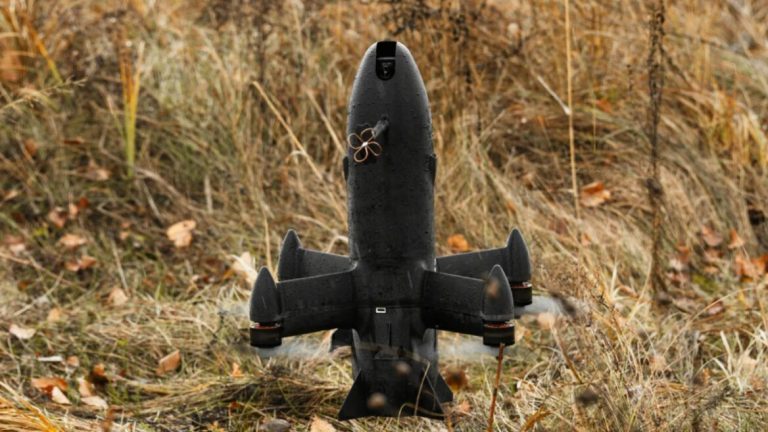
On the battlefield, drones fulfil multiple roles: reconnaissance, artillery spotting, electronic warfare detection and direct attack. Short-range first-person-view drones are used against infantry in trenches and buildings; heavier systems deliver munitions; and longer-range drones strike depots, airfields and energy-related targets. In many sectors, the density of drones has reduced freedom of movement in daylight and forced both sides to disperse, mask emissions and use decoys.
The strategic question is whether Ukraine can sustain and scale this output amid countermeasures. Russia has invested heavily in electronic warfare, air defences, drone hunting teams and its own mass production of drones. Ukraine has similarly expanded domestic output and sought external support for components, software and advanced systems. The contest is now as much about production, training pipelines and frequency of adaptation as it is about territorial advances.