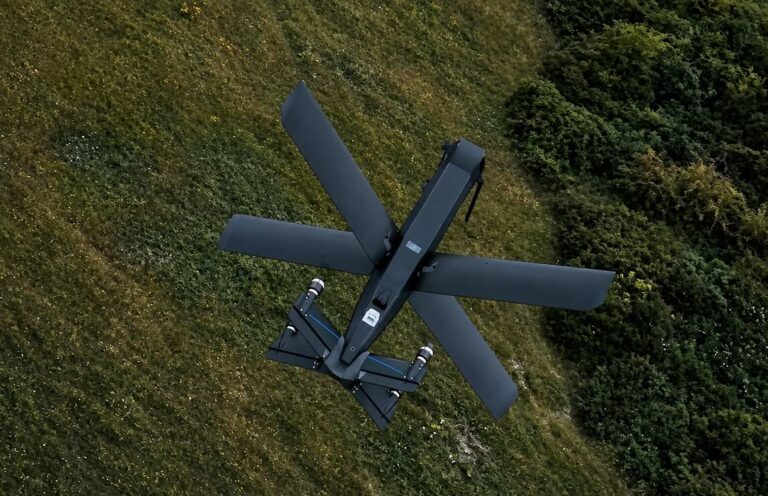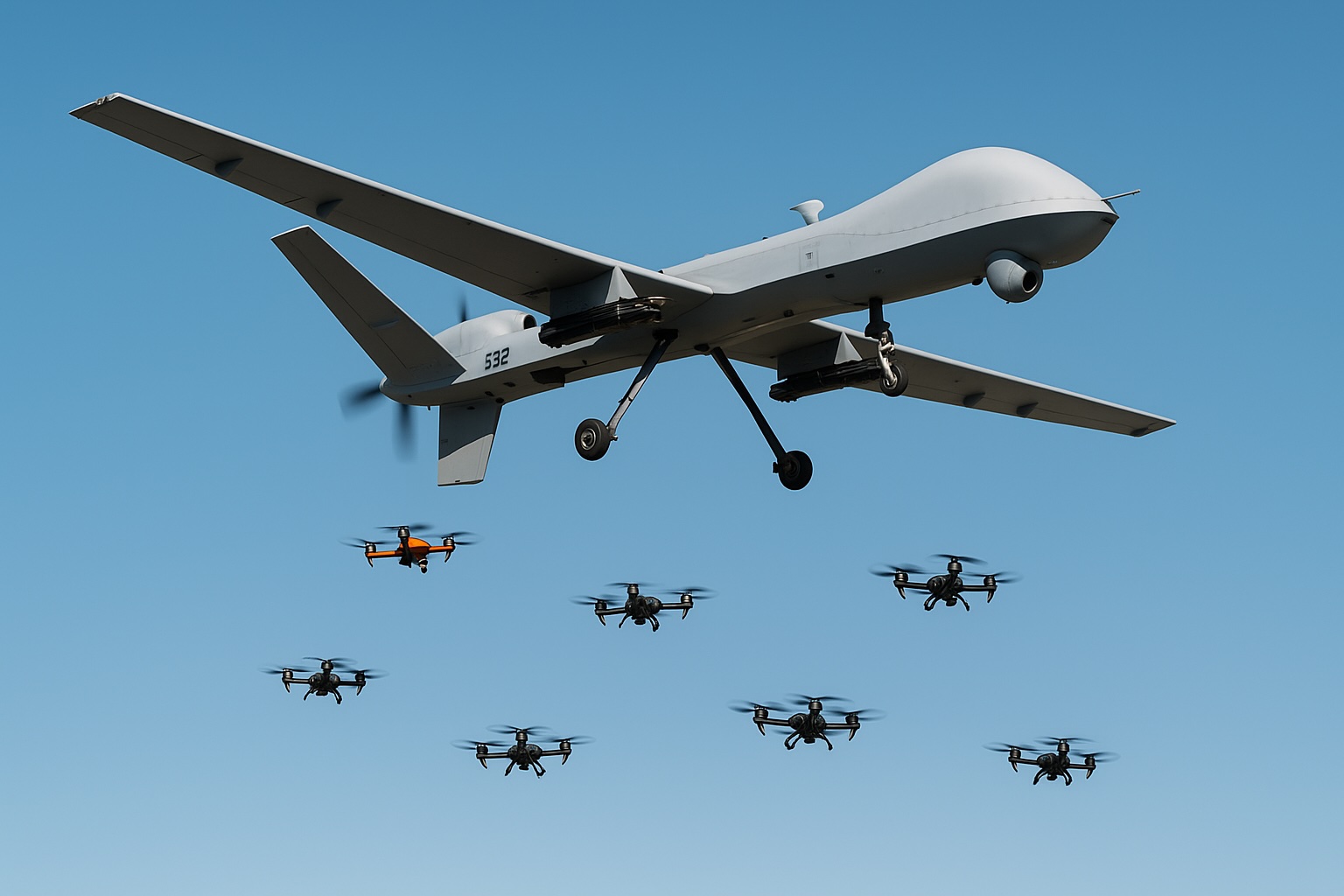
According to recent reports, the DWS-1 system developed by French company Atreyd is due to be tested in combat in Ukraine. The architecture envisages up to 200 FPV-type interceptor drones networked to an AI-driven command system, with one operator able to manage as many as 100 drones at once. The swarm can operate autonomously or under human supervision and is designed to function without GPS, addressing Russia’s extensive jamming of satellite navigation.
The concept of a “drone wall” has already entered European strategic debate. Baltic and Nordic states are working on a multilayered defensive shield, built around systems such as the Estonian–Latvian Eirshield platform, which combines radar, cameras and radio-frequency sensors to classify incoming drones and decide whether to jam, spoof or physically intercept them. In Ukraine, however, the emphasis is on kinetic interception by swarms of relatively cheap FPV drones, tailored to counter mass attacks by Shahed-type loitering munitions and other Russian unmanned systems.
The need for such innovations is driven by the scale and tempo of drone use in the war. Russia’s large-scale strikes regularly involve more than 100 Shahed-type drones in a single night, while Ukraine has responded with its own deep-strike campaigns against Russian logistics and energy infrastructure.
At the same time, Kyiv has moved interceptor drones into mass production, with officials speaking of contracts for “tens of thousands” of systems to bolster air defence and relieve pressure on traditional surface-to-air missile stocks.
AI-enabled interceptor swarms are intended to address a basic constraint: manpower. Each conventional FPV drone requires a dedicated pilot. During mass attacks that can involve hundreds of incoming targets, this model quickly becomes unworkable. It is unrealistic to expect one operator per drone in such circumstances; autonomous functions and decision-support tools are required if defenders are to scale up.
Systems like DWS-1 and other interceptor concepts showcased in Europe attempt to solve this problem by placing more decision-making on board the drone. Using computer vision and trained target libraries, the interceptor is programmed to recognise specific classes of hostile drones, calculate an interception course and ram or detonate at close range. The human operator retains overall control – authorising launches, defining protected areas and setting engagement rules – but does not manually fly each platform to its target.
Ukraine’s environment makes it an attractive, if harsh, test site for this technology. The conflict features dense electronic warfare, with both sides jamming communications links and satellite navigation. This forces developers to build systems that can function with degraded connectivity, rely less on GPS and make more use of inertial navigation and on-board processing. Western studies note that Ukraine has already fielded drones capable of locking onto pre-identified targets in the final approach phase to overcome jamming, a capability that feeds directly into counter-drone applications.
The war also offers a wide spectrum of targets. Russian forces employ reconnaissance UAVs, loitering munitions, cruise-missile-like drones and larger unmanned aircraft, each of which presents different signatures and flight profiles. Ukrainian industry and military units have developed a variety of interceptor types in response, ranging from high-speed ramming drones to quadcopters mounting shotgun-type weapons. Testing these designs against real threats provides data that would be difficult to obtain in peacetime trials.
European governments are watching closely. The EU and several member states have signalled interest in using Ukrainian-developed systems as part of a broader “drone wall” to protect the continent’s eastern flank, and are investing in Ukrainian manufacturers through schemes that fund domestic production for use on the Ukrainian front. For Europe’s defence-tech sector, Ukrainian battlefields function as a live laboratory in which algorithms, sensors and engagement tactics are refined before being integrated into NATO air and missile defence networks.
Significant challenges remain. Ensuring reliable identification of targets is critical in complex airspace that also contains friendly drones and manned aircraft. Developers must strike a balance between autonomy and human control, both for safety and for compliance with emerging norms on the use of AI in weapons systems. There are also cost considerations: although individual FPV airframes are relatively cheap, true “wall” coverage over large areas requires sustained industrial output and secure supply chains for electronics.
Nonetheless, the direction of travel is clear. The combination of mass-produced interceptor drones, AI-enabled control systems and lessons derived from Ukraine’s experience is reshaping how militaries think about air defence. What is being tested over Ukrainian cities and infrastructure today is likely to inform how European states attempt to protect their own airspace against drone threats in the years ahead.