

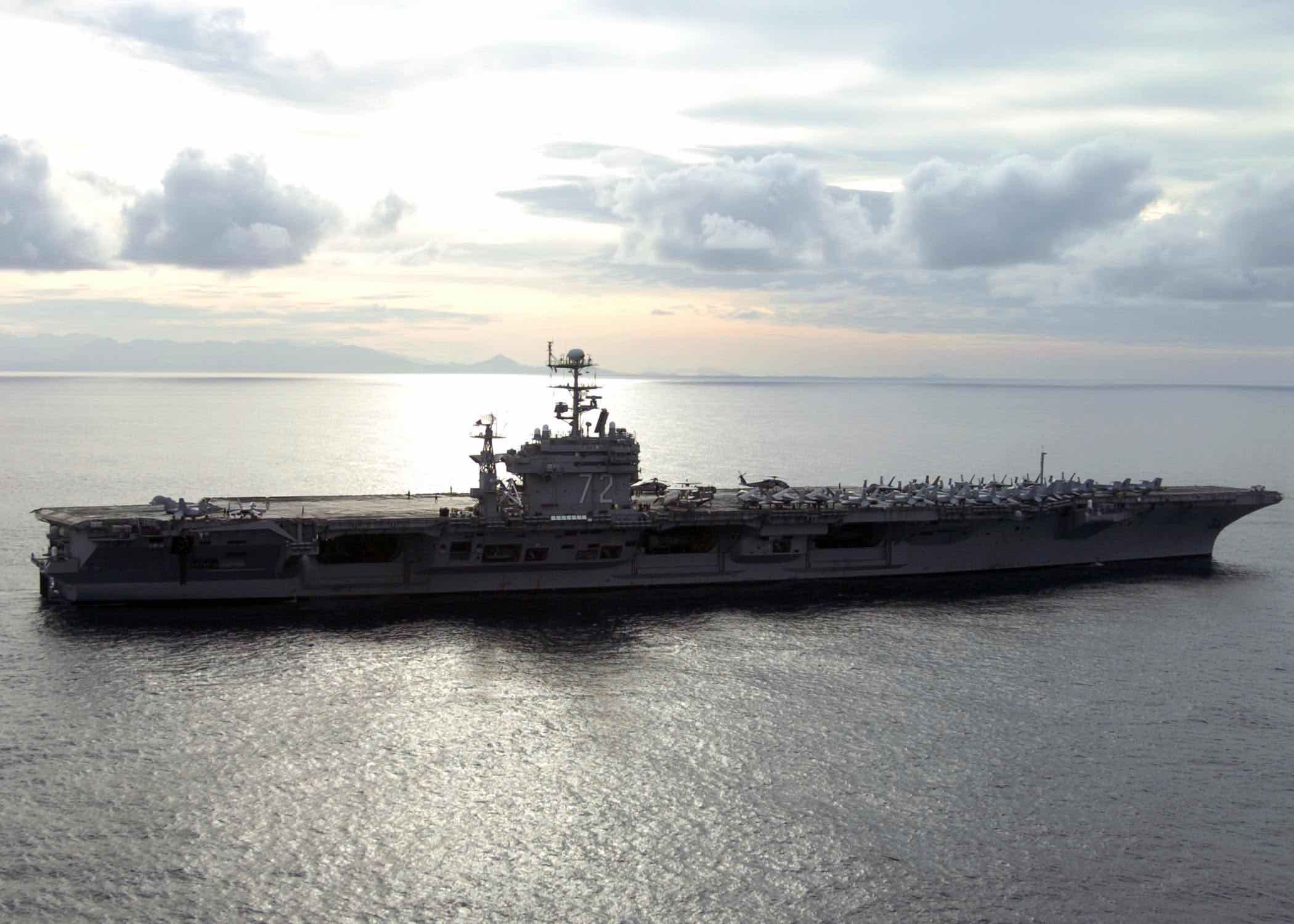
A visit by the head of US Central Command to USS Abraham Lincoln has placed renewed attention on the human and maintenance costs of keeping an aircraft carrier at sea for more than 200 days without a port call.
Admiral Brad Cooper, commander of US Central Command, has defended conditions aboard USS Abraham Lincoln after visiting the aircraft carrier during a regional tour that ended on 15 August.
The carrier has remained at sea without a port visit for more than 200 days while supporting sustained US operations in the Middle East. The Associated Press reported that the uninterrupted period had passed 240 days, making it a record-setting stretch for the ship.
Cooper said the deployment would be remembered as one of the most operationally intense of the modern era. In a subsequent statement, he said the ship had the lowest number of mental-health cases among the US Navy’s 11 active aircraft carriers and praised its leadership for prioritising resilience.
That comparison should be treated as a claim by the theatre commander. No underlying Navy dataset has been released to show how cases were counted, whether reporting practices were comparable across carriers or how the figure relates to the length and intensity of the deployment.
The wider question is not whether Abraham Lincoln remains operational. It is how long a carrier strike group can sustain an exceptional tempo before the cumulative burden begins to affect personnel, maintenance and future availability.
An aircraft carrier is often discussed principally as a weapons platform: a nuclear-powered flight deck able to move air power without reliance on a land base. Operational endurance, however, depends on thousands of sailors and Marines working in a confined environment, maintaining aircraft and machinery, handling ammunition, supplying food and conducting continuous flight operations.
The absence of a port call removes an important opportunity for rest, resupply and work that is easier to perform alongside than at sea. It also keeps the crew separated from families for a prolonged and uncertain period.
Reports from relatives and sailors have alleged worsening supply, sanitation and mental-health conditions aboard the ship. Those accounts remain contested, and CENTCOM’s public response has emphasised operational success and leadership rather than accepting that conditions have deteriorated.
Even if the command’s mental-health comparison is accurate, it cannot by itself establish that an exceptionally long deployment is sustainable. Low recorded case numbers may indicate effective support, but they do not measure fatigue, retention intentions, unreported distress or the impact of prolonged uncertainty on families ashore.
The second burden is mechanical. Carrier operations require constant maintenance of the ship, its nuclear propulsion plant, aviation systems and embarked air wing. Work can be conducted at sea, but prolonged deployment can defer deeper maintenance and compress the time available before the next operational cycle.
This matters beyond a single carrier. Keeping one ship forward for longer can solve an immediate command requirement while shifting risk into later readiness periods. A delayed maintenance availability or an exhausted crew can reduce the number of carriers available to respond elsewhere.
Abraham Lincoln’s deployment has supported US operations against Iran and the blockade of Iranian ports. Those missions demonstrate the strategic value of naval aviation, but they also show how a sustained regional commitment can consume force capacity that Washington may need in the Indo-Pacific or another theatre.
Cooper’s visit and public defence of the crew are significant because they amount to an operational response to growing scrutiny. The Navy is asserting that the ship remains effective and that its leadership has contained the personnel effects of the deployment.
That claim would be more persuasive if supported by comparable data on mental-health referrals, medical evacuations, mishaps, retention, equipment readiness and deferred maintenance. Without those measures, operational output risks becoming the sole test of readiness.
The carrier’s performance may be exceptional. The deployment should not automatically become the model. Sustaining naval power requires more than proving that a crew can endure an extraordinary tour; it requires ensuring that the people and ship can recover sufficiently to serve again.

_stationed_off_the_coast_of_the_island_of_Sumatra,_Indonesia.jpg)
Trump’s VA Gamble: Less Bureaucracy, More Service