According to a recent Reuters investigation, this tranquil archipelago, lying less than 90 miles from Taiwan, has quietly become the centrepiece of America’s plan to contain China’s naval ambitions.
At stake is the Bashi Channel, a narrow passage between the Philippines and Taiwan that serves as the gateway between the South China Sea and the Pacific Ocean. For the United States and the Philippines, it is a natural chokepoint through which China’s growing navy must pass if it hopes to project power into the wider Pacific. For Beijing, it represents both opportunity and vulnerability — the route by which it could break free of the First Island Chain, or the trap that could confine it there.
Yet this is no mere tactical contest. It is a confrontation between two worldviews: one built upon the maritime freedom of sovereign nations, the other driven by the ideological imperative of Communist expansion.
Communist systems, from Lenin’s Moscow to Xi Jinping’s Beijing, have always treated expansion as a virtue. Under Marxist doctrine, revolution is international by design — borders are temporary inconveniences in the march toward ideological dominance. That doctrine, transposed into Chinese statecraft, underpins Beijing’s modern strategy: extend control outward, assert dominance regionally, and recast it all as the “restoration of historical rights”.
From the annexation of Tibet to the militarisation of the South China Sea, the pattern is unmistakable. The Chinese Communist Party (CCP) justifies every new advance — every artificial island, every grey-zone incursion, every naval patrol beyond its own coast — as a matter of destiny and defence. In truth, it is the physical expression of a political creed that cannot survive without expansion.
The Reuters report notes that Chinese carrier groups, including the Shandong, have already pushed through the Bashi Channel into the Pacific — a signal that the PLAN no longer sees itself as confined to coastal waters. Each such passage tests the resolve of those who would defend the First Island Chain, and each underlines the ideological conviction that geography and sovereignty are subordinate to the Party’s will.
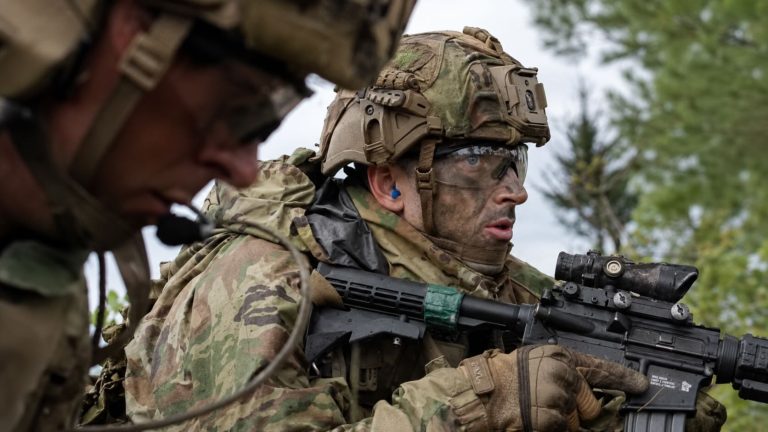
The U.S. response has been to turn geography itself into a weapon. In partnership with the Philippines, Washington is transforming Batanes into a forward fortress — a point of denial in the heart of the Pacific. American Marines have practised deploying Naval Strike Missiles (NSM) and their robotic launcher system, NMESIS, by air-lifting them onto the islands and simulating strikes against hostile ships attempting to transit the strait.
This is more than training. It is an explicit rehearsal for the day when U.S. and Philippine forces might have to close the Bashi Channel, blocking the PLAN’s access to open waters. As retired Philippine Rear Admiral Rommel Ong told Reuters: “In a conflict scenario, that decisive point will determine who wins or who loses.”
The re-energised alliance between Washington and Manila marks a strategic reversal. Under former president Rodrigo Duterte, the Philippines flirted with Beijing, seeking investment and soft diplomacy. Under President Ferdinand Marcos Jr., that experiment has ended. The Philippines is once again aligned with its treaty ally, granting the U.S. access to key northern bases and committing to joint patrols in the South China Sea.
But the shift carries risk. The islands of Batanes — small, exposed, and home to just a few thousand civilians — could easily become ground zero in a confrontation between the world’s two largest powers. Local residents now speak less of fishing yields and more of evacuation routes. For them, the “First Island Chain” is no abstraction; it is home.
Predictably, Beijing has denounced the missile drills and deployments as “provocations” that threaten “regional peace”. Yet such outrage rings hollow. It is China’s relentless militarisation of the South China Sea — the dredging of reefs, the construction of airstrips, and the harassment of foreign vessels — that has destabilised the region.
The Reuters investigation makes clear that Beijing’s moves are not defensive improvisations, but calculated assertions of dominance. Expansion cloaked as reclamation. Deterrence disguised as “reunification”. This is the logic of Communist expansionism: advance, justify, consolidate — then accuse others of aggression.
The danger is that geography leaves little room for error. The Bashi Channel is barely 160 kilometres wide. A misinterpreted radar signal or an accidental missile lock could ignite a crisis in minutes.
For Washington, the renewed focus on the Bashi Channel echoes the strategic logic of the Cold War’s Fulda Gap — a narrow corridor in Germany that symbolised the frontier between freedom and totalitarianism. The principle is the same: hold the chokepoint, contain the ideology.
The presence of U.S. forces in Batanes is thus not just a tactical hedge against Chinese naval movement; it is an ideological countermeasure. It signals to Beijing that the free world will not abandon the sea lanes upon which open economies depend, nor concede to the idea that one-party regimes have a right to dominate their neighbourhoods.
This logic extends far beyond the Pacific. Europe’s experience with Russian aggression underscores how expansionist ideologies, left unchecked, metastasise. From Crimea to the South China Sea, authoritarian powers use the same playbook: create facts on the ground, dismiss opposition as “provocation”, and exploit the West’s hesitancy to act.
It would be a mistake to view the struggle over the Bashi Channel as an isolated Pacific quarrel. It is a test case for whether democratic alliances can resist the steady, ideologically driven advance of authoritarian power. The Reuters investigation shows that America’s strategy in the Philippines is as much about values as it is about geography: ensuring that small nations are not left defenceless against larger bullies cloaked in revolutionary rhetoric.
As U.S. missile units rotate through Batanes and Chinese carrier groups prowl just beyond the horizon, the world is witnessing a confrontation that fuses strategy and ideology. The contest is between expansion and restraint, compulsion and consent, authoritarian certainty and democratic caution.
For the CCP, expansionism is not merely a policy; it is an existential necessity. For the free world, containing it is vital for our survival.
The fate of the Pacific may hinge on a sliver of sea few could pinpoint on a map. In the Bashi Channel, Communist China’s expansionist creed meets the physical limits of geography — and the determined resistance of allied democracies.
Whether this remains a theatre of deterrence or becomes a battlefield will depend not only on missiles and manpower, but on resolve. If the free nations of the Indo-Pacific, backed by Europe, stand firm, the narrow strait between Taiwan and the Philippines could mark the outer limit of Communist expansion.
Should they falter, it may instead become the passage through which China’s ideological ambitions flow unrestrained into the Pacific — and the world beyond.
Main Image: By CharMel Creations – Own work, CC BY-SA 4.0, https://commons.wikimedia.org/w/index.php?curid=136633421
China and Russia Join Forces in Pacific Drills, Sparking Alarm in Canberra