Faced with mounting geopolitical pressures, Prime Minister Anthony Albanese’s government has taken a stance rooted not in hyperbole or reflexive hostility, but in clear-eyed pragmatism, and this should be welcomed across the free world.
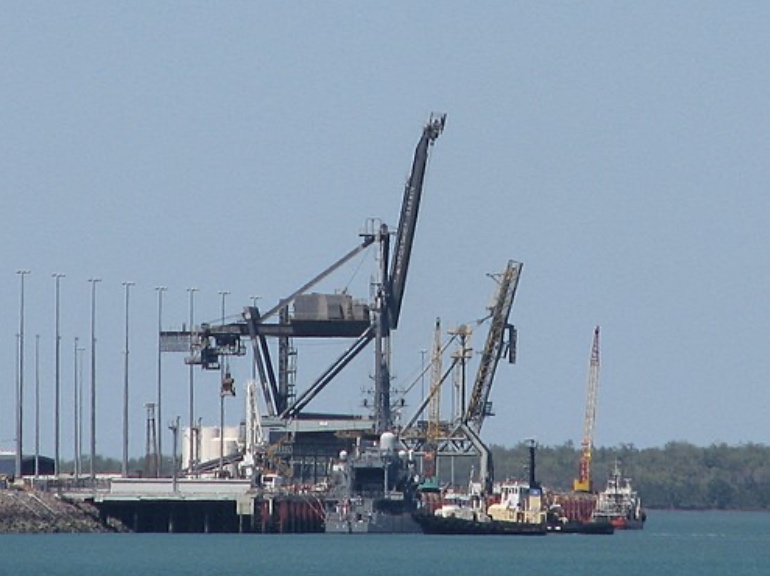
At its core, the dispute revolves around the 99-year lease of the Port of Darwin to the Chinese company Landbridge, granted a decade ago by the Northern Territory government. Though initially uncontroversial, the arrangement became symbolic of the broader strategic dilemma facing Canberra: how to balance economic ties with China against the imperatives of national security and regional stability. Now, the Albanese government has resolved that this balance has tipped too far, and that control of a critical piece of national infrastructure should rest within Australian hands.
Unsurprisingly, Beijing’s response has been combative. China’s ambassador to Australia, Xiao Qian, has issued warnings of potential repercussions, claiming that any forced cessation of the lease could harm bilateral trade relations and necessitate intervention to protect Chinese interests. His comments read less like diplomatic admonitions than the rhetorical flurries of a state apparatus unaccustomed to being challenged on strategic grounds by one of its major partners.
Yet these pronouncements — couched in stern language about economic consequences — only underline the wisdom of Canberra’s resolve. For too long, established democracies have relied on the comforting fiction that economic interdependence with China would serve as a bulwark against coercive diplomacy. The past decade has laid bare the flaws in this assumption. Whether it has been targeted tariffs, sanctions over foreign political expressions, or threats tied to strategic assets, the pattern has been consistent: Beijing conflates commercial interests with geopolitical leverage, to the detriment of stable bilateral relationships.
In this context, the Albanese government’s move should be read not as an act of escalation but as a sober adjustment to a changed reality. The prime minister’s commitment to “make sure that that port goes back into Australian hands because that is in our national interest” is a statement of basic sovereignty, not brinksmanship.
Critics of Canberra’s decision might argue that economic ties with China are too significant to imperil over a single port. Indeed, China remains one of Australia’s largest trading partners, with two-way commerce amounting to hundreds of billions of dollars annually. But to reduce this debate to mere economics is to miss the fundamental point: sovereignty and security form the bedrock upon which sustainable economic relationships are built. Compromise on strategic fundamentals for short-term economic benefits is a Faustian bargain that history has shown rarely pays off.
What is particularly commendable about the Albanese government’s approach is its steadfastness in the face of pressure. Rather than flinch at diplomatic warnings or seek to defuse the matter through concessions, Canberra has pursued its policy with clarity and consistency. That is leadership, plain and simple. It is also leadership that recognizes the duty of a sovereign nation to set the terms of engagement on issues that shape its own strategic landscape.
Beyond Australia’s shores, the implications of this episode resonate with democracies wrestling with similar dilemmas. In Europe, North America and Asia, policymakers are grappling with the challenge of engaging economically with China without ceding strategic autonomy. Australia’s handling of the Darwin port issue offers a template for how to strike that balance: be firm on core interests, transparent in intent, and resilient in the face of calculated pressure.
Some will doubt whether the port plan will be fully realised, pointing to ongoing negotiations over compensation and legal mechanisms. Yet the symbolic significance of the move has already been felt. It signals a readiness to reassess the assumptions of the past decade and to prioritise national security in a world where strategic contestation is no longer a distant abstraction.
If there is a lesson to be drawn from Canberra’s resolve, it is that pragmatism grounded in principle remains one of the most potent virtues of democratic governance. In an era marked by geopolitical tumult, such an approach is not just desirable; it is necessary.
The Albanese government’s decision — measured, deliberate and rooted in a sober assessment of Australia’s interests — deserves not only domestic support but international recognition. In quietly asserting the fundamentals of sovereignty and security, Australia has charted a course that others in the free world might well consider emulating. Now, more than ever, such pragmatic leadership is not merely welcome — it is indispensable.
Main Image: – Darwin’s East Arm Port August 2007 Uploaded by tm