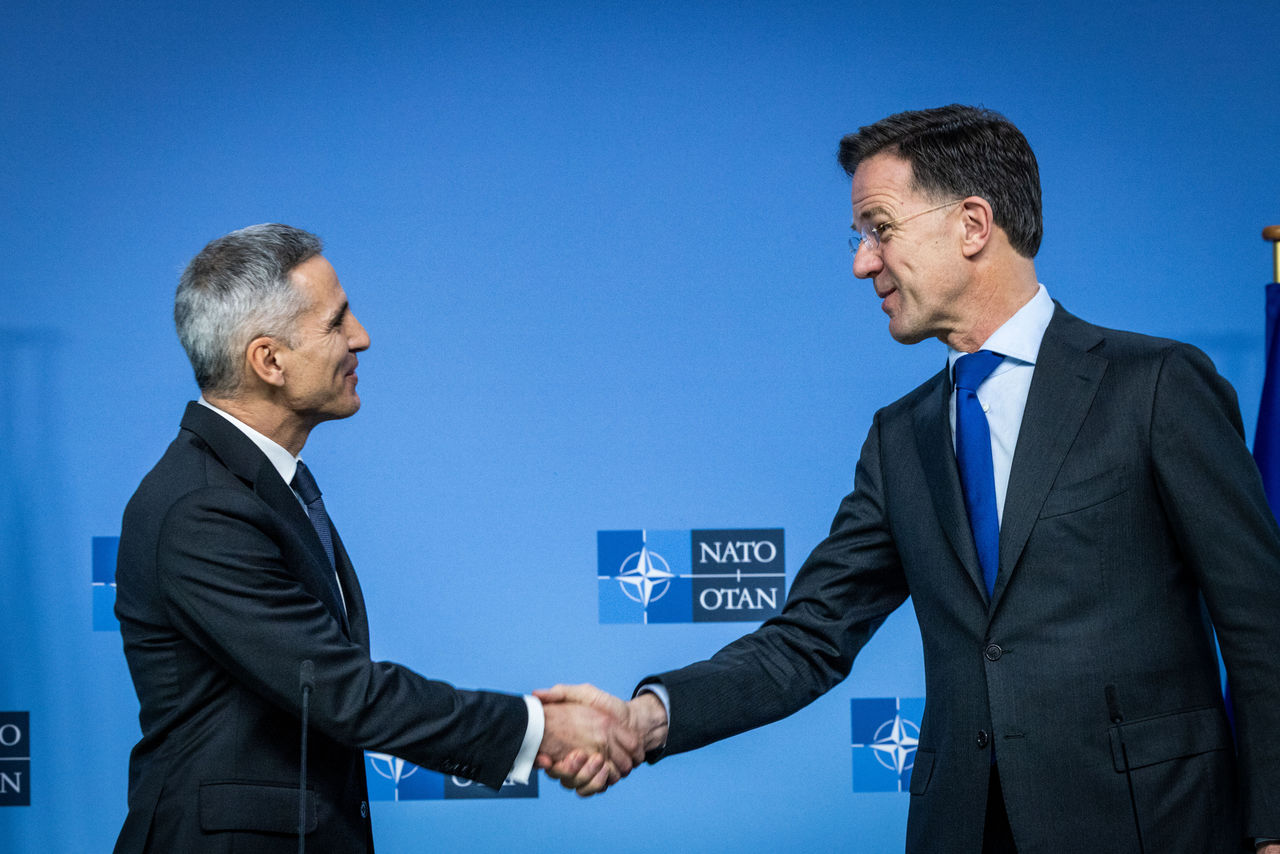
NATO used a pair of meetings in Brussels on Thursday to underline the strategic weight of Romania and Bulgaria on the Alliance’s eastern flank, with Secretary General Mark Rutte highlighting both countries’ role in Black Sea security and wider deterrence measures along NATO’s front line with Russia.
In separate engagements on 19 March, Rutte welcomed Romanian President Nicuşor Dan and Bulgarian Prime Minister Andrey Gurov to NATO headquarters. The meetings were not presented as major policy announcements, but the language used by NATO was clear and consistent: both countries are central to the Alliance’s posture in the Black Sea region and on the eastern flank.
In NATO’s account of the Romanian meeting, Rutte described Romania as strategically important on the eastern flank and in the Black Sea region. He pointed to Romania’s hosting of the French-led NATO Forward Land Forces, its defence investment, and its role in recent allied air activity. NATO said Rutte cited the joint scrambling of allied aircraft and Romanian F-16s, as well as the interception of Iranian ballistic missiles heading towards Türkiye, as examples of the Alliance’s readiness to defend allied territory. He also referred to Eastern Sentry, launched in September 2025, as a multi-domain activity that has strengthened allied presence across land, sea and air along the eastern flank.
NATO also used the Romanian meeting to emphasise defence spending and industrial capacity. According to the Alliance, Rutte commended Romania for spending more than 2 per cent of GDP on core defence and for planning to reach 2.5 per cent this year, while also calling for industry to increase output. He further noted Bucharest’s hosting of the NATO-Industry Forum last November as part of efforts to deepen defence-industrial cooperation and innovation.
The Bulgarian meeting was shorter and lighter in formal detail, but the message was similar. NATO said Rutte praised Bulgaria for its contribution to deterrence and defence on the eastern flank and for its key role in the security of the Black Sea region, which it described as an area of strategic importance for the Alliance. NATO also said he commended Bulgaria for its consistent support for Ukraine.
Taken together, the two meetings show where NATO wants to keep attention fixed. The eastern flank remains the Alliance’s main territorial defence priority, and the Black Sea continues to be treated as a strategic theatre rather than a secondary one. NATO’s own background material says its Forward Land Forces now consist of eight multinational battlegroups stationed along the eastern flank, including in both Romania and Bulgaria. It also says Eastern Sentry was launched in 2025 to increase vigilance across the full eastern flank, while maritime, air defence, cyber and resilience measures have all been reinforced.
For Defence Matters readers, the significance lies less in the protocol of the Brussels meetings than in what they indicate about NATO planning. Romania is increasingly framed as a hub for integrated air, land and regional deterrence in the Black Sea space. Bulgaria, meanwhile, is being presented not simply as a flank state but as a contributor to Black Sea security in its own right. The emphasis on investment, industrial output and multi-domain presence suggests NATO is continuing to move from reassurance to sustained forward defence. That is particularly relevant as allied governments balance support for Ukraine with the need to strengthen their own readiness and infrastructure.