President Volodymyr Zelenskyy has said Ukraine will begin exporting domestically produced weapons under a new framework intended to turn the country’s wartime defence industry into a broader strategic asset for partner states.
The announcement, made on April 28, followed what Zelenskyy described as an expanded meeting on the key issues surrounding the export of Ukrainian weapons. According to the Ukrainian President’s office, the details had been agreed at the level of state institutions, with the National Security and Defence Council, the Ministry of Defence, the General Staff, the Foreign Ministry, intelligence agencies and the Security Service of Ukraine all assigned roles in the process.
“Ukrainian weapons exports will become a reality,” Zelenskyy said, adding that Ukraine’s military would retain priority access to all necessary equipment before any surplus could be sent abroad. He said that in some areas of production Ukraine now has surplus capacity of up to 50 per cent, which he attributed to state investment in the defence industry and co-operation with international partners.
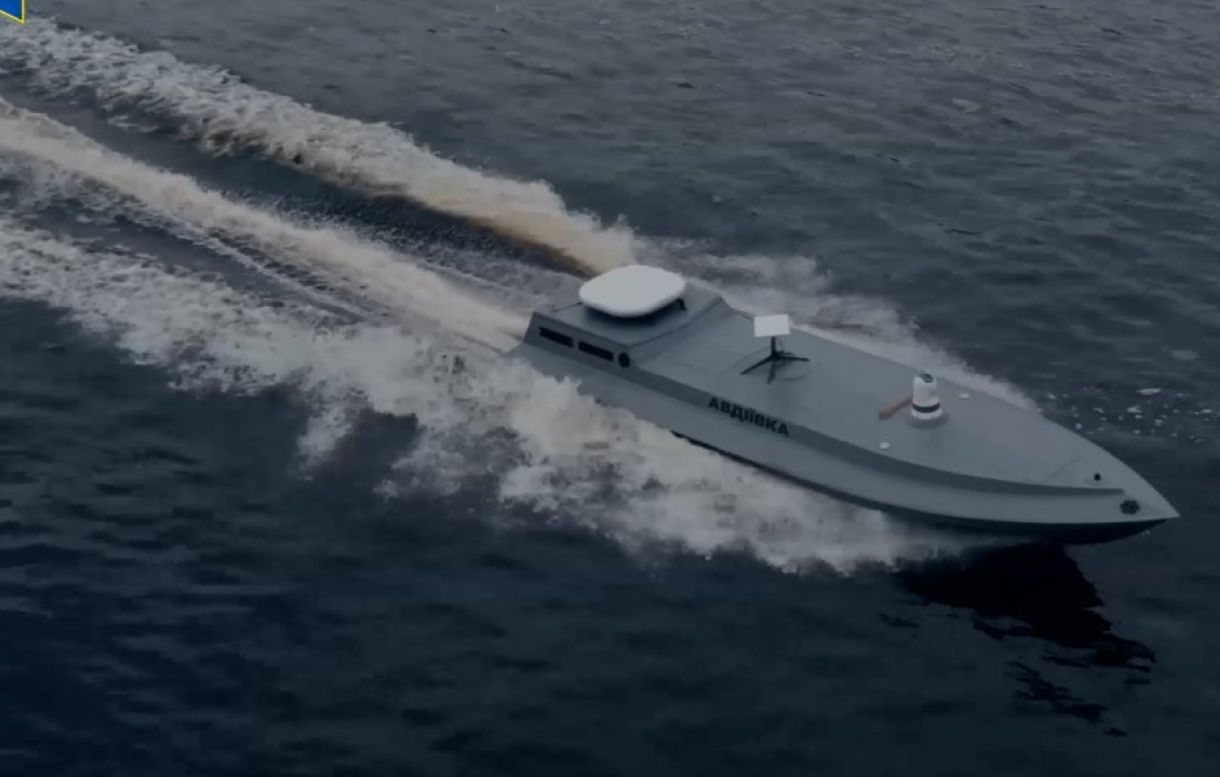
The policy marks a significant shift for a country whose defence industry has expanded rapidly under the pressure of Russia’s full-scale invasion. Ukrainian drones, electronic warfare systems, software, battlefield integration tools and other military technologies have drawn growing international attention because they have been tested in a high-intensity modern war.
Zelenskyy said Ukraine was offering partners a specific format of co-operation known as “Drone Deals”. These arrangements would cover the production and supply of Ukrainian drones, missiles, shells and other weapons, as well as military equipment, software, integration with partners’ defence systems, technical expertise and technology exchange beneficial to Ukraine.
The framework is expected to proceed first through intergovernmental agreements based on reciprocity. These would define the political and security parameters for co-operation before implementation moves to state institutions and manufacturers. Kyiv intends to simplify bureaucratic procedures while maintaining export controls.
The President said Ukrainian companies would be given a real opportunity to enter the markets of partner countries, but only after the requirements of Ukraine’s armed forces had been met. The Ministry of Defence and the General Staff will determine the volume of equipment required by the Defence Forces, while the National Security and Defence Council will co-ordinate export procedures and ensure that only surplus production is exported.
The Foreign Ministry, together with Ukraine’s intelligence services and the Security Service of Ukraine, has been instructed to prepare a list of countries to which Ukrainian weapons exports will not be permitted because of their co-operation with Russia. This restriction is intended to prevent Ukrainian-developed technologies from reaching states considered vulnerable to Russian influence or intelligence access.
The move comes as Ukraine seeks to build new defence-industrial partnerships beyond traditional military aid. Reuters has reported that Kyiv has been using its drone expertise to develop what has been described as “drone diplomacy”, including agreements involving Germany, Norway and the Netherlands, as well as arrangements with other partner states.
Zelenskyy’s recent diplomacy has also included talks in Azerbaijan and Saudi Arabia, where security, energy and defence co-operation were among the issues discussed. According to The Guardian, Ukraine’s agreements with Azerbaijan included military-industrial co-operation and discussions on potential joint defence production.
For Kyiv, the export framework has several aims. It offers a possible new source of revenue for Ukraine’s defence sector, strengthens industrial links with partner states, and positions Ukrainian companies as suppliers of systems developed under real combat conditions. It may also help reduce Ukraine’s long-term dependence on foreign military assistance by creating a more sustainable defence-industrial model.
At the same time, the policy contains clear limits. Ukraine remains at war, and Zelenskyy has emphasised that the armed forces will receive priority. Export decisions will therefore depend not only on commercial demand but also on military requirements, production capacity and security assessments of potential partners.
The government and the National Security and Defence Council have been instructed to present the public with further information on how the export process will work. For now, the announcement indicates that Ukraine is preparing to move from being primarily a recipient of military support to becoming a selective exporter of weapons, combat-tested technology and operational expertise.