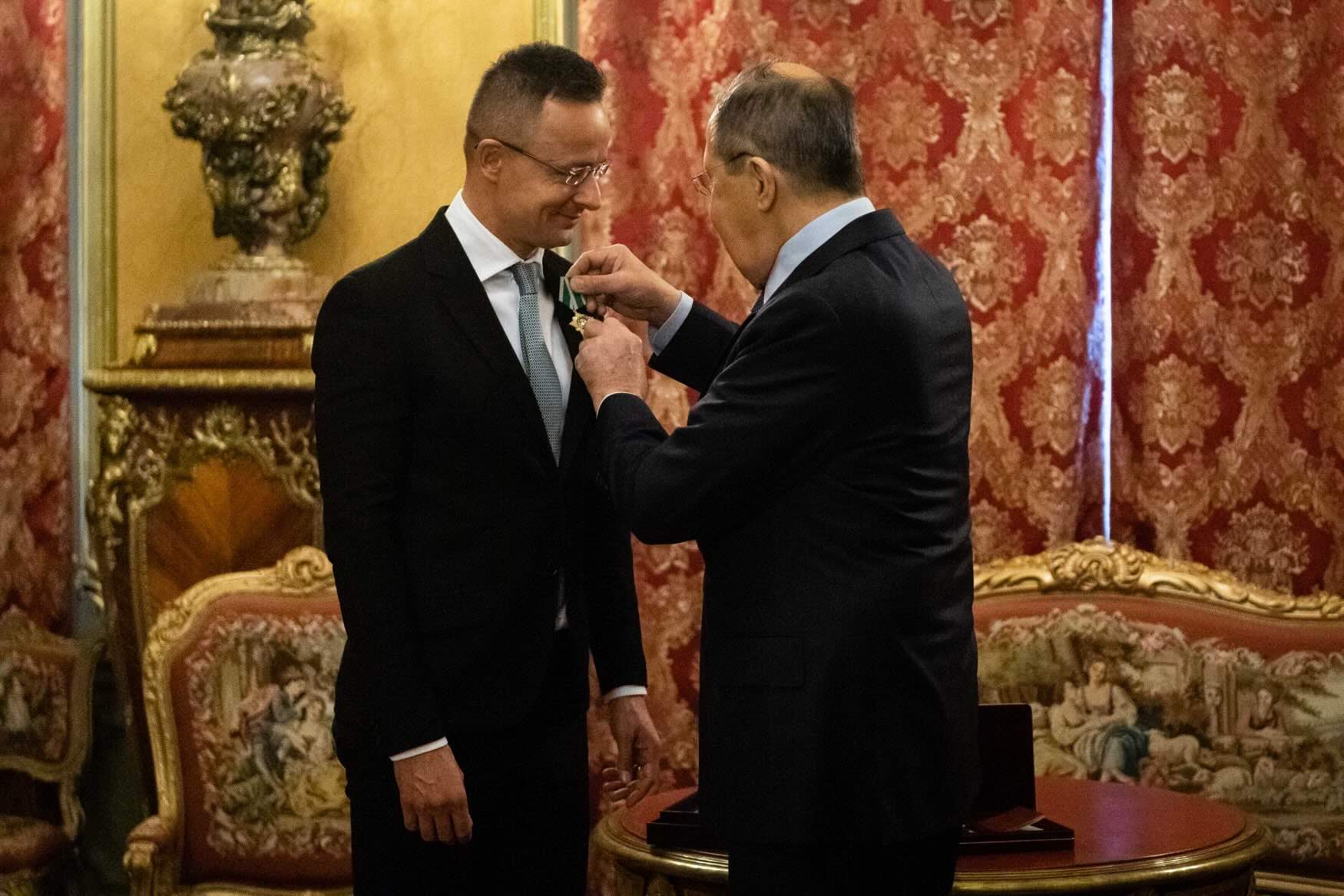
According to The Washington Post, Szijjártó is alleged to have telephoned Lavrov during breaks in EU foreign ministers’ meetings and relayed details of internal exchanges. The report forms part of a broader account of Russian efforts to influence Hungary’s parliamentary election, due on 12 April, at a moment when Orbán faces his strongest electoral challenge in years.
For a defence audience, the most important issue is not the diplomatic embarrassment in itself, but the strategic implication. If a senior minister from a NATO and EU member state was indeed passing on the substance of private allied discussions to Moscow, the matter goes to the heart of trust, operational discretion and alliance resilience. NATO’s current doctrine places growing emphasis on resilience, deterrence and the protection of decision-making structures against hostile pressure. In that context, any suggestion that Russian officials may have been receiving real-time insight into Western internal debate is serious.
Hungary has long occupied an awkward position inside the Euro-Atlantic system. It remains a full NATO member and continues formally to support collective defence obligations. Yet Orbán has repeatedly used Hungary’s position inside the EU to obstruct or delay measures intended to support Ukraine and increase pressure on Russia. This week, that obstruction again came into focus when Orbán blocked a planned €90 billion EU loan package for Ukraine, prompting strong criticism from other EU leaders and forcing the European Commission to look for alternative routes to deliver the funds.
That pattern matters because military security in Europe is no longer separable from political cohesion. Russia’s war against Ukraine has exposed how dependent European defence remains not only on matériel and budgets, but on speed of decision-making and unity of purpose. NATO has itself stressed that Russia’s war and wider geopolitical competition have made deterrence, defence and societal resilience central to alliance security. If one allied government is seen as systematically undermining common policy while maintaining unusually close political and diplomatic channels to Moscow, partners will inevitably begin to treat that as a defence problem rather than merely a political nuisance.
The Hungarian case is particularly sensitive because it sits at the intersection of energy dependence, Russian influence and alliance geography. Budapest’s long-maintained ties with Moscow have been reinforced by Hungary’s continued reliance on Russian energy, a factor visible again in Orbán’s recent confrontation with Kyiv and Brussels over disrupted oil flows through the Druzhba pipeline. Orbán has linked his opposition to Ukraine support with that dispute, deepening the impression that the Kremlin retains leverage over a government inside both NATO and the EU.
At the same time, the domestic political context in Hungary is changing. Opposition Tisza party, led by Péter Magyar, has retained a lead over Fidesz as the election approaches, even if the margin has narrowed. That has increased the importance of the election not only for Hungary’s internal trajectory but for Europe’s security environment. A weakened or defeated Orbán would remove Russia’s most reliable obstructive partner inside EU decision-making. An Orbán victory, by contrast, would be read in many European capitals as confirmation that Moscow can still rely on a friendly government within the Western institutional system.
The wider significance of the Washington Post report is therefore not limited to one allegation about one foreign minister. It points to a structural vulnerability in Europe’s defence and political architecture: the assumption that formal membership of NATO and the EU necessarily means strategic reliability. In practice, the war in Ukraine has shown that adversaries do not need to fracture the alliance from outside if they can exploit veto points, dependencies and political sympathisers from within.
That is the real defence story in Hungary. The issue is no longer simply whether Orbán is difficult, disruptive or sympathetic to Moscow. The question increasingly being asked in allied capitals is whether Hungary under Orbán still behaves as a dependable member of the Western security community when the central strategic challenge facing Europe remains Russian aggression. If the answer to that question becomes uncertain, then the consequences will extend well beyond Hungary’s election campaign and into the future credibility of allied deterrence itself.