The United States has imposed sanctions on three Chinese commercial satellite companies, accusing them of providing satellite imagery used by Iran to support military strikes against American forces in the Middle East. The measures, announced by the US Department of State, target Meentropy Technology (Hangzhou), also known as MizarVision, The Earth Eye, and Chang Guang Satellite Technology. A fourth sanctioned entity is Iran’s Ministry of Defence Export Center, known as MINDEX, which Washington describes as the export arm of Iran’s defence ministry.
The move comes days before President Donald Trump is expected to travel to Beijing for talks with Chinese President Xi Jinping, with Iran, sanctions enforcement and maritime security in the Strait of Hormuz expected to feature prominently. The timing places China’s commercial satellite sector within a wider dispute over Tehran’s military capabilities and Beijing’s role as Iran’s main economic partner.
According to Washington, the targeted companies provided imagery and data collection services that detailed US military activity during Operation Epic Fury. MizarVision, a Hangzhou-based geospatial intelligence company, was accused of publishing open-source images concerning American military movements. The Earth Eye, a Beijing-based satellite earth station company, was accused of providing satellite imagery to Iran. Chang Guang Satellite Technology, one of China’s major commercial satellite operators, was accused of collecting imagery of US and allied military facilities in response to Iranian requests.
The State Department said the sanctions were intended to hold accountable entities supporting Iran’s military activity and warned that Washington would continue to act against third-country suppliers assisting Tehran’s defence sector. Secretary of State Marco Rubio said the measures targeted foreign support for Iran’s military procurement networks and satellite-enabled targeting activity.
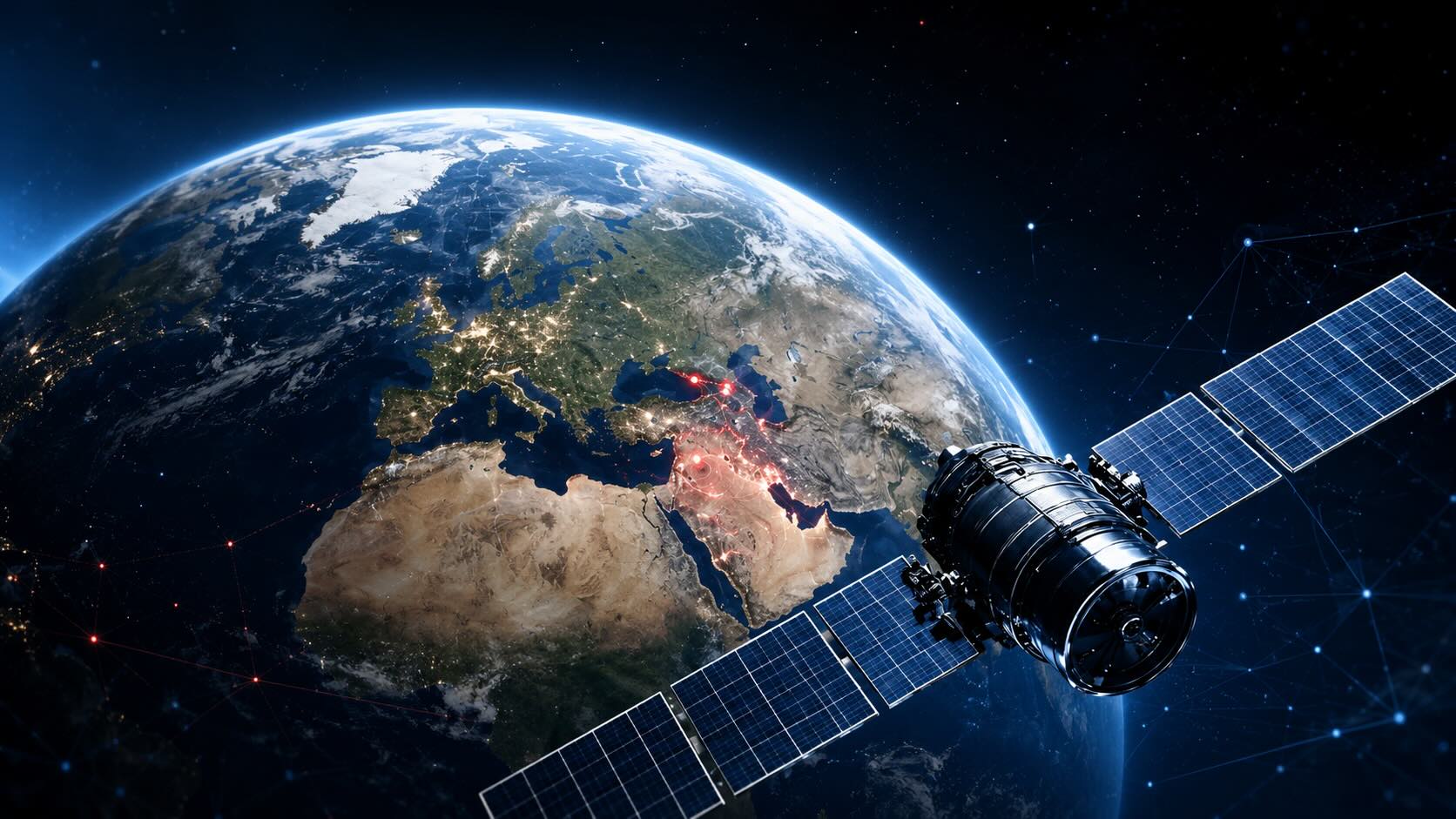
The sanctions follow earlier reporting that Iran’s Islamic Revolutionary Guard Corps had obtained access to a Chinese-built satellite, TEE-01B, giving it an improved ability to monitor US military bases across the Middle East. The reported arrangement involved satellite tasking, coordinates, time-stamped imagery and orbital analysis, suggesting that Iranian commanders were able to request surveillance of specific locations before strikes. Beijing dismissed the report as untrue.
Chang Guang has already faced US scrutiny in other theatres. Washington previously sanctioned the company in 2023, and US officials have now also alleged that it provided satellite imagery to Iran-backed Houthi forces in Yemen for use against American military assets. The latest action therefore presents the issue not as a single commercial transaction, but as part of a broader chain of imagery supply involving Iran and its regional partners.
The case highlights the changing role of commercial satellite imagery in modern conflict. Data sold or distributed by nominally civilian companies can be used for target identification, tracking military deployments and assessing the effects of strikes. The US action indicates that Washington is prepared to treat such services as part of a military support network when the imagery is alleged to have enabled attacks on US forces.
The sanctions also increase pressure on Beijing ahead of Trump’s visit. US officials have been urging China to use its influence over Tehran, particularly because China remains the dominant buyer of Iranian energy exports. Treasury Secretary Scott Bessent said China buys about 90 per cent of Iran’s energy exports, giving Beijing significant leverage over Tehran at a time when Washington is seeking to secure de-escalation.
The energy dimension is central to the dispute. The Strait of Hormuz remains one of the world’s most important oil transit routes. In 2024, oil flows through the strait averaged around 20 million barrels per day, equivalent to about 20 per cent of global petroleum liquids consumption. A separate US energy assessment found that about one-fifth of global LNG trade also transited Hormuz in 2024, primarily from Qatar.
Any escalation involving Iran, US forces or shipping near Hormuz therefore has immediate implications for oil prices, inflation and wider economic policy. The International Energy Agency describes Hormuz as one of the world’s most critical oil transit chokepoints, with limited options to bypass it. A prolonged disruption would affect not only energy-importing states in Asia and Europe, but also broader commodity and shipping markets.
For Washington, the sanctions serve several purposes. They target alleged technical support for Iran’s military operations, signal to Beijing that commercial entities are not exempt from penalties, and strengthen the US negotiating position before talks with Xi. For China, the measures add another source of friction in a relationship already affected by tariffs, technology controls and enforcement action linked to Iranian energy exports.
The Chinese government has repeatedly objected to unilateral US sanctions and has argued that its trade with Iran should not be subject to American enforcement measures. The latest designations are therefore likely to be contested by Beijing, even though they formally target individual companies rather than the Chinese state.
The immediate effect will be to restrict the sanctioned entities’ access to US-linked financial systems and increase compliance risks for companies dealing with them. The broader consequence may be more significant: commercial satellite data is now being treated as a strategic military asset, and firms that sell, process or task such imagery are increasingly exposed to sanctions when their services are alleged to support hostile military operations.