British Prime Minister Keir Starmer and his Polish counterpart Donald Tusk are expected to sign a wide-ranging bilateral security pact in London on Wednesday, deepening military cooperation, cybersecurity coordination and defence industrial ties at a time when European capitals are increasingly anxious about Moscow’s long-term intentions.
The agreement reflects a broader shift under way across Europe: the emergence of tighter regional security arrangements as doubts linger over future American commitments to NATO and the war in Ukraine enters another uncertain phase.
Speaking ahead of the signing, Tusk said Warsaw wanted “the closest possible relations” with Britain, framing the treaty primarily as a deterrent against Russian aggression. Poland, already NATO’s largest defence spender relative to GDP, has become one of Europe’s most vocal advocates for military preparedness.
For Britain, the accord represents one of the clearest attempts yet by the Starmer government to rebuild influence on the continent after years of strained relations with Brussels following Brexit. British officials describe the pact as the most substantial upgrade in Anglo-Polish relations in decades, combining hard security cooperation with broader coordination on border protection, organised crime and intelligence-sharing.
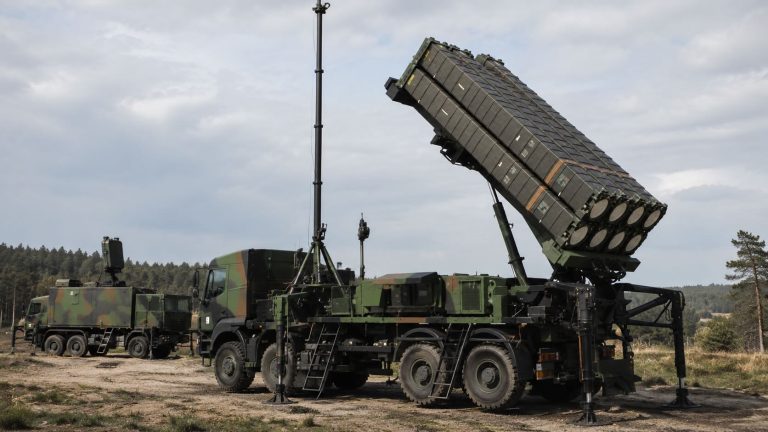
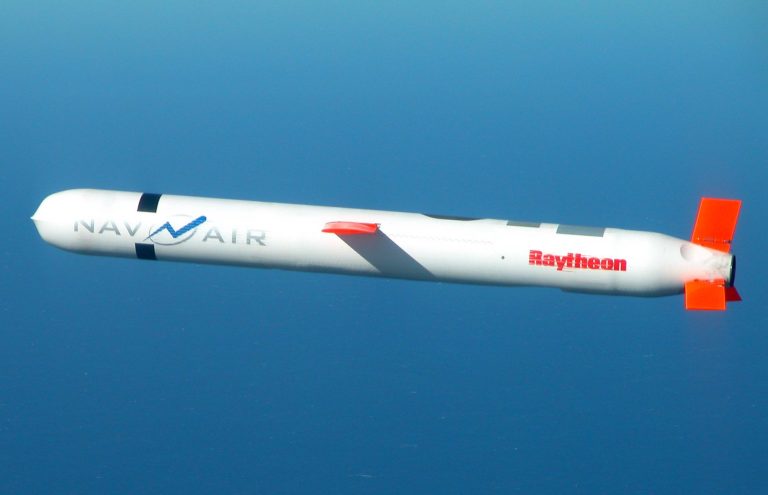
While the treaty stops short of introducing any new mutual defence guarantees beyond NATO’s existing Article 5 commitments, officials on both sides have emphasised the practical military dimension. The two countries are expected to expand joint weapons development programmes, including work on medium-range air defence systems and advanced missile technologies.
Cybersecurity is also expected to feature prominently. Poland has become a critical logistical hub for Western military support flowing into Ukraine and, as a result, an increasingly frequent target for Russian cyber operations and espionage campaigns, according to Polish officials.
The agreement comes amid heightened nervousness across eastern Europe over the trajectory of the war in Ukraine and Russia’s broader military posture. In recent months, Polish officials have repeatedly warned that the threat posed by Moscow should not be viewed as hypothetical or distant. Tusk said in April that any Russian confrontation with NATO could emerge in “months rather than years”, remarks that underlined Warsaw’s increasingly stark security assessments.
Those concerns have been amplified by a string of incidents around NATO’s eastern flank, including drone incursions, cyberattacks and alleged sabotage operations that several European governments have linked to Russian intelligence networks.
The treaty also arrives at a moment when European governments are under mounting pressure to shoulder more of the continent’s defence burden. Washington has continued urging allies to increase military spending, while former US President Donald Trump has again unsettled European policymakers with mixed signals over America’s future strategic commitments.
Poland has responded by accelerating one of the largest military modernisation programmes in Europe. Warsaw is investing heavily in missile defence, tanks, artillery and air power while simultaneously pushing for more integrated European defence financing mechanisms.
Britain, meanwhile, is seeking to position itself as Europe’s leading military power alongside France, particularly as Germany continues to rebuild its defence capabilities after decades of underinvestment. The UK-Poland agreement follows a similar security treaty signed earlier this month between Poland and France, suggesting Warsaw is pursuing a layered network of bilateral military relationships across Europe.
Diplomatically, the accord also illustrates how security policy has become one of the few areas where Britain can still exercise substantial influence inside Europe despite no longer being part of the EU. Starmer has made closer coordination with European capitals a cornerstone of his foreign policy, especially on defence and Ukraine.
British officials insist the treaty should not be interpreted as an alternative to NATO or EU defence initiatives. Instead, they argue it complements both by creating faster operational coordination between two of Europe’s most militarily active governments.
Yet the symbolism matters. Britain and Poland now sit among the most hawkish European states on Russia, favouring sustained military support for Kyiv and stronger deterrence measures along NATO’s eastern frontier.
That shared outlook has brought London and Warsaw into closer alignment not only on Ukraine but also on questions of energy security, migration pressures linked to Belarus and Russia, and the future balance of power inside Europe itself.
As the geopolitical centre of gravity in Europe shifts eastward, partnerships once viewed as peripheral are becoming central to the continent’s security order.