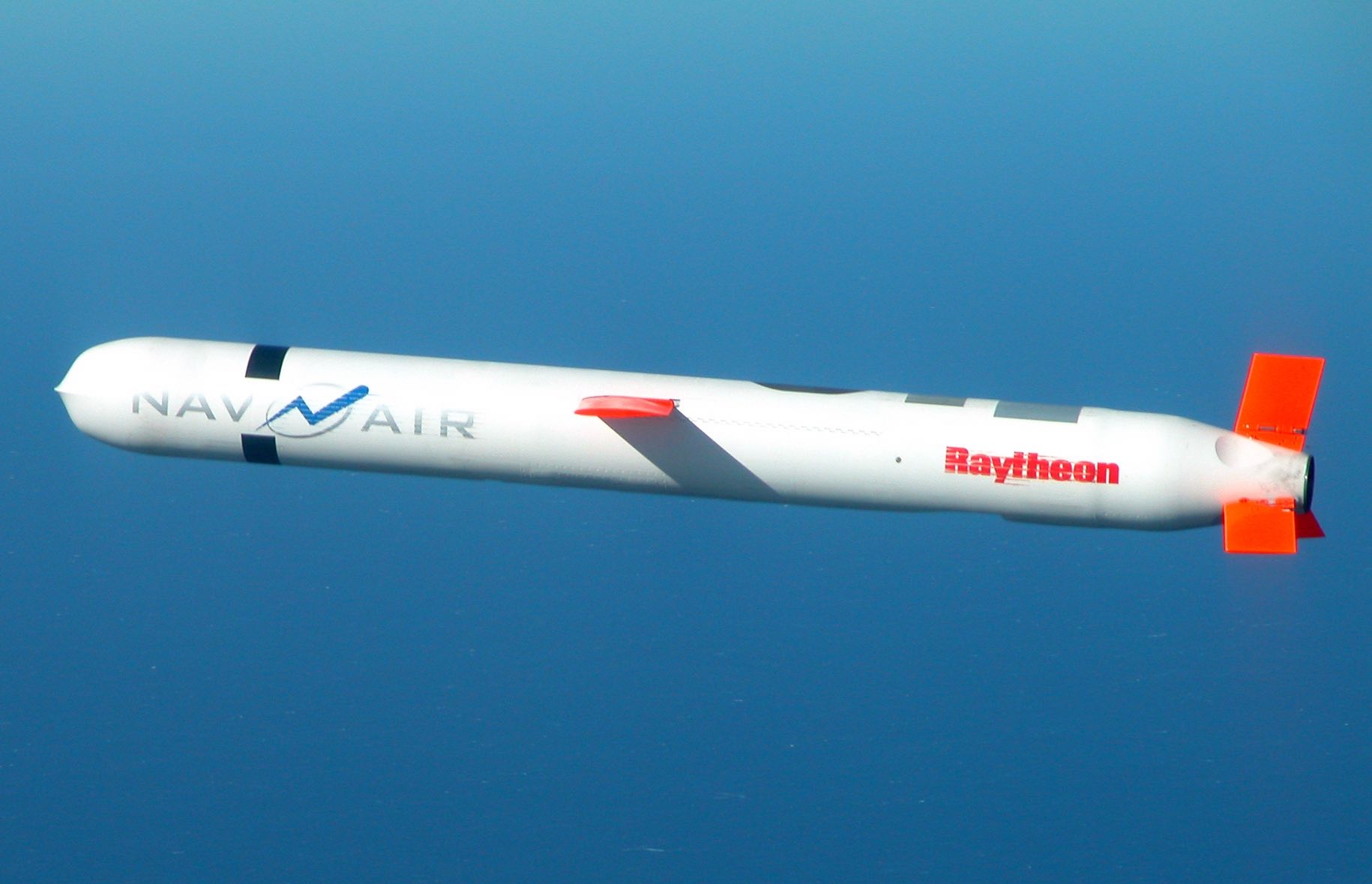
Germany’s agreement to buy US-made Tomahawk cruise missiles marks a significant shift in European long-range strike policy, and an early operational consequence of Washington’s changing posture in Europe.
Chancellor Friedrich Merz confirmed the agreement after the NATO summit in Ankara, following earlier uncertainty over a planned US deployment of Tomahawk-equipped long-range fires to Germany. The new German purchase therefore does not stand alone as a routine arms deal. It fills a capability gap created by the cancellation or reduction of an American deployment that had been expected to strengthen NATO deterrence on European soil.
The original logic was set out in the 2024 US-German plan to deploy long-range fires in Germany from 2026, including systems able to fire Tomahawk missiles and SM-6 missiles. That deployment was designed to restore a ground-launched long-range strike option in Europe after years in which such systems had been absent from the continent’s conventional deterrence architecture.
The reported agreement with Washington changes the model. Instead of relying on US personnel and US launch units deployed in Germany, Berlin is now moving towards owning part of the capability itself. Associated Press reporting on Merz’s comments said Germany had reached a deal to buy US Tomahawk missiles, while Financial Times reporting linked the decision to the earlier US move away from the planned deployment.
That distinction matters. A US deployment would have placed American forces and systems directly into the deterrence equation. A German purchase creates a national procurement and integration challenge: launchers, training, targeting, command arrangements, stockpiles, maintenance and political rules for use.
Germany has long had a gap in ground-launched long-range fires. Its Taurus air-launched cruise missile offers one form of deep-strike capability, but the broader NATO problem concerns land-based systems that can hold targets at range, complicate Russian planning and operate as part of a wider Allied fires architecture.
Russia’s deployment of missile systems, including in Kaliningrad, has sharpened European concern about the imbalance in intermediate-range conventional strike. Since the collapse of the INF Treaty framework, Moscow and NATO have both had to reassess the role of longer-range ground-launched missiles.
For Germany, the Tomahawk purchase is politically sensitive because it revives memories of Cold War missile deployments. But the current debate is different. These are conventional systems, and the strategic issue is not nuclear escalation but the ability to deter Russian military infrastructure, logistics and command nodes from beyond the immediate front line.
For NATO, the German decision is welcome if it produces real capability. But it also exposes a vulnerability. If Europe must replace withdrawn or cancelled US deployments through national purchases, then deterrence becomes dependent on procurement timelines and US export capacity.
The missile itself is only one part of the problem. Germany also needs a launcher solution, likely tied to the US Typhon/Mid-Range Capability system or an equivalent platform. That raises questions about availability, delivery timelines and integration into German and NATO command structures.
US production capacity is another constraint. Tomahawks are also needed by US forces and other allies. Demand for long-range strike weapons has risen sharply as NATO countries reassess Russia, China and Middle East contingencies. Delivery may therefore be slower than the political announcement implies.
Defence Matters has recently examined Europe’s wider deep-strike gap and the difficulty of converting summit promises into capability. The German Tomahawk purchase is a concrete example: the policy decision is fast, but the military effect depends on industrial and operational execution.
The broader lesson is that Europe can no longer assume US deployments will automatically cover its most sensitive capability gaps. If Washington reduces personnel or adjusts force posture, European allies may have to buy, operate and sustain more of the deterrent architecture themselves.
That is not necessarily negative. A Germany that owns and operates long-range conventional fires could strengthen NATO if the system is properly integrated. But the transition from American deployment to German procurement creates a period of vulnerability.
Berlin’s Tomahawk deal is therefore not just about missiles. It is about the changing division of labour inside NATO. Europe is being asked not only to spend more, but to hold capabilities that were once expected to arrive under US command.