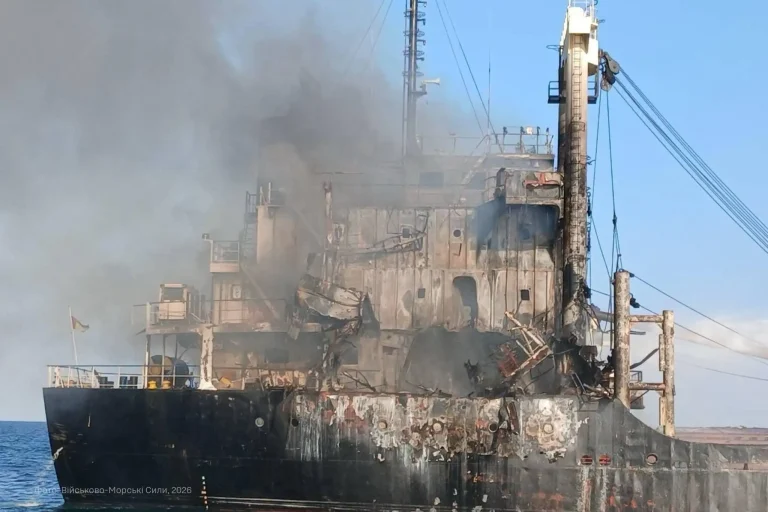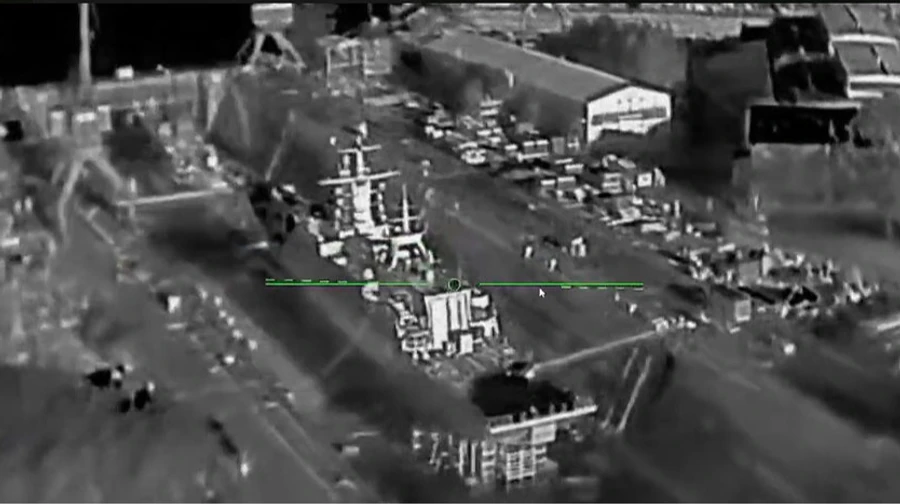
The strike was reported on 3 June by Ukraine’s Unmanned Systems Forces and the Security Service of Ukraine. The operation was described as part of a wider series of long-range attacks on Russian military and energy-related infrastructure. Ukrainian drones hit an oil terminal in St Petersburg and a naval facility in nearby Kronstadt as Russia opened the St Petersburg International Economic Forum.
Robert “Madyar” Brovdi, commander of Ukraine’s Unmanned Systems Forces, said the Boikiy had been hit at around 6.35am while in dry dock at Kronstadt. Ukrainian sources said the vessel had been undergoing planned repairs since February at the Veleshchinsky dry dock. The SBU said Ukrainian drones had struck the area where Russian naval vessels were berthed, while the scale of damage was still being assessed.
The vessel is a Project 20380 corvette, also known as part of the Steregushchiy class. These ships are designed for near-sea operations, including protection of naval bases, patrol duties, anti-surface warfare, anti-submarine warfare and local air-defence tasks. Technical descriptions of Project 20380 corvettes identify the class as a multi-role platform intended for operations in littoral areas, shelf seas, naval approaches and port-protection roles.
The Boikiy was launched in 2011 and entered service with the Russian Navy in 2013. It is one of the Baltic Fleet’s Project 20380 corvettes and is equipped for a range of naval missions rather than a single specialised role. Open-source naval data lists the class as carrying a 100mm naval gun, anti-ship missiles, the Redut air-defence system, anti-submarine and anti-torpedo equipment, radar and sonar systems, and helicopter facilities. A technical profile of the class gives the vessel’s full-load displacement at roughly 2,250 tonnes and identifies the Boikiy among the ships of the Project 20380 series.
Militarily, this gives the corvette a role in Russia’s Baltic posture out of proportion to its size. It can support the defence of naval facilities, escort other vessels, monitor approaches to Russian-controlled waters and operate in the confined maritime geography of the Baltic Sea. In wartime conditions, such vessels also help protect ports, repair infrastructure and logistical routes that are central to fleet readiness.
The strike is therefore not only a symbolic attack on a naval base near St Petersburg. If the vessel sustained meaningful damage, it could delay the return to service of a ship used for patrol, escort and air-defence tasks in one of Russia’s most politically sensitive maritime regions.
The Boikiy is also relevant because of its reported role in escorting vessels linked to Russia’s shadow fleet. That fleet consists of tankers and shipping networks used to move Russian oil despite Western sanctions, price-cap restrictions and growing scrutiny by European governments. In June 2025, specialist maritime reporting said a Russian Navy corvette had escorted sanctioned tankers through the English Channel. Other open-source reporting on the same episode identified the vessel as the Boikiy and said it accompanied shadow-fleet tankers during transit towards Russian ports.
That escort role is significant. Russia’s shadow fleet is not simply a commercial workaround. It is part of a wider system used to sustain oil revenue during the war in Ukraine. Tankers linked to this network often operate through opaque ownership structures, changing flags, complex insurance arrangements or indirect routing. The involvement of naval vessels raises the political and operational risks for European states seeking to monitor, inspect or restrict suspicious maritime activity.
By placing a warship near tankers under sanctions scrutiny, Moscow increases the cost of enforcement. The presence of a naval escort does not alter the legal status of a sanctioned vessel, but it complicates the practical environment in which European authorities must act. It also signals that Russia sees oil exports and maritime logistics as strategic assets requiring military protection.
For Ukraine, the reported strike on the Boikiy fits into a broader pattern of targeting the infrastructure that supports Russia’s war economy. Since 2022, Kyiv has repeatedly attacked Russian naval and energy assets, first most visibly in the Black Sea and increasingly at longer range inside Russia. Kronstadt, more than 1,000 kilometres from Ukraine, demonstrates that the Baltic Fleet is no longer insulated from the war’s expanding drone geography.
For Russia, the Boikiy represents both a military vessel and a tool of maritime protection around economically important shipping. For Ukraine, striking such a target sends a message that assets supporting Russian naval operations and oil logistics may be vulnerable even far from the front line.