Leonardo chief executive Lorenzo Mariani told Reuters that Germany would be a strong and valuable partner for GCAP, the next-generation fighter programme currently led by the United Kingdom, Italy and Japan. His comments followed the breakdown of the rival FCAS project, after France and Germany were unable to resolve disputes over industrial leadership and workshare.
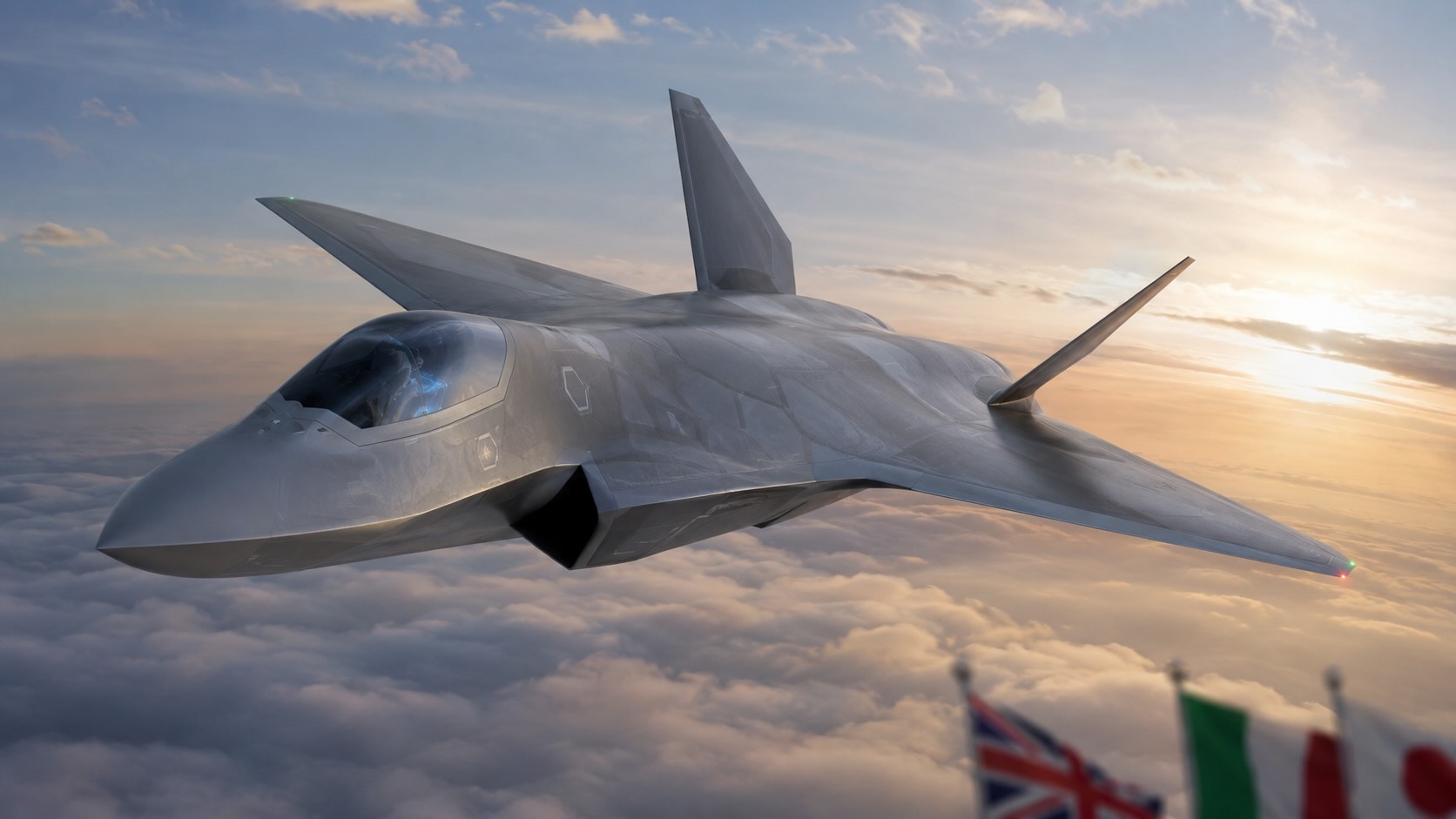
The Global Combat Air Programme brings together BAE Systems in the UK, Leonardo in Italy and Japan Aircraft Industrial Enhancement Co Ltd, supported by Mitsubishi Heavy Industries. The partners aim to deliver a next-generation combat aircraft by 2035. Leonardo describes the project as a multinational programme intended to combine aircraft, sensors, data systems and wider combat-air capabilities in a single future platform.
Mariani’s remarks do not mean Germany has been invited to join. He made clear that any decision on new partners is not for Leonardo alone. GCAP is a state-led programme, and any expansion would require political agreement among the participating governments. Even so, the timing of his comments is important because Germany is now reassessing its future combat-air options after FCAS, which had been intended as Europe’s flagship sixth-generation fighter project.
The FCAS collapse has wider significance than the failure of a single procurement programme. It shows how difficult it remains for European states to align military requirements, industrial interests, export policy and political prestige in high-end defence projects. France’s Dassault Aviation and Airbus’s German defence division had long disagreed over control of the core fighter element. That dispute eventually became impossible to contain.
Germany is unlikely to abandon the sixth-generation fighter field. The question is whether Berlin now tries to build a new European route around Airbus, explores cooperation with Sweden’s Saab, seeks entry into GCAP, or attempts to preserve selected FCAS technologies outside the original Franco-German framework. Reuters has reported that an Airbus-led group of German defence companies has already lobbied Berlin on future fighter development, while Airbus has also explored options involving Saab.
GCAP offers one obvious attraction for Germany: it is already structured, internationally supported and tied to a 2035 target. The programme also brings together two NATO countries and Japan, a major Indo-Pacific partner with advanced industrial capacity and increasing defence cooperation with Europe. Joining such a programme could allow Germany to avoid starting from a blank sheet after the FCAS dispute.
There are also obstacles. GCAP is not an empty framework waiting for German leadership. The UK, Italy and Japan have already divided industrial responsibilities, created programme structures and set timelines. A large new partner such as Germany would bring money, engineering capacity and political weight, but it would also reopen questions over workshare, design influence, production responsibilities and export policy.
Those questions are not technical details. They were among the issues that contributed to the FCAS breakdown. Germany would have to decide whether it is willing to join a programme where it may not have the leadership role it sought in FCAS. The existing GCAP partners would have to decide whether Germany’s participation would strengthen the programme or complicate it.
The industrial stakes are substantial. Sixth-generation fighter programmes are expected to cost tens of billions of euros over their lifetime. Italy has already approved nearly €9 billion in funding for GCAP, and the final cost will be far higher as development, production, sensors, weapons integration and support systems advance. For governments, bringing in additional partners can spread costs. For industry, it can also dilute control.
Europe’s wider defence environment adds urgency. Russia’s war against Ukraine has pushed NATO members to increase defence spending and reconsider long-term air power requirements. Combat aircraft remain central to deterrence, air superiority, strike capability, electronic warfare and intelligence collection. At the same time, modern air combat is moving towards systems of systems, where crewed aircraft operate alongside drones, sensors, networks and long-range weapons.
That shift makes the sixth-generation fighter debate more than a choice of aircraft. It is a choice about industrial sovereignty, software control, sensor fusion, electronic warfare, artificial intelligence, weapons integration and export markets. Countries excluded from the main development track may retain subcontracting roles, but they risk losing influence over the architecture of future combat air power.
Germany faces a particularly difficult calculation. It has a large aerospace and defence base, but its fighter procurement record has been shaped by multinational compromise. The Eurofighter Typhoon was built through a European consortium. The F-35 purchase gave Germany access to a proven US aircraft for nuclear-sharing duties, but it did not strengthen German leadership in next-generation fighter design. FCAS was supposed to answer that gap.
The end of FCAS therefore creates both an opening and a risk. If Germany finds a credible replacement path, it may retain a central role in future combat-air development. If it hesitates too long, it could enter existing programmes late and with less influence than it wants.
For the UK, Italy and Japan, German interest could be useful but sensitive. Germany would bring a major budget, a strong industrial base and political credibility inside Europe. It could also expand GCAP’s production base and strengthen the programme’s claim to be one of the main alternatives to US sixth-generation air systems. But the programme’s current partners will be cautious about importing the same industrial disputes that weakened FCAS.
The Franco-German rupture also raises a broader question for European defence cooperation. Joint programmes are often presented as the rational answer to high costs and fragmented national markets. Yet the fighter dispute shows that cooperation can fail when national industries want the same leadership positions and governments are unwilling to accept subordinate roles in politically prestigious projects.
GCAP may now become a test of whether a different international structure can manage those pressures more effectively. Its UK-Italy-Japan format already reaches beyond the EU and combines European and Indo-Pacific interests. German participation would make it more European in industrial scale, but also more complex.
No decision has yet been made. The immediate significance of Mariani’s comments is that they place Germany visibly into the post-FCAS fighter debate. The next stage will depend on Berlin’s assessment of cost, industrial influence, timing and political control.
For Europe’s defence industry, the lesson is clear. The collapse of FCAS has not reduced the need for a future combat aircraft. It has instead reopened the contest over who builds it, who leads it and whether Europe can organise high-end defence cooperation without allowing industrial rivalry to derail strategic necessity.