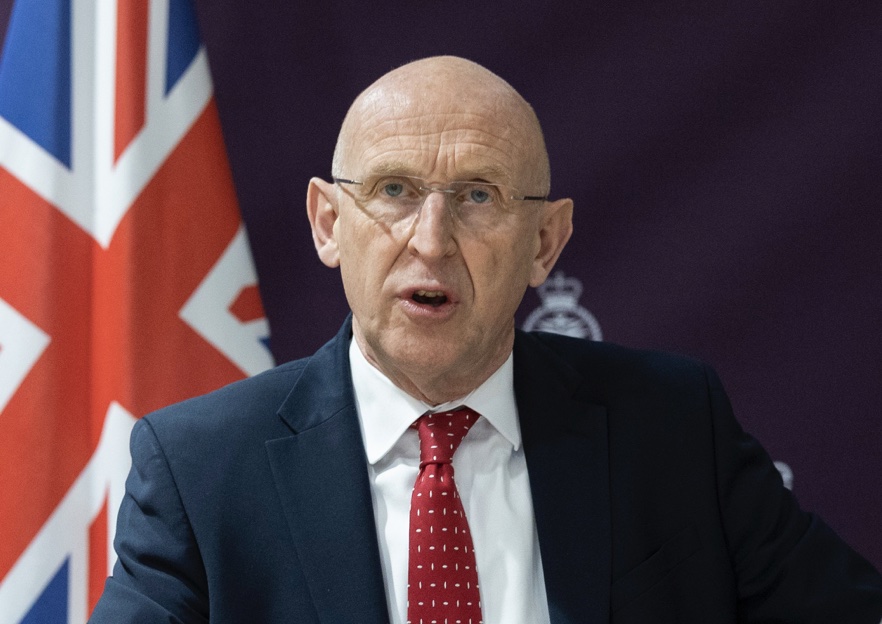
In his resignation letter, Healey argued that the defence settlement presented to him would leave Britain inadequately prepared for the mounting challenges of the coming decade. The criticism cuts to the heart of Sir Keir Starmer’s premiership. Since entering Downing Street, Starmer has sought to cultivate an image of competence and seriousness, presenting Labour as a safe pair of hands after years of Conservative turbulence. Yet nowhere has the disparity between aspiration and delivery become more apparent than in defence policy.
The Prime Minister has frequently described the world as entering a period of heightened instability. Russia’s continuing aggression in Europe, tensions in the Middle East, and increasing strategic competition in the Indo-Pacific have all featured prominently in his speeches. He has repeatedly pledged that Britain would remain a dependable NATO ally and a leading military power.
However, those commitments have often been accompanied by carefully deferred timelines and spending targets that critics argue are designed to postpone difficult fiscal decisions rather than address immediate capability shortfalls.
The delayed Defence Investment Plan became emblematic of this tension. Military leaders had warned that the armed forces required urgent investment to restore readiness after years of constrained budgets. Reports suggested substantial funding gaps remained unresolved, even as ministers insisted that Britain was embarking upon the largest expansion of defence spending since the Cold War.
Healey’s resignation transforms what had been an internal policy disagreement into a public test of political credibility.
There is an argument that his departure should be regarded as an honourable act rather than one of disloyalty. Cabinet solidarity demands compromise, but ministers also bear responsibility for the departments they lead. If Healey genuinely concluded that he could no longer assure Parliament, the armed forces or Britain’s allies that the resources provided were sufficient, resignation became the only constitutionally coherent course available.
Such decisions are rarely taken lightly. They carry personal costs and political risks. Yet they also serve an important democratic function by exposing tensions that governments might otherwise prefer to obscure.
For Starmer, the consequences could prove significant. The Prime Minister’s political appeal has rested heavily upon perceptions of managerial competence. The loss of a Defence Secretary widely regarded as diligent and serious inevitably raises uncomfortable questions about whether the government possesses both the strategic clarity and political resolve required in an increasingly dangerous world.
Defence spending has long occupied an awkward place in British politics. Successive governments have attempted to reconcile ambitious foreign policy objectives with fiscal restraint. But there are moments when events narrow the room for ambiguity.
Healey appears to have concluded that Britain has reached such a moment.
Whether one agrees entirely with his assessment or not, his resignation represents a challenge that cannot easily be dismissed as factional manoeuvring. It forces ministers to explain how a nation that continues to describe itself as a leading military power intends to sustain that position without the investment its own defence leadership has deemed necessary.
Ultimately, Healey’s departure may come to be remembered not simply as the end of one ministerial career, but as the moment when the contradiction between Britain’s strategic ambitions and its political willingness to fund them became impossible to ignore. The greater danger for Starmer is that voters conclude the same principle applies more broadly to his premiership: a government rich in promises, yet increasingly short on delivery.