Two Romanian F-16 interceptions in two days move Bucharest from monitoring drone incursions to repeated kinetic air defence, raising questions about identification, proportionality and allied rules of engagement.
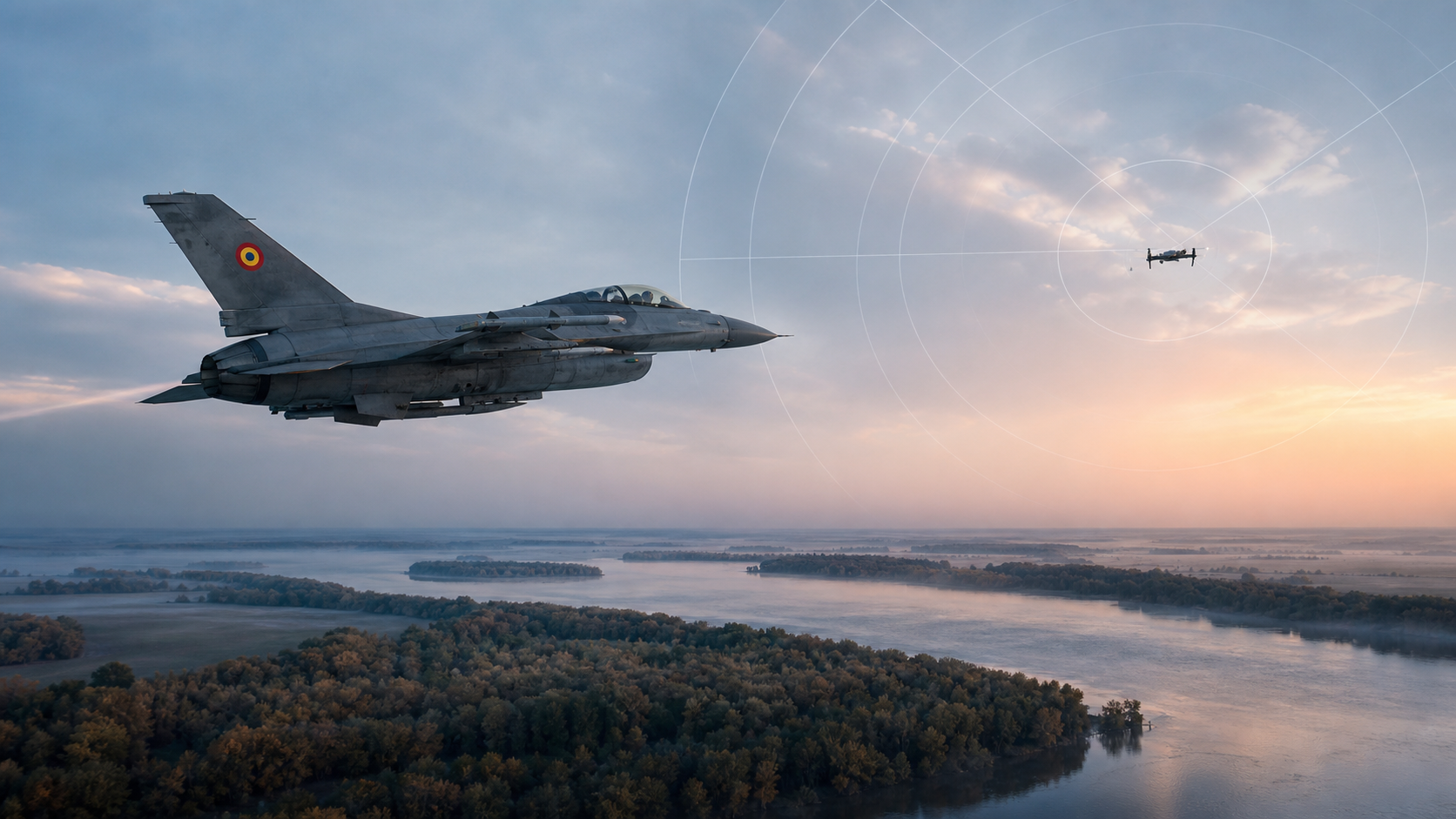
Romanian F-16s have destroyed a second unidentified drone inside national airspace in as many days, marking a shift from the warnings, tracking missions and debris searches that previously characterised Bucharest’s response to spillover from Russia’s war against Ukraine.
Romania’s Ministry of National Defence said military radar detected an unauthorised aerial target at 08:22 local time on 25 July near the Ukrainian border. Fighters were directed to intercept and one aircraft destroyed the drone. The ministry’s statement on the second interception followed its account of the first shootdown on 24 July.
The consecutive engagements are operationally more significant than another discovery of wreckage after a Russian strike. They demonstrate that Romanian pilots have crossed the threshold from observing a possible violation to deliberately using force against an airborne object.
The ministry had not publicly identified the second drone’s model, operator, payload or intended target when this article was prepared. Those uncertainties matter. An interception protects sovereign airspace, but attribution determines the diplomatic and military consequences.
Romania has repeatedly detected drones or fragments near the Danube since Russia intensified attacks on Ukrainian ports. For much of that period, the public pattern involved alerts, scrambled aircraft and searches after an object disappeared from radar.
Defence Matters reported in May that a Russian drone strike in Romania exposed NATO’s unresolved air-defence dilemma. Romania had already adopted legislation allowing unauthorised drones to be destroyed in peacetime under defined conditions. The latest engagements show what implementing that authority looks like in practice.
A pilot must classify an object, understand its trajectory and assess the danger within minutes. Small drones may fly low, present a limited radar signature and resemble civilian or friendly systems. Electronic warfare can also divert an aircraft from its intended route.
The decision to fire therefore requires more than an airspace violation. Commanders must consider whether the object poses a threat, whether interception creates greater danger to people below and whether other methods are available.
F-16s provide speed, sensors and trained crews, but they are not an economical solution to every small drone. A fighter sortie consumes fuel and maintenance hours. An air-to-air missile may cost many times more than its target.
That imbalance is acceptable when lives or critical infrastructure are at risk. It becomes difficult to sustain if incursions occur daily or in groups. Romania needs layered defences: radar and passive sensors, electronic-warfare systems, guns, short-range missiles and fighters for targets beyond the reach of ground units.
Geography complicates the problem. The lower Danube is close to Romanian communities and Ukrainian infrastructure. A weapon fired near the border may produce wreckage on either side. A drone destroyed over land can still cause casualties when it falls.
Rules of engagement must therefore integrate civilian air traffic, local alerts and emergency response. The public does not need sensitive tactical detail, but it should understand the principles governing the use of force.
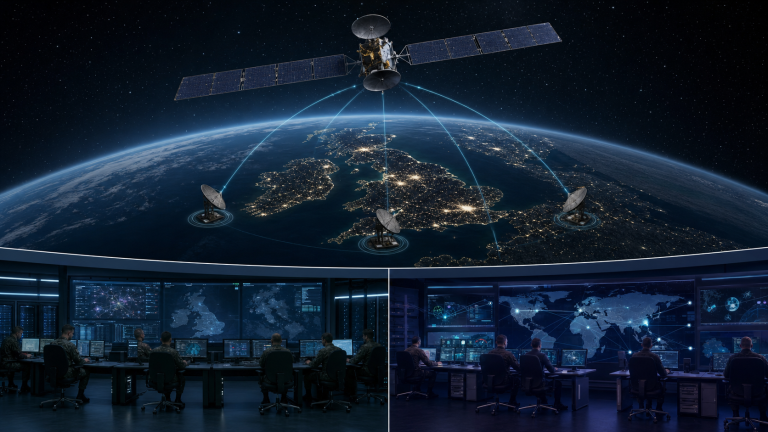
National forces defend Romanian airspace, yet the operational picture is allied. NATO surveillance, air policing, intelligence and command arrangements contribute to detecting and assessing activity on the eastern flank.
Defence Matters has examined how NATO turned Baltic air policing into an air-defence mission. Romania’s two shootdowns point in the same direction: missions designed largely to identify and escort manned aircraft are adapting to small, cheap and potentially expendable threats.
Frontline allies need compatible thresholds. If one state destroys an object that another would merely track, adversaries can probe the difference. Complete uniformity is unrealistic because terrain and national law vary, but common definitions and incident procedures would reduce ambiguity.
The Alliance must also avoid automatic escalation. An unauthorised Russian military drone would constitute a serious violation, but destroying it does not by itself trigger collective defence. Article 5 is a political decision based on the nature and context of an armed attack, not a mechanical consequence of any border breach.
Conversely, describing every event as accidental before an investigation is completed may encourage further risk-taking. NATO should publish verified facts quickly and attribute responsibility when evidence supports it.
Recovery of the wreckage will be central. Components, navigation data, explosives and manufacturing marks can help identify the platform and its mission. Romania should preserve evidence under a documented chain of custody and share relevant findings with allies and Ukraine.
Radar tracks and cockpit recordings can establish the route and engagement sequence. Some information will remain classified, but a public reconstruction would strengthen confidence and counter competing disinformation.
If the drone was unarmed or had drifted because of jamming, the engagement may still have been lawful under Romanian rules. That finding would lead to different policy conclusions from evidence of a deliberate reconnaissance or attack mission.
Two successful interceptions do not constitute a complete air-defence solution. They show political willingness and tactical capability, but also expose the cost of using combat aircraft against low-cost targets.
Romania should now review sensor coverage, munition expenditure, debris procedures and coordination with Ukraine. It should identify which incursions can be defeated with ground-based or electronic means and reserve fighters for targets requiring their reach and sensors.
NATO should use the incidents to accelerate a common counter-drone architecture along the Black Sea and Danube approaches. That architecture must connect detection, identification, civilian warning and proportional engagement.
Romania has moved beyond debating whether it possesses authority to act. Its pilots have used that authority twice in two days. The next test is whether Bucharest and the Alliance can turn an emergency response into a clear, affordable and controlled defensive posture.