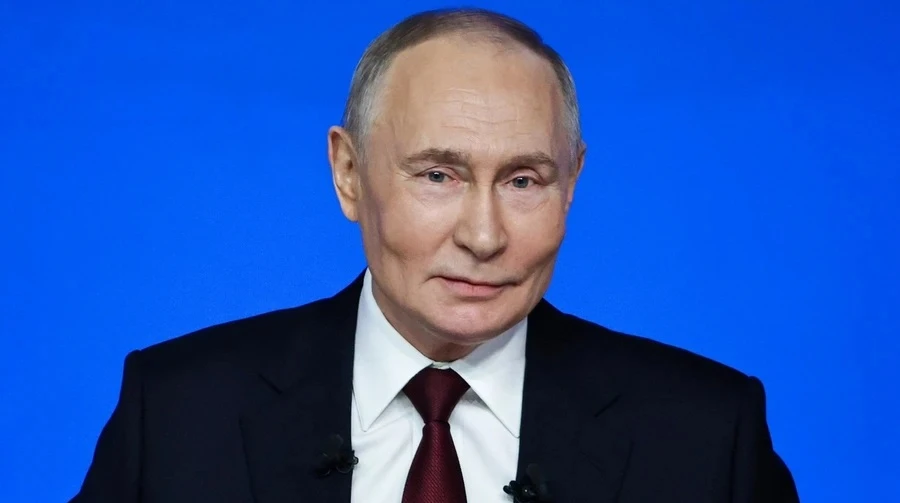
Vladimir Putin has ordered Russia’s armed forces to continue mass strikes against Ukraine’s military-industrial infrastructure and the facilities that support it. In the Kremlin’s language, this is a campaign against production, logistics and command capacity. In practice, the latest attacks on Kyiv and other Ukrainian regions show a familiar pattern: apartment blocks, civilian services and rescue workers are again left to absorb the main impact of Russia’s long-range war.
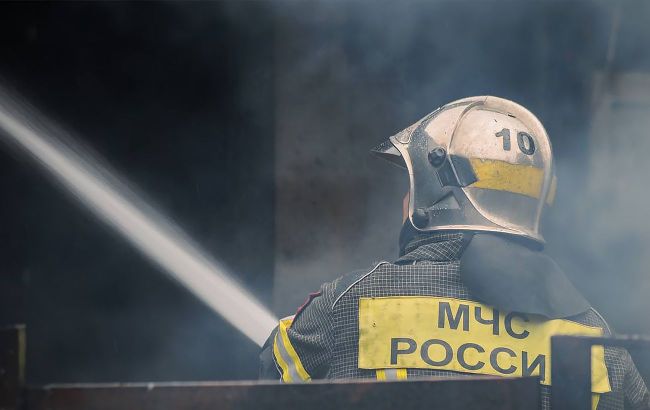
The overnight assault on Kyiv on July 1–2 was one of the deadliest attacks on the capital this year. According to Ukrainian figures cited after the strike, Russia launched 74 missiles and almost 500 drones against Ukraine, with Kyiv the principal target. At least 30 people were killed and more than 90 were injured. Residential buildings, medical sites and a Ukrainian Red Cross warehouse were among the damaged locations.
That discrepancy matters. Moscow says it is attacking military and energy infrastructure, yet the visible outcome in Kyiv again includes destroyed flats, shattered civilian buildings and emergency crews searching through rubble. The political purpose is therefore difficult to separate from the military one. Russia is using missiles and drones not only to hit Ukraine’s industrial and logistical capacity, but to impose pressure on Ukrainian society itself.
This is not a substitute for victory on the battlefield. It is evidence of the limits of Russia’s ground campaign. More than four years after the full-scale invasion, Moscow is still fighting for towns and transport routes in Donetsk, while its original political objective — the subordination or destruction of Ukrainian statehood — remains out of reach.
The latest example is Kostiantynivka. On July 3, Russia’s Defence Ministry said its forces had captured the city, a key point in the Sloviansk-Kramatorsk-Kostiantynivka defensive belt in Donetsk region. General Valery Gerasimov presented the claim to Putin, who treated it as an important military success. The claim had not been independently verified when first reported, and Ukrainian confirmation was absent at that stage.
Even if Moscow’s account were accepted in full, the strategic gap would remain. Kostiantynivka would be a serious local gain for Russia in Donetsk. It would not bring Russia close to controlling Ukraine, nor would it solve the central contradiction of Putin’s war: the Kremlin’s objectives remain imperial and maximalist, while its battlefield progress is local, slow and costly.
Russia’s stated aim in Donetsk is to take the remainder of the region. But that was never the full purpose of the war. The wider objective was already visible before the full-scale invasion, when Moscow issued its December 2021 demands for a new European security order. Those draft documents sought to block further NATO enlargement and restrict allied deployments in countries that joined the alliance after 1997. The proposals would have reduced the strategic sovereignty of Ukraine and several Central and Eastern European states.
Those demands placed Ukraine inside a wider Russian project: the restoration of a sphere of control over former Soviet space and the weakening of NATO’s eastern flank. The war against Ukraine was therefore not launched for Kostiantynivka, Bakhmut or any single settlement. It was launched to decide whether Ukraine could exist as an independent state outside Moscow’s authority.
Seen in that context, the public celebration of every Russian advance in Donetsk carries a different meaning. It does not show that Russia is approaching its political objective. It shows how far the war has narrowed on the ground. A campaign that began with an attempt to seize Kyiv is now presented to Russian audiences through incremental gains in eastern Ukraine.
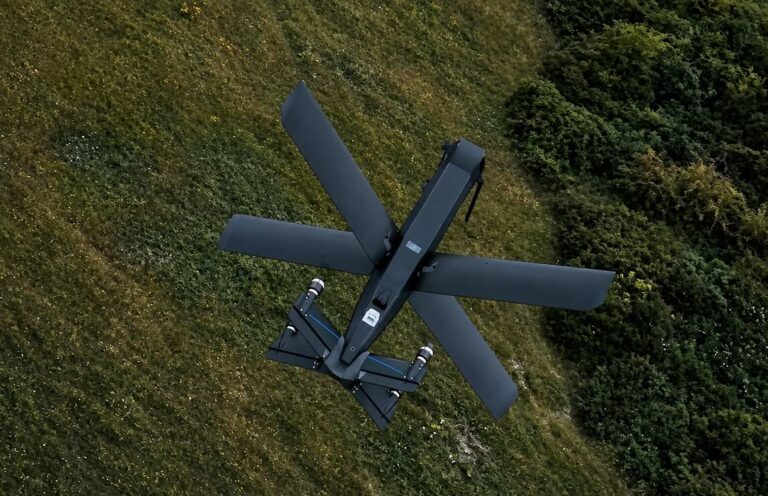
This also explains the growing importance of air terror in Russian strategy. Where the army cannot deliver decisive occupation, missiles and drones are used to exhaust the population, damage energy and industrial systems, and test the patience of Ukraine’s allies. Russia has also adapted its strike packages, including faster drones and larger mixed barrages designed to overwhelm air defences. Reports on Russia’s new jet-powered drones suggest Moscow is trying to increase the speed and complexity of attacks in order to make interception more difficult.
Ukraine’s answer has increasingly been to strike Russia’s own war economy. Long-range Ukrainian drones have targeted oil refineries, fuel infrastructure and other facilities linked to Russia’s ability to sustain the invasion. Putin has acknowledged fuel shortages inside Russia, while Ukrainian strikes on the oil sector have become a visible pressure point for the Kremlin.
This creates a contest between two forms of pressure. Russia is trying to break Ukraine’s civilian resilience and military production through mass aerial attacks. Ukraine is trying to raise the cost of the war inside Russia by targeting the infrastructure that funds, fuels and supports the invasion. The distinction is in the purpose: Ukraine’s campaign is aimed at the machinery of aggression; Russia’s campaign continues to fall heavily on the society it seeks to coerce.
For Europe, the lesson is immediate. Air defence is not a secondary issue, nor a humanitarian supplement to the war. It is central to Ukraine’s ability to keep functioning as a state. The shortage of Patriot interceptors and other systems remains one of Ukraine’s most serious vulnerabilities against ballistic missiles and large mixed attacks.
Putin’s latest orders therefore clarify rather than change the war. Russia still seeks political capitulation from Ukraine, but lacks the means to impose it quickly by ground force. Its answer is escalation from the air, combined with claims of battlefield success that do not alter the wider strategic equation.
Kostiantynivka, if Russia’s claim is confirmed, would be a serious local setback for Ukraine. It would not be the restoration of Russian power in Soviet borders, nor the defeat of Ukrainian statehood. The more Moscow relies on missiles and drones against cities to compensate for limited ground results, the clearer the central fact becomes: Russia can still inflict severe damage, but it has not found a path to the victory Putin promised.