Russia’s latest mass attack on Kyiv has exposed the most dangerous weakness in Ukraine’s air-defence network on the eve of NATO’s Ankara summit: it can destroy large numbers of drones and cruise missiles, but it lacks enough interceptors capable of defeating repeated ballistic and hypersonic attacks.
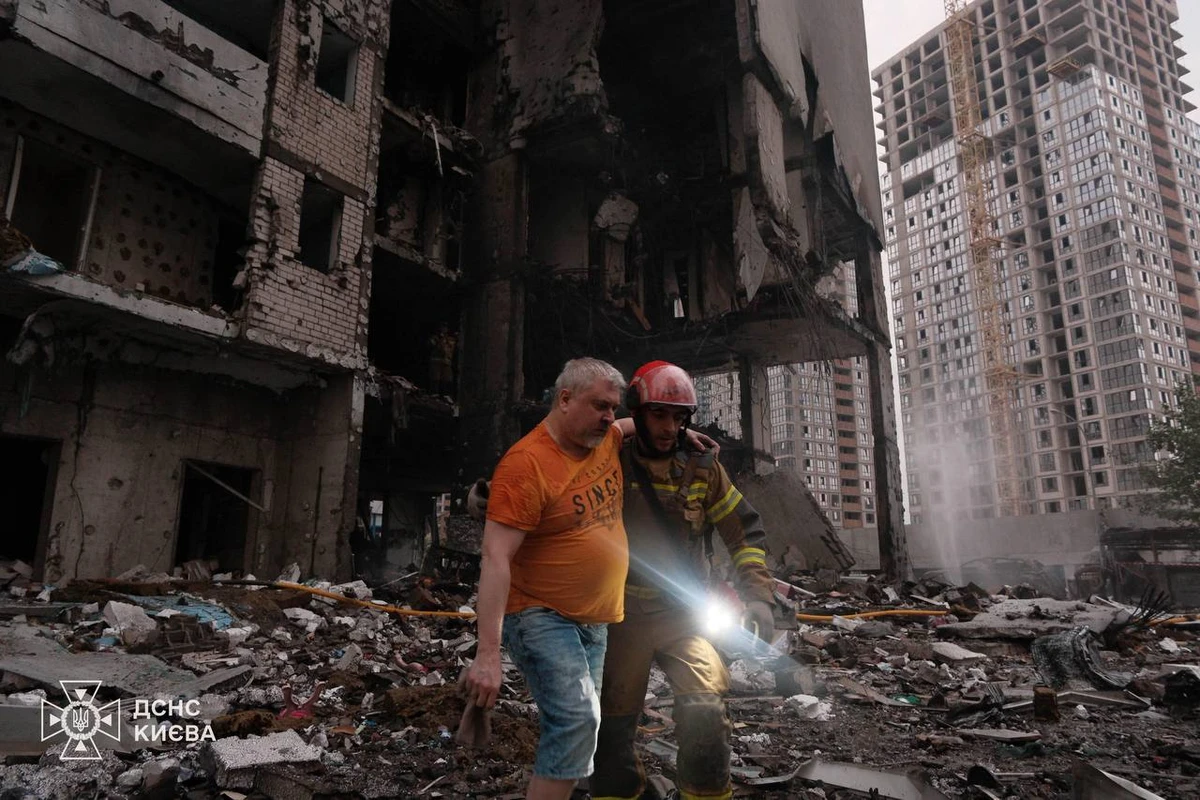
At least 11 people were killed and dozens wounded in the overnight assault on 5–6 July, according to initial reporting from Kyiv. Residential buildings suffered direct hits as rescuers searched damaged structures for survivors.
Ukraine’s Air Force said it detected 419 aerial weapons, including 68 missiles and 351 drones. Its operational breakdown of the attack said 363 targets were neutralised, but 29 ballistic missiles and 18 attack drones struck 34 locations. Kyiv was the principal target.
The figures show both the strength and the limits of Ukraine’s layered defences. Mobile groups, electronic warfare and short-range systems can reduce the drone threat. Modern Western systems can engage cruise missiles. Ballistic and high-speed weapons remain a much harder problem, and the interceptors capable of defeating them are scarce.
Ukraine has repeatedly asked partners for additional Patriot batteries and interceptor missiles. The request is not simply for more coverage. A launcher without sufficient interceptor stocks cannot sustain defence against large salvos, while each engagement must be weighed against the possibility of another attack days later.
Russia can exploit that calculation. By combining hundreds of comparatively cheap drones with cruise, ballistic and hypersonic missiles, it forces defenders to identify genuine threats, preserve high-end missiles and accept that some weapons may penetrate.
The latest assault followed another devastating attack on Kyiv only days earlier. Defence Matters argued after that strike that air defence alone cannot provide a complete answer unless it is combined with pressure on launch platforms, production facilities and logistics. The new attack reinforces rather than replaces that conclusion.
Ukraine still requires more interceptors because civilians cannot wait for a longer-term suppression strategy to mature. At the same time, partners must help Kyiv reduce Russia’s ability to generate repeated salvos through long-range strikes, sanctions enforcement and disruption of missile components.
NATO leaders are expected to discuss a proposed €70 billion military-support commitment for Ukraine in 2026. The Kyiv attack gives that debate a concrete measure: how much of the package will translate into air-defence capability, and how quickly?
Patriot supply is constrained by production and by allied requirements. European operators need missiles for their own national and NATO plans, while the United States has faced additional demand from the Middle East. That does not remove the need to support Ukraine; it demonstrates why production expansion should have begun earlier and must now be treated as an Alliance priority.
Partners can contribute in several ways. Some possess complete Patriot systems, others interceptor stocks, radar components, maintenance capacity or funding. European SAMP/T systems and other layers can protect additional areas, although they do not provide a direct substitute for every Patriot capability.
The most credible summit outcome would combine immediate transfers with multi-year production orders. Emergency reallocations can save lives now. Larger contracts and licensed production are needed to prevent the same shortage from recurring.
Moscow does not need every missile to reach its target. It can impose exhaustion by forcing alerts, dispersing emergency services, interrupting sleep, damaging power and transport systems and consuming defensive ammunition.
The civilian consequences are central. Discussion of interception rates can obscure the reality that weapons which penetrate strike homes and public infrastructure. Ukraine’s defence problem is not an abstract contest between systems; it is the protection of a population subjected to repeated deliberate mass attacks.
The attack also tests Western political endurance. Each failure to replenish Ukrainian stocks teaches Russia that sustained pressure may outlast the coalition supplying Kyiv. Conversely, reliable interceptor deliveries undermine the expectation that time automatically favours Moscow.
Ankara will be filled with language about solidarity, industrial capacity and long-term security. Kyiv has supplied the summit with a stark operational requirement. If NATO leaders cannot connect their financial pledges to the interceptors Ukraine needs, the gap between alliance declarations and battlefield reality will remain visible in the ruins of another residential building.