Thales has agreed to acquire the Gorgé family’s controlling stake in Exail Technologies as the first step towards a full takeover, marking one of Europe’s clearest attempts to consolidate the technologies needed for autonomous underwater warfare.
The French group will offer €134 per share for the family’s 35.51 per cent holding, a 44 per cent premium to Exail’s unaffected closing price on 25 June. The terms imply an equity valuation of about €3.9 billion, according to reporting on the binding agreement.
If the block purchase is completed, Thales intends to launch a mandatory public offer for the remaining shares. The transaction remains subject to regulatory approvals and the usual completion conditions.
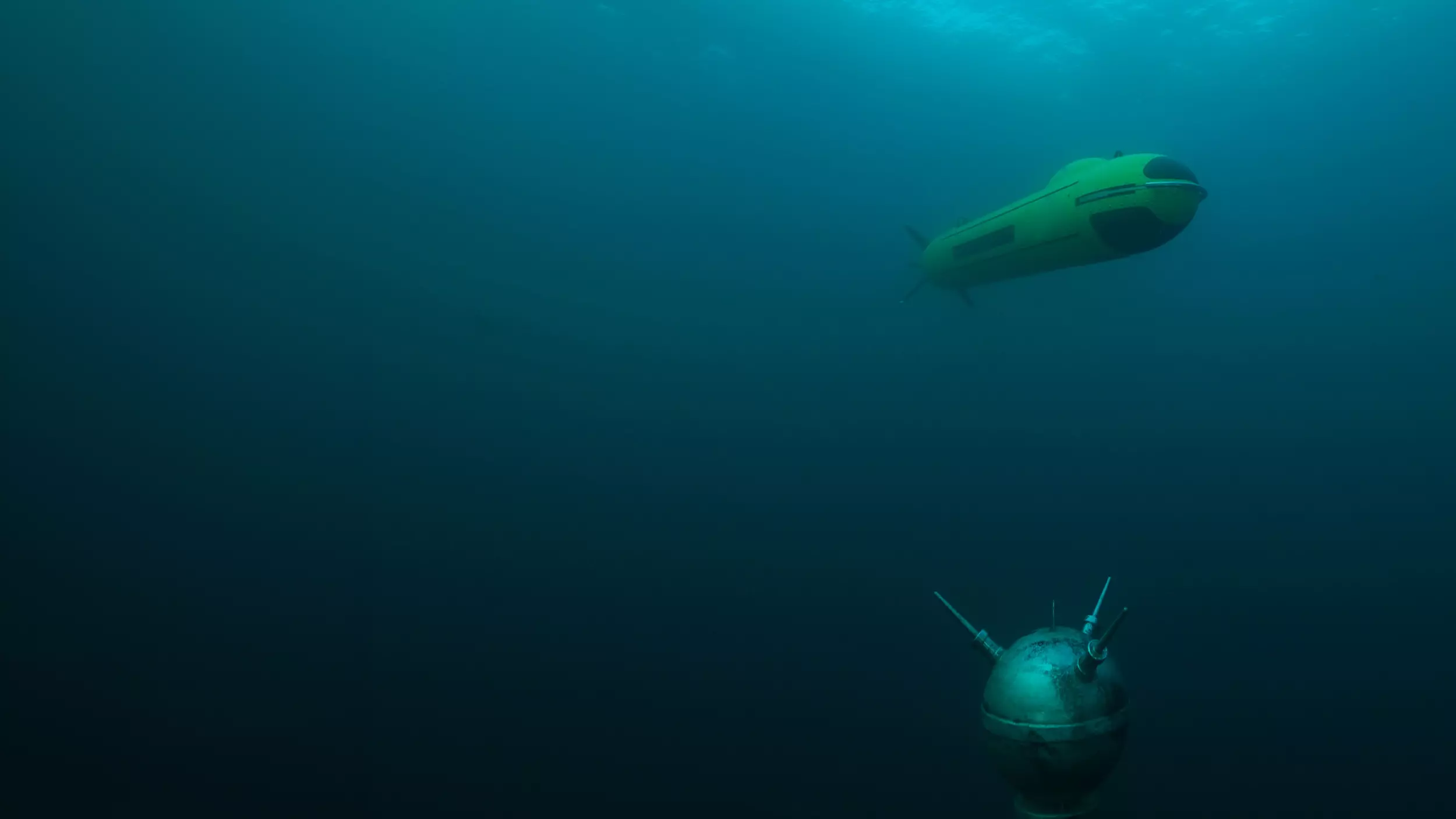
Exail develops maritime drones, inertial navigation systems, mine-countermeasure technology and other robotic platforms. These capabilities once occupied a specialist corner of naval procurement. They are now increasingly central to seabed surveillance, port protection, anti-submarine warfare and the security of undersea cables and pipelines.
The company’s market value has risen dramatically as investors have anticipated higher European defence spending and stronger demand for uncrewed systems. Its shares climbed almost 600 per cent over three years before the latest transaction, illustrating how quickly the market has repriced maritime autonomy.
Safran had previously explored a possible acquisition before withdrawing from talks. Thales has a clearer industrial overlap. Its existing activities in sonar, naval combat systems, secure communications and sensors can be combined with Exail’s robotics and high-precision navigation.
Thales said the deal should increase its scale in underwater warfare and expand its position in inertial navigation. It expects Exail to generate more than €90 million in annual revenue and cost synergies by 2032.
The acquisition is not simply about adding a drone manufacturer. Modern underwater operations depend on networks of sensors, navigation, communications, mission software and launch-and-recovery systems. A vehicle is useful only if it can locate itself without reliable satellite signals, communicate in a difficult environment and feed data into a wider command system.
Thales can potentially integrate those functions across a broader naval portfolio. That offers customers fewer interfaces between suppliers and creates a stronger European rival to US and other international undersea-technology groups.
Defence Matters has previously examined how the AUKUS undersea drone project exposes Europe’s fragmented autonomous-maritime capability. The Exail deal is one industrial response. Consolidation can create the scale needed to fund development, standardise systems and support export campaigns.
It also carries risks. Fewer independent suppliers may reduce competition, particularly in niche technologies where governments have limited alternatives. Regulators will examine market overlap, while customers will want assurances that Exail’s products remain available within open architectures rather than becoming tied exclusively to Thales systems.
European concern over undersea infrastructure has intensified after incidents affecting pipelines, power links and communications cables. Attribution is often difficult, and the area requiring surveillance is vast. Crew-intensive naval patrols cannot provide continuous coverage.
Autonomous vehicles can perform persistent survey, mine countermeasures, anomaly detection and infrastructure inspection while reducing risk to sailors. In conflict, similar systems can support reconnaissance, deception, anti-submarine operations and potentially strike missions.
The EU has now identified maritime and seabed defence as one of five proposed European Defence Projects of Common Interest. National navies are also expanding uncrewed programmes. These policy signals create a larger addressable market for companies able to offer complete systems rather than stand-alone platforms.
The French state owns a significant stake in Thales, giving the transaction a strategic-policy dimension. France is consolidating sensitive capability under a national champion at the same time that Europe calls for more cross-border cooperation.
That is not necessarily contradictory. A stronger Thales-Exail combination could support multinational programmes and exports. But it also shows that European integration often occurs through the expansion of national champions rather than through genuinely shared ownership.
The proposed takeover confirms that underwater autonomy has crossed an industrial threshold. Exail is no longer valued as a niche robotics company. It is being treated as part of the strategic infrastructure of future naval power.