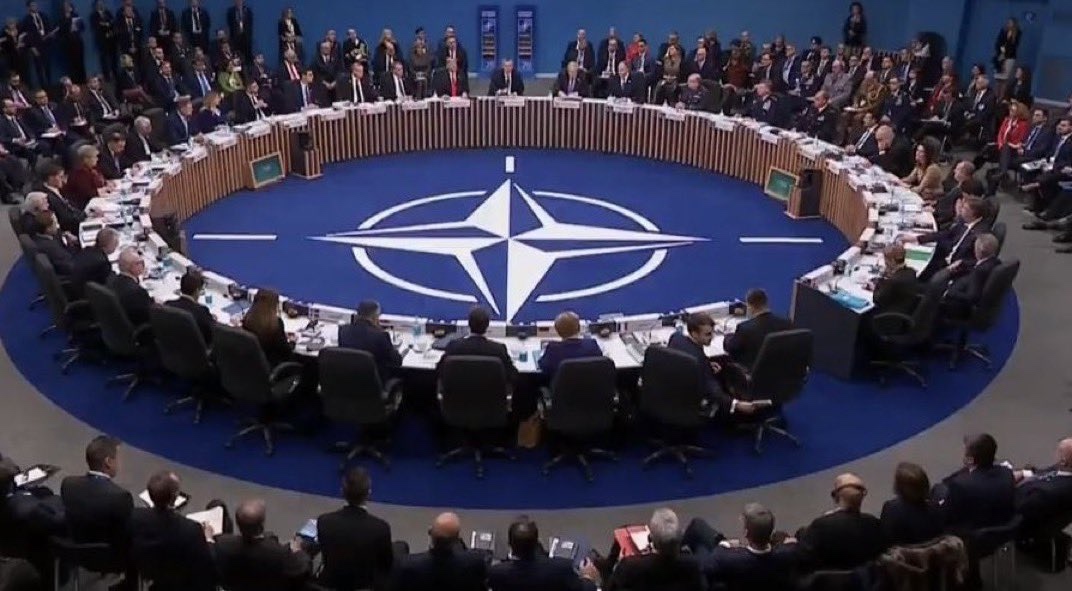
Czech Prime Minister Andrej Babiš has said his government will not participate in NATO’s proposed €70 billion package of military support for Ukraine, creating the first visible national fracture around one of the Ankara summit’s largest commitments.
The refusal does not invalidate the package, but it exposes its central weakness. NATO can coordinate requirements, procurement and political signalling; most military assistance still depends on national budgets and national consent.
The proposed package is intended to make support for Ukraine more predictable as the war continues to consume air-defence missiles, ammunition, drones, vehicles and maintenance capacity. A multi-year figure can help manufacturers plan production and give Kyiv greater confidence about future supply.
Yet a headline total is not the same as contracted equipment. Allies must agree how contributions are calculated, which purchases qualify, who places orders and whether national support already announced counts towards the target.
Defence Matters previously examined how NATO’s Ukraine funding plans exposed uneven burden-sharing. The Czech position converts that structural concern into a concrete summit dispute.
The Czech Republic has played a practical role in sourcing ammunition for Ukraine and coordinating international purchases. An opt-out therefore carries more weight than opposition from a state with little involvement.
Babiš can argue that Prague has already contributed through other channels or that additional spending should remain under national control. The political difficulty for NATO is that other governments may adopt the same reasoning, leaving the largest contributors to cover the gap.
That can create two forms of inequality. Smaller frontline states may spend a high share of national income because they view Russia as an immediate threat. Larger economies may provide greater absolute sums but resist formulas that expose their contributions as a lower share of capacity.
NATO’s new five-per-cent investment framework already places heavy pressure on budgets. Governments can distinguish domestic defence spending from support to Ukraine, but voters and finance ministries experience both as competing demands.
The package should be assessed through equipment delivered, not money announced. Ukraine needs specific capabilities on predictable timelines: Patriot and other air-defence interceptors, artillery ammunition, long-range strike systems, drones, electronic warfare and repair capacity.
An alliance pledge can improve delivery if it pools demand and reduces competition among allies for limited stocks. It can fail if governments attach different conditions, place fragmented orders or delay appropriations.
The Czech opt-out also raises a governance question. NATO decisions are taken by consensus, but coalitions of willing allies often finance particular initiatives. The Alliance must be clear whether €70 billion is a collective commitment, an aggregate expectation or a target to be reached by participating states.
Russia will portray any refusal as evidence that Western support is weakening. That does not make disagreement illegitimate; democratic governments must approve expenditure. It does mean alliance leaders should avoid presenting an amount as settled before the contribution mechanism is credible.
Prague’s decision need not derail the package. Other allies may compensate, and the Czech government may continue bilateral or in-kind support outside the framework. But the refusal demonstrates that NATO’s problem is no longer generating ambitious totals. It is converting them into equitable national obligations and factory orders.
For Ukraine, the distinction is existential. A political ceiling cannot intercept a missile or replenish a brigade. The €70 billion pledge will matter only to the extent that national governments turn it into usable capability despite the escape routes exposed in Ankara.