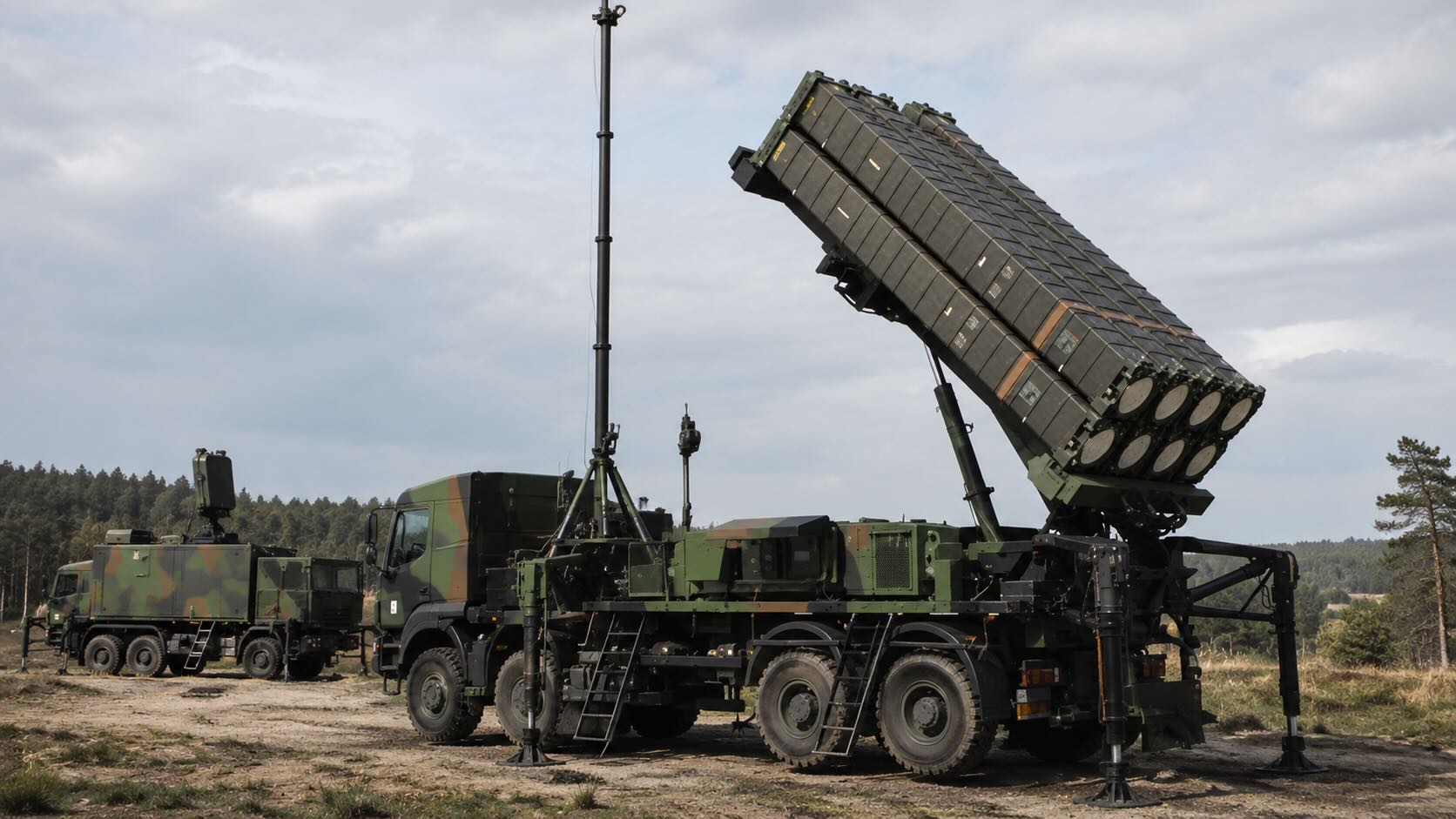
The reported US willingness to allow Ukraine to produce Patriot interceptors would be a major defence-industrial shift, but it would not solve Kyiv’s immediate shortage of missiles for defending cities, energy infrastructure and military targets against Russian ballistic attacks.
Associated Press reported that a US licence could allow Ukraine to produce Patriot-related systems or components, while warning that such production would be complex, expensive and slow. Ukrainian and US political signals point to a political agreement on production licences, but a political licence is not the same as a functioning production line.
That distinction matters. PAC-3 interceptors are among the most technically demanding air-defence weapons in Western inventories. They require specialised seekers, guidance electronics, rocket motors, control surfaces, warhead or hit-to-kill components, software integration, quality control and live-fire testing. Even countries with advanced industrial bases need years to qualify production.
Ukraine’s need is immediate. Russian strikes continue to include ballistic missiles, aeroballistic weapons, cruise missiles and massed drones. Patriot batteries can defeat some of the most dangerous threats, but only if interceptor stocks are available. A factory that begins producing in 18 to 24 months cannot defend Kyiv this winter.
That is why the production announcement should not be allowed to replace emergency procurement. Ukraine still needs missiles from existing US, European and allied stocks. It also needs more launchers, radars and trained crews to expand defended areas. Domestic production is a strategic hedge, but it cannot fill today’s magazines.
The licensing process itself would have stages. Washington would need to define what Ukraine may produce: full interceptors, selected components, canisters, launch equipment or support systems. US companies such as Lockheed Martin and RTX would need to transfer technical documentation, establish security controls and decide which parts of the supply chain remain outside Ukraine.
Technology transfer is not automatic. PAC-3 production includes sensitive components that the US may be unwilling to move fully into a war zone. A compromise could involve Ukrainian assembly from imported kits, local manufacture of less sensitive parts, or regional co-production with European partners. Each model has different timelines and vulnerabilities.
Defence Matters has previously noted that Patriot production announcements cannot close Ukraine’s immediate air-defence gap. A domestic licence fits that same pattern. It could reduce future dependence on deliveries, but it does not replace urgent donations or purchases of existing missiles.
Russia would also treat any production site as a target. A Ukrainian PAC-3 line would require hardened facilities, air defence, redundant supply chains and operational secrecy. Building the factory is only one part of the challenge. Keeping it alive under missile and drone attack is another.
European participation may become essential. A production chain that places some work in Ukraine and some in safer NATO territory could reduce risk while building Ukrainian capacity. Germany’s planned Patriot-related production and wider European missile initiatives may therefore become part of the same industrial architecture, even if the licence is formally American.
The strategic value is still real. If Ukraine eventually produces interceptors domestically or regionally, it would become less vulnerable to US political shifts, export bottlenecks and allied stockpile limits. It could also anchor a broader European air-defence industrial base around Ukrainian battlefield requirements.
But the near-term policy conclusion is clear. Ukraine needs both tracks: immediate interceptor supply from allies and a longer-term production pathway. Treating the licence as a substitute for current deliveries would be dangerous. The licence is a future capacity tool, not an emergency magazine.