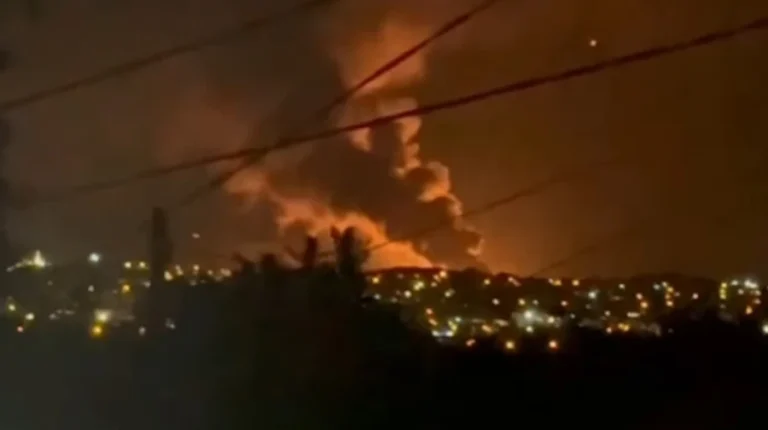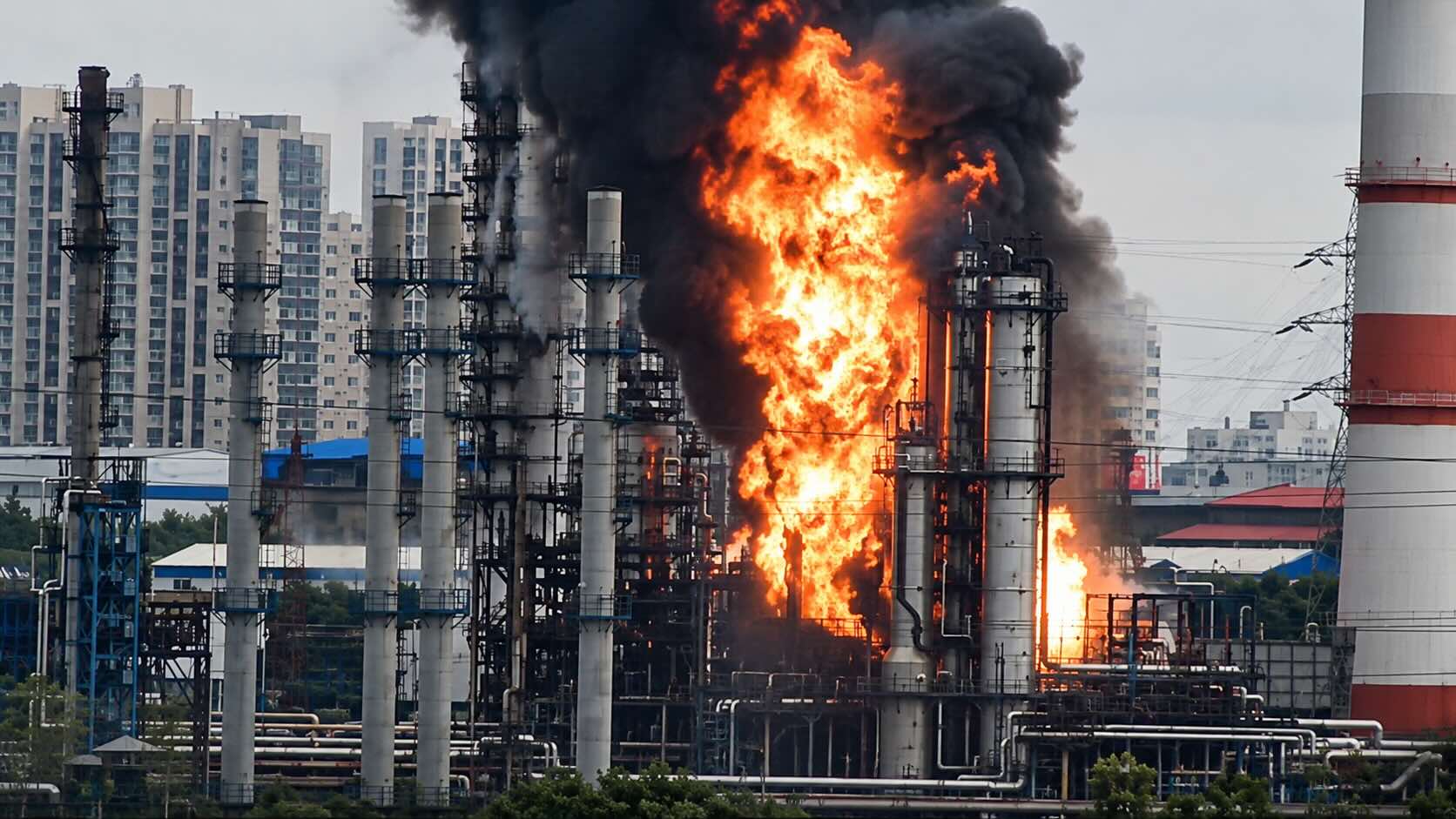
Ukraine’s deep-strike campaign against Russian energy infrastructure appears increasingly focused not only on fuel storage but on the complex refinery units that turn crude oil into usable military and civilian products.
The distinction matters. A burning storage tank is visually dramatic and can remove product from the system, but tanks are simpler to replace than specialised refinery equipment. Crude-distillation units, catalytic crackers, compressors, heat exchangers, cooling systems and control infrastructure are more difficult to repair and often require specialised components.
Recent reporting on Ukraine’s long-range strike campaign described sustained attacks on Russian oil infrastructure and a widening effort to hit critical economic targets deep inside Russia. Accounts of the campaign show how refinery and logistics targets have become part of Kyiv’s attempt to impose costs far from the front. Earlier analysis of strikes on Russian oil installations noted that refining capacity can be reduced when key processing equipment is damaged.
The military logic is clear. Russia’s war machine depends on diesel, jet fuel, lubricants and petrochemical feedstocks. Crude oil alone does not move tanks or aircraft. Refineries convert crude into products needed for military logistics and the domestic economy. Damaging complex units can therefore create pressure beyond the immediate fire.
Complex refinery units are bottlenecks. A plant may have many tanks, but fewer primary distillation units or secondary processing lines. If one of those units is damaged, the refinery may have to reduce throughput, shift product yields or shut down part of the facility. Repairing such equipment requires skilled labour, spare parts, engineering inspections and sometimes foreign-origin components that sanctions can make harder to obtain.
Secondary units are particularly valuable because they determine the quality and type of products a refinery can make. A plant may still process some crude after a strike, but if catalytic cracking, hydrotreating or reforming capacity is reduced, it may produce less of the fuels and components most useful to the military and transport economy.
Storage attacks still have value. They can destroy fuel, cause fires, disrupt loading and create local shortages. But they may not reduce refining capacity for long if the plant can continue producing. Strikes against processing units can have a more persistent effect because they interfere with the plant’s ability to make product in the first place.
Ukraine may also be learning from Russia’s defensive adaptation. As Moscow reinforces refineries with short-range air defence and electronic warfare, Ukrainian planners have incentives to hit the highest-value components when drones do get through. A successful strike against a key unit can justify the cost of a long-range mission more than damage to an easily replaceable storage area.
The economic-warfare effect depends on accumulation. One damaged refinery may be manageable. Repeated strikes across multiple plants force Russia to prioritise repairs, move fuel across longer distances and decide which facilities deserve scarce air-defence protection. That can raise costs even if national fuel production does not collapse.
There are limits. Russia has a large refining system, domestic engineering capacity and experience repairing industrial damage. Some reports of shutdowns may be partial or temporary. Ukraine also has to balance energy-targeting with other military priorities, including air bases, ammunition depots and air-defence systems.
Russia can also adapt by changing product flows, drawing on inventories, importing components through friendly states or prioritising military fuel over civilian demand. That means the impact of refinery strikes may appear first as regional shortages, price pressure or export restrictions rather than a dramatic nationwide halt.
Still, the shift from tanks to units is strategically important. It shows that Ukraine is not merely trying to create fires. It is trying to understand and exploit the weak points in Russia’s fuel-production chain. In a war of attrition, damaging the machinery that makes fuel can be more valuable than burning the fuel already made.