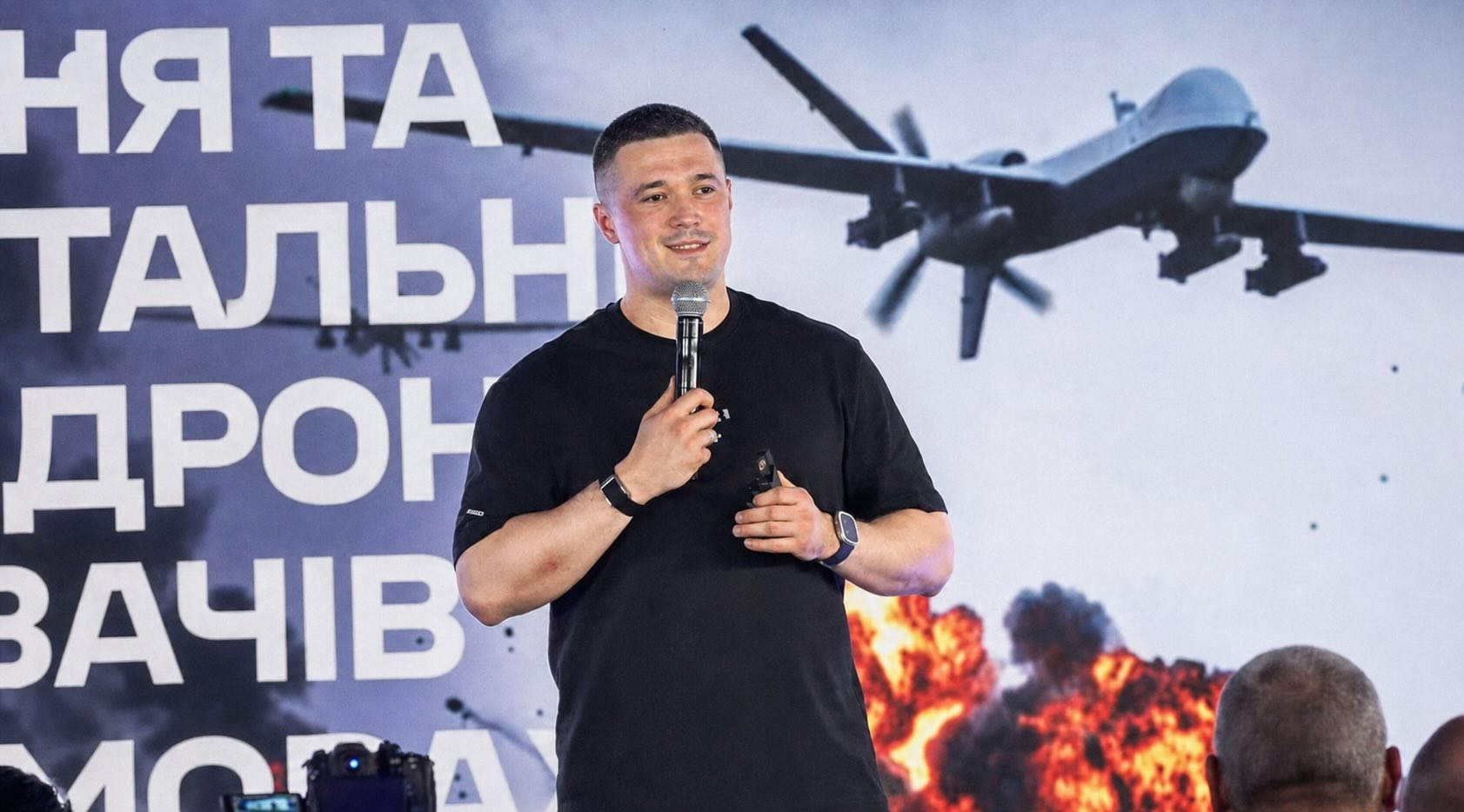
Mykhailo Fedorov has used his departure from Ukraine’s Ministry of Defence to set out a detailed critique of the country’s military command, arguing that the Armed Forces require new leadership and a faster transition towards technology-led warfare.
At a briefing on his six months as defence minister, Fedorov said he had proposed replacing General Oleksandr Syrskyi, the commander-in-chief of the Armed Forces, and the chief of the General Staff.
He alleged that initiatives proposed by the ministry had been blocked and that Syrskyi had issued an ultimatum that contributed to the breakdown in their working relationship.
Fedorov nevertheless credited Syrskyi with an important role in the defence of Kyiv and Ukraine’s Kharkiv and Kherson operations during 2022. His argument was that the command methods associated with those campaigns were no longer sufficient for a battlefield increasingly shaped by unmanned systems, sensors, electronic warfare and short innovation cycles.
Syrskyi had not publicly answered the allegations at the time of publication.
The central military criticism in Fedorov’s presentation was that Ukraine continued to operate primarily at the tactical level while Russia systematically attacked targets at operational depth.
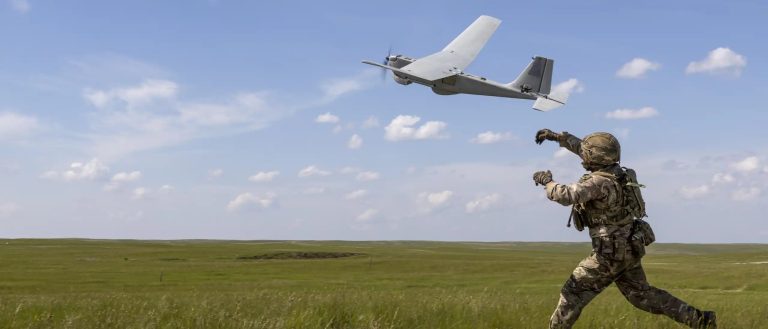
Fedorov said Ukraine’s introduction of medium-range strike drones had begun to address this imbalance. He presented their growing use against targets more than 20km and 50km behind Russian positions as evidence that procurement decisions made earlier in 2026 were producing results.
His proposed model would give corps responsibility for defined sectors and the resources needed to operate beyond the immediate front line. Brigades would receive a guaranteed basic allocation of drones and other equipment, allowing commanders to plan instead of competing for supplies distributed through discretionary decisions.
According to Fedorov, the present corps structure remains incomplete. Some corps have developed coherent command systems, while others contain too many brigades or undergo repeated changes of leadership. Battalions are also detached from their brigades and reassigned elsewhere, weakening established command relationships.
He claimed that units regarded as loyal could receive equipment while others were excluded, despite the ministry purchasing more drones during the previous five months than in the whole of the preceding year.
Fedorov’s proposed doctrine gives drones the primary role in preparing an assault.
Under this concept, unmanned systems would detect targets, disrupt logistics, suppress positions and destroy equipment before infantry moved forward. The intention would be to lose drones rather than personnel during the most dangerous phase of an operation.
Ukraine cannot match Russia’s mobilisation pool, Fedorov said, making technological asymmetry a strategic requirement rather than an optional modernisation programme.
He cited the use of drone-centred tactics by units involved in operations around Kupiansk as an example of the approach. Several formations had received direct financing after battlefield data identified them as particularly effective.
This method is linked to Ukraine’s electronic battlefield reward system, under which verified strikes generate points that units can use to obtain equipment through the Brave1 Market. Fedorov said the system enabled successful formations to acquire updated technology without waiting for conventional procurement cycles.
Fedorov also outlined plans for a “small air-defence” system intended to intercept at least 95 per cent of Shahed-type drones and cruise missiles through a combination of new technology and organisational reform.
Private developers had been allowed to integrate interceptor drones into regional air-defence arrangements and test them against live Russian attacks. Fedorov claimed the interceptors were achieving success rates of between 70 and 90 per cent in areas where they operated.
Ukraine contracted 12,000 unmanned ground vehicles in 2025 and planned to purchase 50,000 in 2026, he said. These systems can carry supplies, evacuate casualties, place mines and perform combat tasks without exposing personnel.
A ballistic and anti-ballistic consortium had also been established, according to Fedorov, although he disclosed few operational or industrial details.
Fedorov said the Ministry of Defence had replaced a procurement process in which the General Staff identified both the required products and, in some cases, companies from which they should be purchased.
Under the revised system, 80 per cent of drone procurement was to be directed towards manufacturers ranked among the best performers in each category. The ranking would draw on verified strike data and military purchases through the Brave1 Market. The remaining 20 per cent would be awarded through open tenders.
He claimed that a competitive tender for long-range 155mm ammunition had reduced prices by $1,000 per shell after an additional manufacturer joined the competition. Total savings from the artillery tender exceeded $100 million, he said.
A separate competition for approximately 150,000 to 160,000 medium-range strike drones attracted 59 companies and was expected to reduce costs by 20 to 30 per cent.
The financial claims require confirmation through procurement records or an independent audit. They nevertheless demonstrate the scale of the policy dispute: whether wartime purchasing should remain driven by central military requirements or be opened more extensively to competition and battlefield-performance data.
The dispute is not simply between a civilian technology manager and a career general. It concerns the distribution of authority between the ministry, General Staff, corps and brigades.
Fedorov’s model would shift resources towards formations that produce measurable results, expand civilian oversight and give operational commanders predictable allocations. Its risks include overreliance on quantifiable strike data and the possibility that short-term results could receive priority over less measurable functions such as holding ground, training reserves and sustaining defensive positions.
The existing command model provides continuity and preserves military control over operational requirements, but Fedorov alleges that it also protects bureaucratic processes that cannot keep pace with battlefield innovation.
President Volodymyr Zelenskyy must now determine whether this disagreement can be resolved through a new defence minister or whether it requires changes within the military command itself.